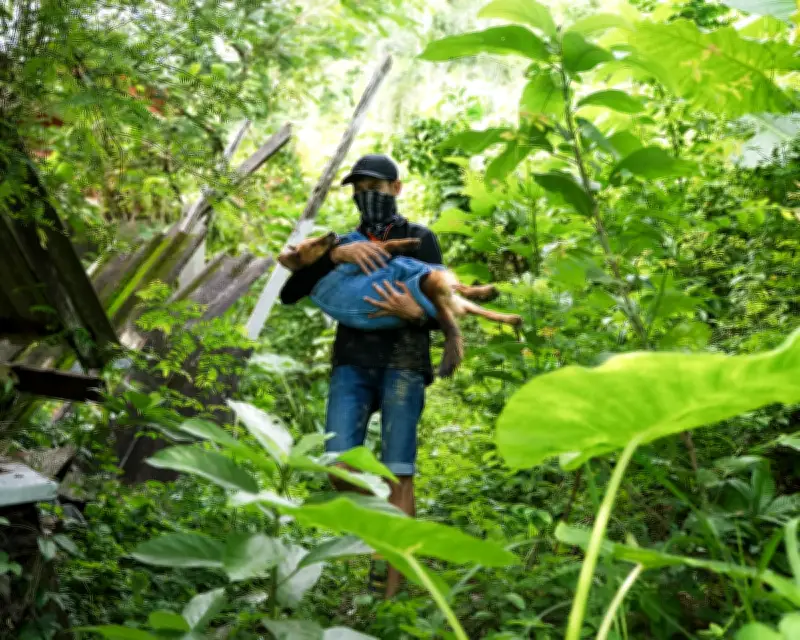
It's after midnight and Dr Bow is already awake when her phone starts to ring. She sleeps lightly when she is on call, and she knows who is calling before she picks up the phone. Khun May, who has worked in the front office for more than a decade, speaks calmly but urgently – a dog has been struck by a motorbike and is severely injured. The rescuer is already en route. Dr Bow, whose given name is Nutta Siriwatchaiporn, rolls out of bed and slips into her signature dog-paw Crocs, briskly crossing the gravel road between her flat and the hospital entrance.
Emergency surgeries and routine rescues
The surgery she is about to perform is complex and gruelling, but on the outside she is the picture of calm, even nonchalance. At 33, she is already an expert, her steadiness hard won over hundreds of hours of operating under pressure. An amputation or major reconstruction like this would be an exceptional case in many veterinary clinics, but for Dr Bow and her colleagues this is a normal Tuesday evening. Road traffic accidents are one of the leading causes of traumatic injury among street animals in Thailand.
She would be the first to say, however, that they are only one part of the picture. During those few hours of restless sleep, an informal but well-trodden emergency response system was rapidly set in motion – a chain of calls, contacts and quiet acts of compassion that most people never see.
Millions of animals on the streets
Millions of dogs and cats live on the streets of Thailand, inhabiting public space on a hazy spectrum of partial ownership, kinship, tolerance and intolerance. Many live in temples and rely on monks to feed them from their daily alms; many inhabit city streets and rural roads, hanging around food stalls and markets. They are rarely viewed as “strays” in the Western sense – anomalies that need to be captured and removed from public view – but rather as permanent, legitimate cohabitants of the shared urban landscape.
This is deeply rooted in Thai society at least in part through Theravada Buddhism. Practiced by more than 90% of Thais, followers are urged to show compassion to all sentient beings and to cultivate good karma through acts of giving. For many, feeding the animals that share their street is a natural extension of the tradition of daily almsgiving, a recurring gesture animated by what Buddhists call metta, or loving-kindness.
Unsung dedication and organised efforts
In practice, this produces acts of remarkable, unsung dedication. One volunteer in Phuket provides food for more than a hundred stray animals every night. She fills plastic barrels with rice, broth and kibble and tows them through the hills of Patong on her motorbike, past bars and nightclubs and into the dark jungle beyond, where animals come cautiously out of the undergrowth to meet her. She has been doing this every night for 20 years. There are others like her all across the country.
On the other end of the spectrum are highly visible organisations like the Soi Dog Foundation, whose Phuket campus includes a hospital, education centre and a permanent shelter housing over 1,800 resident animals. Soi Dog – whose name comes from the Thai word for side-street or alley – runs one of the world’s largest Catch, Neuter, Vaccinate and Return initiatives, sterilising more than 1.7 million animals since the programme’s inception in 2003, and deploys mobile veterinary teams across the country. Their rescue team operates around the clock, seven days a week, responding to calls from members of the community who have found sick or injured animals.
Complex coexistence
But the picture is not simple. The same cultural factors that support coexistence can also facilitate suffering. Free-roaming animals are vulnerable not only to disease and environmental dangers, but constant shared space also leads to human cruelty – while most Thais are highly tolerant, street animals are still subject to frequent violence that exists in uncomfortable proximity to the extraordinary kindnesses shown every day.
Institutions and compassionate individuals remain in constant dialogue. When an animal is injured on a Phuket street at midnight, it is rarely an organisation that finds them first. It is a feeder, a fruit vendor, a passing driver – someone already there, who knows who to call.