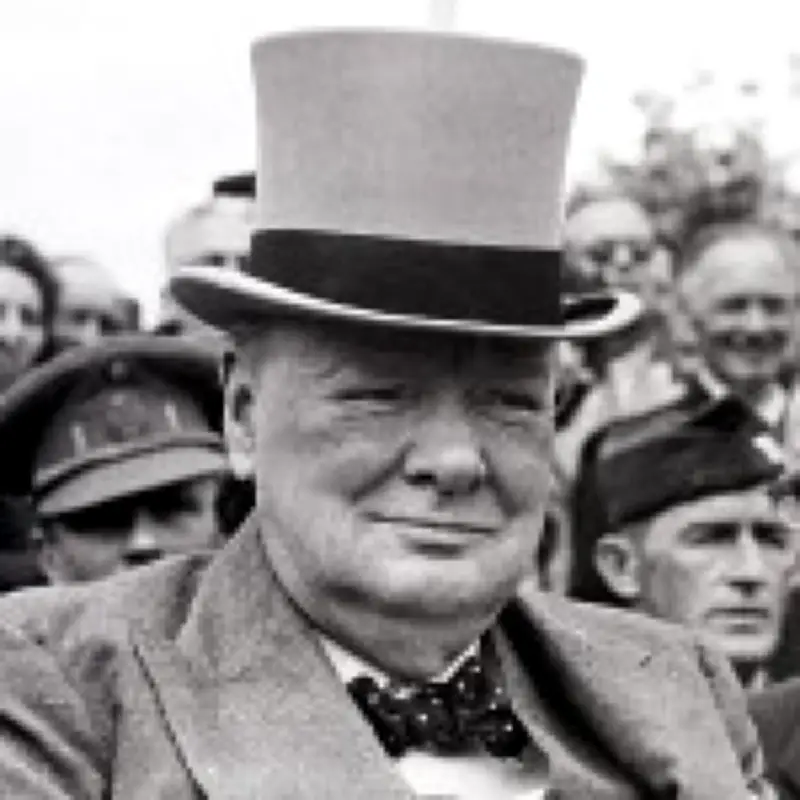
A video display at the National Portrait Gallery has been withdrawn following a row over Sir Winston Churchill's role in the Bengal famine. The 40-minute video by artist Helen Cammock, titled Persistence, accused Sir Winston of using 'wilful' mass starvation as part of the 1943 famine. A historian and former trustee of the gallery wrote to 'protest in the strongest possible terms' against the video installation and claimed that the accusation was 'foul and vile'. Now, the gallery has told BBC News that the artist has removed her work from display, with Cammock saying it was not a documentary but people should 'hear it out'.
Artist defends her work
Cammock, a Turner-Prize winning artist, said in a statement on Monday: 'There is an incredible pressure on artists and arts institutions to bend to external pressure; to be benign at best and silent at worst. I do not accept this pressure. To question, challenge and explore ideas and histories is vital to a healthy society and art is intrinsic to this.' After working on her video installation since 2023, it had been on temporary display for 10 months in the gallery and was due to end in August. In the work, which she narrated, she explored Oliver Cromwell's 17th century military campaigns in Ireland, saying he 'starved people, en masse' which was 'a little like' Churchill in the Bengal famine.
Historical context and dispute
An estimated three million people died in eastern India in the Bengal famine. However, the nature of Sir Winston's role in it has long been subject to academic dispute. In 2019, researchers in India and the US concluded that the Bengal famine was due to a 'complete policy failure during the British era'. Others have argued that Churchill's policies contributed to the famine. However, an open letter to the gallery from Lord Roberts of Belgravia, a Churchill biographer, said this was incorrect, and received more than 50 signatures by peers, including Churchill's grandson Sir Nicholas Soames. Lord Roberts accused the institution of telling a 'barefaced lie' and claimed the installation's description was an 'ideologically motivated rant'.
Gallery responds
The author went on to claim that the Bengal famine was caused by a typhoon and that Churchill told his war cabinet every effort must be made to help those affected. 'He would not have done this if he were the genocidal maniac described by Ms Cammock in her taxpayer-funded rant against one of our greatest national heroes,' he wrote in the letter to Professor Shearer West, the interim chair of the board of trustees. With the row receiving widespread attention and media coverage, the gallery said the work has now been withdrawn. 'Today, Helen Cammock decided to remove her film, Persistence, from display at the National Portrait Gallery. We respect her decision, just as we acknowledge the opinions of those who were offended by what was said in the film,' the gallery told the BBC. 'The aim of this project was to give artists the opportunity to create works as personal and creative responses to our collection. The work was presented as an artistic piece, not a documentary, and the views expressed in the film do not necessarily reflect those of the NPG.' Cammock also said that her work was grounded in academia and 'asks us to think about who is honoured and valorised and who is not; whose stories are told and whose are not'.