Shortbread is a crisp and crumbly butter biscuit that pairs perfectly well with a cup of tea. The centuries-old sweet treat is famously Scottish but now much-loved around the world. Previously making Nigella Lawson's and Paul Hollywood's classic Victoria sponge cakes, I was keen to see how their shortbread recipes compare. In the other comparison, I found Nigella's recipe to be the best, so I was intrigued whether that would be the case again with this bake. Just by looking at both recipes, there was one I was expecting to be easier and tastier, but I was wrong.
Paul Hollywood's shortbread recipe
First up, I started with Paul Hollywood's buttery shortbread recipe, which just requires basic ingredients, plus one that I don't usually add to my shortbread – cornflour.
Ingredients: 225g of unsalted butter, softened, plus extra for greasing; 110g of caster sugar, plus extra for dusting; 225g of plain flour, plus extra for dusting; 110g of cornflour; pinch of salt.
I started by lining my trays with baking paper. The recipe said you only needed two trays, but a third was very much essential. To make the dough, it wasn't recommended to add all the ingredients together like most recipes; instead, it asks you to cream the butter and sugar together first, like you would when making a cake. I put the butter and sugar into a large bowl and creamed them together until light and fluffy. You can use a wooden spoon, but I opted for an electric hand-held whisk to speed up the process.
Next, I sifted the cornflour and added the pre-sifted flour into the bowl, added the salt, and mixed until smoothly combined. I tipped the mixture out onto a lightly floured surface and kneaded it to a soft dough. Then, it was time to roll out the dough. Paul's recipe said to do so between two pieces of baking parchment to a thickness of 1cm. I found rolling the dough out with the paper worked better.
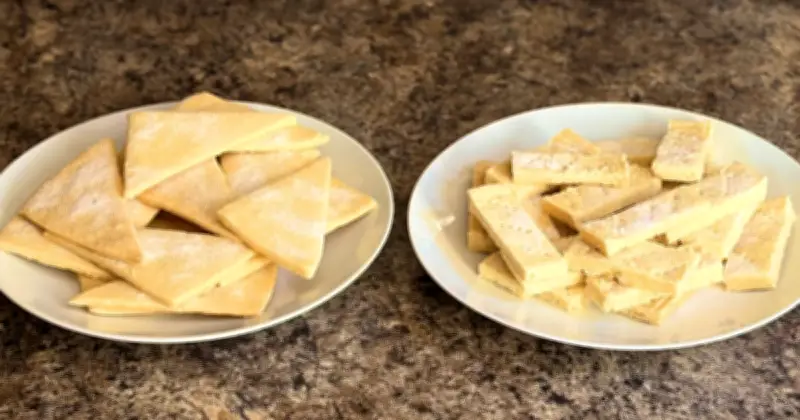
For the shape of the shortbread pieces, Paul recommends opting for triangles. This step took the longest, as I was trying to get my triangles as even as possible. With some triangles cut out, I re-rolled the scraps a couple more times to cut more. It's worth noting that when you re-roll a few times, the dough starts to get greasy, so you will need more flour.
With all my triangles cut out, I placed them on the prepared baking trays and left them to chill for 30 minutes as instructed. In the meantime, I heated the oven to 150C Fan/170C/Gas Mark 3. After, I baked the shortbread for 25 minutes until it was just turning golden brown at the edges. I left them on the baking trays for a few minutes to firm up slightly, then lifted the shortbreads onto a wire rack. A little later, I dusted them with sugar and left them to cool.
How did they taste?
While the process of making the shortbread took longer than expected, the flavour was good, and it certainly lived up to its name – buttery shortbread. The shortbread had a nice crisp to it, but it was lacking a bit of the crumbly texture you want from a shortbread.
Nigella Lawson's shortbread recipe
With the first batches of shortbread in the oven, it was time to move onto Nigella's vanilla shortbread recipe. Just like with her Victoria sponge cake recipe, Nigella tends to use more ingredients. As well as adding cornflour, she recommends using a vanilla pod and icing sugar, as well as caster sugar.
Ingredients: 100g of icing sugar; 200g of plain flour; 100g of cornflour; 200g of very soft unsalted butter; seeds from one vanilla pod; caster sugar, for dusting.
As the process of making these shortbreads is very quick, I started by preheating my oven to 140C Fan as recommended. For this recipe, Nigella prefers combining all the ingredients in a food processor until a dough starts to form, so that's what I did. I put the icing sugar, plain flour, and cornflour into a food processor fitted with the double-bladed knife and gave them a quick blitz before adding the butter, along with the vanilla seeds I scraped out of a vanilla pod. I found the easiest way to remove the seeds is by cutting the vanilla pod in half across and then splitting each short half lengthwise and prising out the seeds with the point and edge of a sharp knife.
Instead of throwing the deseeded bits of vanilla pod away, I stashed them in the container of caster sugar to use next time a recipe requires vanilla sugar. I blitzed the mixture again until it all started to bind and began to form a ball, loosely clumping around the blade.
I turned the dough out onto a Swiss roll tin and pressed it to form an even layer, using my fingers and the back of a spoon. I have to say, this step does require patience to get it to fit and have a smooth and even result, but you will get there. Using the tip of a sharp knife, I cut the pressed-out shortbread into fingers. I made two incisions lengthwise to form three layers and then made 10 cuts down so that you end up with eleven fingers per layer. I used a fork to make little holes in each marked-out biscuit: I pressed down about three times, diagonally, on each finger.
I then put the tin into the oven and baked it for about 23 minutes, by which time the shortbread was still pale, but not doughy. Nigella said to expect a little goldenness around the edges, but shortbread should not be crisp but melting. After, I removed the tin from the oven and let the shortbread cool for 10 minutes before removing the pieces with a palette knife to a wire rack. To top them off, I sprinkled them with caster sugar and left them to cool completely.
How did it taste?
Similarly to Paul's shortbread, these were buttery but more on the sweeter side. They have a strong vanilla flavour, which I loved. However, the best part of the shortbread had to be the texture. This shortbread was incredibly crumbly and just melted in the mouth.
The winner
Overall, both batches of shortbread were delicious, but Nigella clearly had the winning recipe for me. As well as the flavour and texture of this sweet treat being better, so was the ease of making this recipe. Nigella's shortbread recipe was more all-in-one and minimal effort, whereas Paul's recipe requires more work and steps.