Lord of the Flies Adaptation Ignites Controversy Over Race and Representation
The recent BBC adaptation of William Golding's classic novel Lord of the Flies, penned by Jack Thorne, has stirred significant debate among critics and audiences alike. At the heart of the controversy is the series' diverse casting and its handling of themes related to racial identity, with opinions sharply divided on whether the new interpretation stays true to the original narrative's essence.
Diverse Casting Under Scrutiny
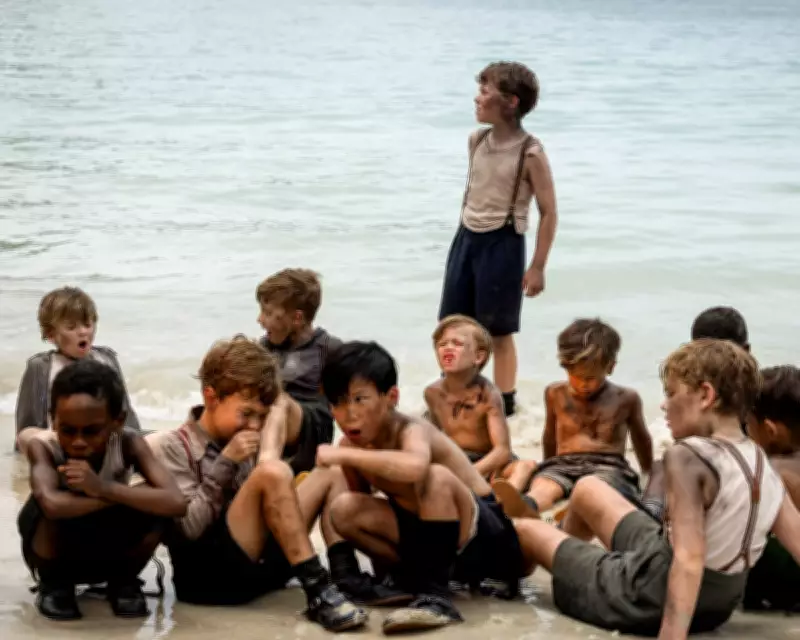
Darren Chetty, a prominent voice in the discussion, argues that the inclusion of black and Asian actors in Thorne's adaptation fails to adequately address the racial themes present in Golding's work. In a recent critique, Chetty suggested that this approach obscures the original story, particularly by not directly portraying the racism faced by non-white characters. He contends that racism extends beyond overt slurs to encompass systemic power dynamics, such as the envy and undermining of black capability.
However, defenders of the series counter that race, while subtly integrated, plays a consequential role in shaping character identities. For instance, the portrayal of Ralph and Jack highlights how white envy of black vitality can drive conflict, even without explicit racial tropes. This nuanced perspective suggests that the adaptation explores racism in more indirect, yet impactful, ways.

Class as a Unifying Theme
Peter Grimsdale, a former BBC and Channel 4 commissioner, offers an alternative viewpoint, emphasizing that class, rather than race, is the central unifying element in Thorne's adaptation. He notes that all characters are depicted as public-school boys, reflecting a shared privileged background. This focus on class dynamics, Grimsdale argues, aligns with the novel's exploration of social hierarchies and human nature under stress.
Mike Pitts, drawing from personal experiences at a boys' private boarding school, supports this notion. He observes that the adaptation's inclusion of backstories for the children mirrors real-life scenarios of absentee or broken families among the elite. Pitts suggests that the series effectively portrays how such upbringings can influence behavior in wider society, transcending racial lines to comment on broader social issues.
Balancing Adaptation and Originality
Jack Thorne's adaptation does not directly translate Golding's themes of racial identity, but it introduces race as a significant factor in the new narrative. Critics like Chetty may view this as a dilution, but others see it as a modern reinterpretation that avoids spoon-feeding familiar racial conflicts. The series prompts viewers to consider how racism operates in subtler forms, such as through envy and power struggles, rather than overt discrimination.
Ultimately, the debate underscores the challenges of adapting classic literature for contemporary audiences. While some argue that diverse casting enhances relevance, others fear it may detract from the original's core messages. As the discussion continues, it highlights the ongoing tension between preserving artistic integrity and embracing inclusivity in media.