Divine Feminine Review: A Goddess-Inspired Soundscape Stuck in Ambiguity
Shiva Feshareki's Divine Feminine, premiered at St Martin-in-the-Fields in London, presents itself as an ambitious exploration of goddess energy but ultimately struggles to find its artistic footing. This latest work from the multi-award-winning British-Iranian composer and turntablist transforms the church's nave, gallery, and sanctuary into an intricately amplified "360° soundscape," yet it falls short of its billed status as an opera.
A Misleading Operatic Label
Despite promotional materials describing it as an opera, Divine Feminine defies easy categorization. It might be more accurately labeled as an installation, a piece of music-theatre, or even a therapeutic session. The absence of a clear narrative framework undermines its impact, as art loses energy without solid architecture to bounce off or walls to scale and dismantle. Terminology matters here, as it sets expectations that the piece fails to meet.
The meditative celebration revolves around the concept of the divine feminine, loosely defined at the nexus of fecundity, sisterhood, rebirth, and goddess-energy. Through chanting, shouting, stamping, and dancing, the performance never coalesces into a focused whole, leaving audiences adrift in a sea of abstract sounds and ideas.

Poetic Text and Mythological Storyline
Poet Karen McCarthy Woolf's text serves not as a traditional libretto but as a sequence of poems, some sung and most spoken. It narrates the story of Celtic goddess Brigid, who, with the aid of a grimoire of global goddesses and a mortal teenager named Snowdrop, must smash the patriarchy and summon the return of spring. Snowdrop's modern traits, such as her "cool cherry vape" and phrases like "OMG" and "kick arse," highlight the piece's attempt to blend ancient mythology with contemporary themes.
This ambitious plot aims to tackle grand themes within an hour's runtime, but the execution feels rushed and underdeveloped, lacking the depth needed to fully engage with its subject matter.
Stellar Performances Amidst Conceptual Flaws
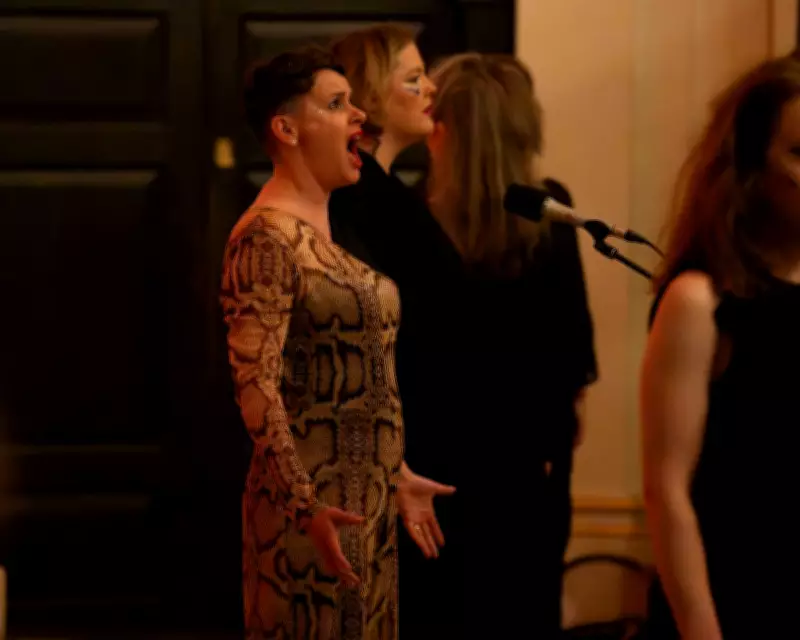
Soprano Emma Tring delivers an incandescent and fearless performance as Brigid, showcasing a voice that shifts from sweet to hoarse with primal energy. She tackles keening cries and lilting Irish-style folk tunes with rooted power, embodying the goddess's spirit with conviction. Tring is supported by the upper voices of the BBC Singers and young singers from Vox Next Gen, all conducted by Lucy Goddard.
Feshareki herself contributes on turntable and electric guitar, manipulating sound in real time to create an immersive auditory experience. However, these technical and vocal achievements cannot compensate for the piece's overarching lack of substance.
The Core Issue: Transcendence Without Foundation
The fundamental problem with Divine Feminine is its inability to transcend its own conceptual vagueness. With eyes and ears fixed on heavenly aspirations, the musical feet never find solid ground. Strip away the digital illusions and amplified effects, and what remains is a handful of cluster chords, a folk song, and some chanting—elements that feel insufficient to sustain the piece's grand ambitions.
This leaves audiences questioning what it all adds up to, as the work fails to build a coherent artistic statement from its disparate parts.
Broadcast and Future Prospects
Divine Feminine will be broadcast on BBC Radio 3's New Music Show on March 7, offering a wider audience the chance to experience its soundscape. While it may find appreciation among enthusiasts of experimental music and goddess-themed art, its shortcomings as a narrative-driven opera are likely to persist.
In summary, Feshareki's creation is a bold but unfocused endeavor that highlights the challenges of blending mythology, modern themes, and innovative sound design without a clear structural backbone.