André de Ridder Steps Up to Lead English National Opera Through Turbulent Times
André de Ridder has taken on one of the most demanding roles in the music world as the new music director of the English National Opera. Set to officially assume the position in 2027, he inherits a company grappling with severe challenges, including slashed budgets, low morale, and a contentious partial relocation from London to Manchester. This move follows Arts Council England's 2022 directive that threatened to withdraw all funding unless ENO left London, sparking a period of upheaval that saw his predecessor, Martyn Brabbins, resign in 2023 over concerns of "managed decline."
Despite these obstacles, De Ridder's enthusiasm remains undimmed. The Berlin-raised conductor, aged 54, views the dual-centre model as a pioneering opportunity rather than a setback. He expresses a strong affinity for Manchester, having studied at the Royal Northern College of Music and worked with the Hallé orchestra, and believes it offers a chance to cultivate new audiences without preconceived notions of opera.
Navigating Predecessors and Pioneering New Paths
De Ridder is well-acquainted with ENO's history, having studied alongside former music director Edward Gardner and taken classes from Brabbins. However, he has chosen to approach his role without consulting them, seeking a fresh perspective free from past baggage. His vision includes expanding opera's boundaries through innovative productions, such as the UK premiere of Du Yun's Angel's Bone in Manchester, which addresses modern slavery and human trafficking.

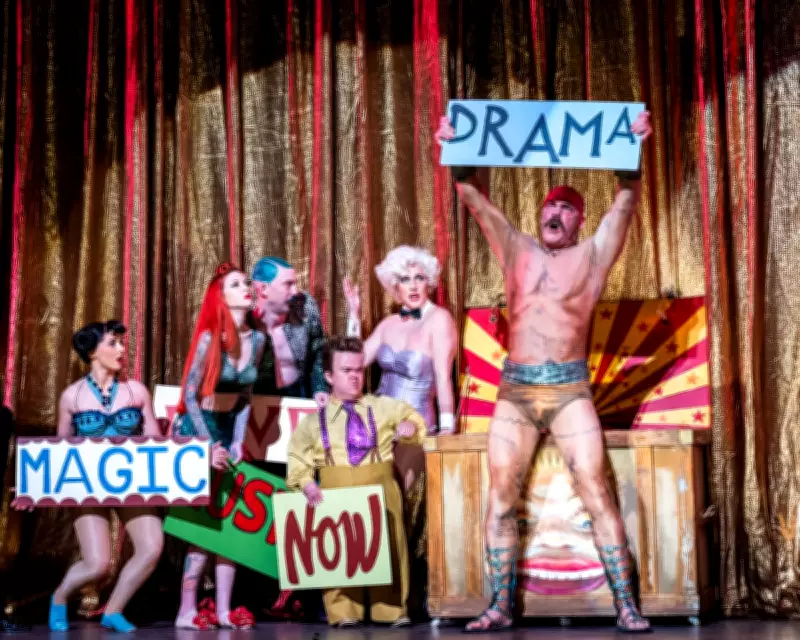
He draws parallels between contemporary works and the legacy of Kurt Weill, whose opera Rise and Fall of the City of Mahagonny he is currently conducting. De Ridder highlights Weill's fusion of classical forms with ragtime, tango, and blues, noting that this eclectic approach mirrors his own goal to make opera more accessible and relevant. Using his father's score for the production adds a personal touch to his professional journey.
Addressing Core Challenges and Future Prospects
The transition has not been without its difficulties. ENO's orchestra and chorus now operate on reduced seven-month contracts, and the recent resignation of the chief executive has further strained morale. De Ridder acknowledges these issues but remains committed to upholding the company's artistic excellence. He points to the enduring spirit of the core ensembles and the vibrant atmosphere during rehearsals at venues like 3 Mills Studios as signs of resilience.
Comparing his current role in Freiburg, Germany, where funding is more stable, De Ridder admits he was drawn to ENO precisely because of its "make-or-break" environment. He relishes the challenge of working in a cash-strapped setting, believing it fosters creativity and urgency. His plans include not only bringing London productions to Manchester but also developing new works that could travel in the opposite direction, ensuring a dynamic exchange between the two cities.
As ENO navigates this pivotal period, De Ridder's leadership will be crucial in determining whether the company can overcome its financial and operational hurdles. With a focus on innovation and community engagement, he aims to redefine what opera can be in the 21st century, proving that even in times of crisis, artistic vision can thrive.