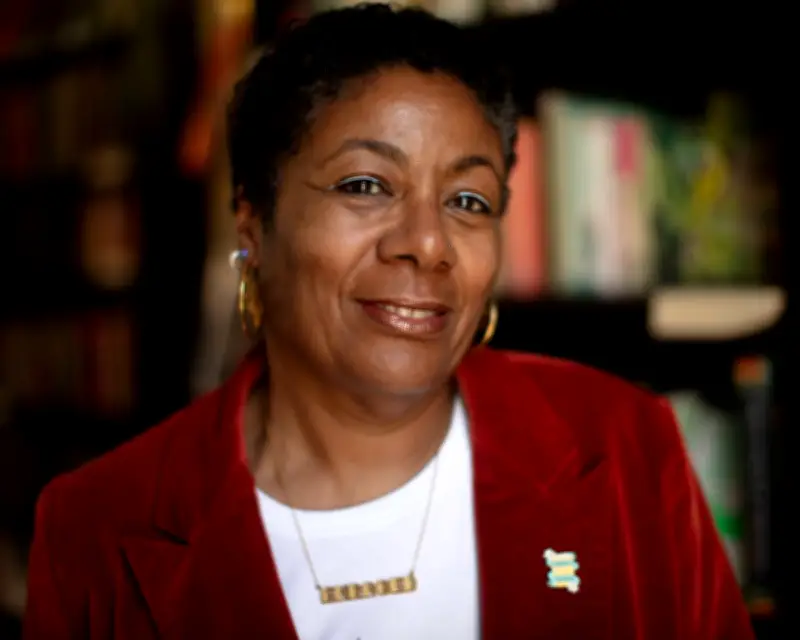
Patrice Lawrence has been appointed the UK's new children's laureate, a role she plans to use to ensure children who are isolated from reading get involved. The author of Orangeboy, Indigo Donut, and Is That Your Mama? says she wants to build on the work of outgoing laureate Frank Cottrell-Boyce, who highlighted reading for pleasure's role in transforming children's outcomes.
Shock and Awe at the Appointment
Lawrence, 59, admitted she was in 'absolute shock' when she received the call offering her the position. She joins a prestigious lineage that includes Jacqueline Wilson, Quentin Blake, Michael Rosen, Julia Donaldson, Malorie Blackman, and most recently Frank Cottrell-Boyce. 'So many people who've gone before have had such an influence on my life,' she said, crediting Wilson as a trailblazer in social realism and Blackman as a mentor.
Focus on Social Division and Belonging
Lawrence plans to focus on reading's role in what she sees as an increasingly socially divided Britain. 'We're such a fractured society at the moment,' she said. 'Personally, for the first time in a long while, as a Black person and the child of immigrants, I've felt unsafe. And if I feel that as an adult, how on earth do some children feel?' She believes books can foster a sense of belonging, comparing shared reading to singing together at a concert: 'Everybody sings together and everybody has that moment of unity.'

Practical Vision with Research
Before becoming a children's author, Lawrence worked in organisations focused on children's rights and social justice. She has a practical vision for her laureateship: 'To change policy you need evidence. We say stories work, let's show how they work.' She hopes to gather research from children in care, refugee families, and the children of prisoners to demonstrate how books change lives.
Personal Journey to Authorship
Lawrence was born in 1967 to Trinidadian parents who trained as nurses in Britain. She spent her first four years privately fostered by a white working-class family in Brighton while her mother completed her training. Her foster mother signed her up to the library and taught her to read before school. Later, living with her mother and visiting her father, books were everywhere. Yet she assumed children's books could not be written by people who looked like her: 'I presumed children's books were written by people who were white and dead.'
It was only after seeing the 1999 BBC adaptation of Malorie Blackman's Pig-Heart Boy that her perception shifted. 'It was life-changing,' she said. 'For the first time I realised you could write about Black British people.' Blackman became both mentor and friend.
Breakthrough with Orangeboy
Lawrence published her debut book, Granny Ting Ting, in 2009, but her breakthrough came with Orangeboy in 2016, a YA novel about a teenage boy in Hackney entangled in gang violence. It won the Waterstones children's book prize for older children and the Bookseller YA book prize, and was shortlisted for the Costa Children's book award. Her follow-up, Indigo Donut, cemented her reputation.
Representation and Validation
As laureate, Lawrence hopes children from every background will recognise themselves in her appointment—Black children, working-class children, fostered children, and those whose family lives don't fit traditional narratives. When she visits schools, pupils often wait behind to share their own stories. Her 2023 picture book Is That Your Mama?, inspired by strangers questioning whether her mixed-race son was really her child, continues to resonate. 'I know that people feel validated and seen by the books I write, which is so important,' she said.
Addressing the Literacy Crisis
This year, the government launched the National Year of Reading to combat a literacy crisis. According to the National Literacy Trust, only one in three eight- to 18-year-olds reported enjoying reading in their spare time last year—a 36% drop in two decades and the lowest level on record. Lawrence is nuanced in her analysis, warning against blaming parents and highlighting structural issues: expensive books, library closures, and financial pressure. She also argues that reading in schools has become too assessment-focused: 'Reading becomes functional. The pleasure side is forgotten.'

Optimism Amid the Challenges
Despite the grim statistics, Lawrence remains optimistic. She travels the country visiting schools, libraries, and book awards, where children treat authors 'like rock stars.' 'I walk into these events after horrible train journeys feeling exhausted,' she said. 'Then I meet all these young people who are passionate about books. It completely lifts my heart.' She added: 'There are amazing things happening already. I spend my life surrounded by children who are obsessed with books—I just don't think people always hear about them.'