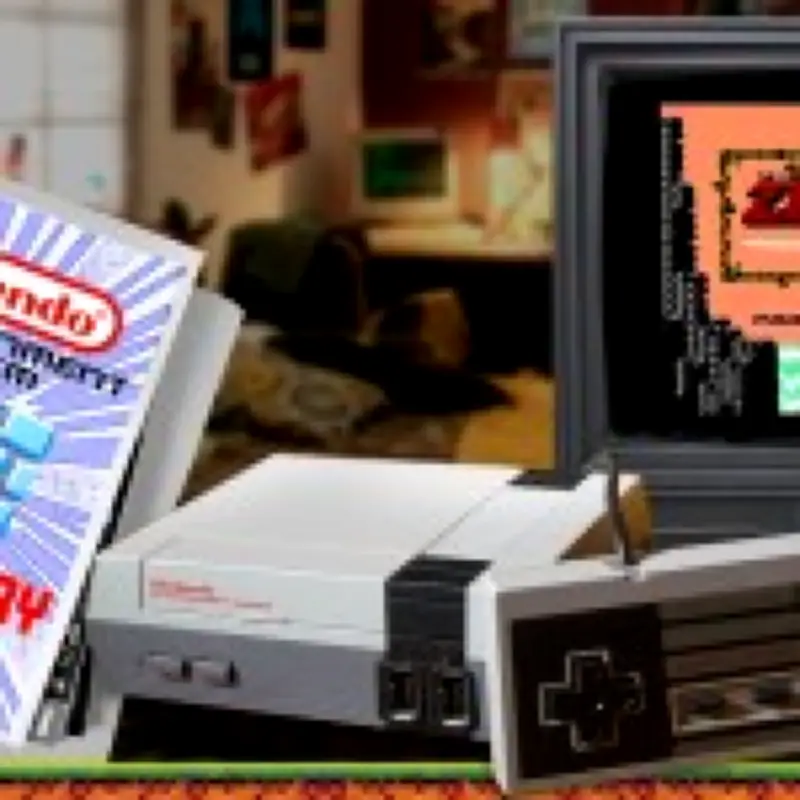
The Nintendo Entertainment System (NES) turns 45 years old in 2026, yet for many UK gamers, the console that saved the American video game industry after the 1983 crash holds little nostalgic value. Despite its iconic status in Japan and North America, the NES failed to achieve similar cultural resonance in Britain due to a late launch, high prices, and the dominance of home computers.
Late Launch and High Cost
The NES originally launched in Japan on July 15, 1983, as the Family Computer (Famicom). It arrived in the US in 1985, helping to revive a market devastated by the video game crash. However, UK gamers had to wait until 1987 for the console to reach their shores—four years after its Japanese debut. By that time, the 8-bit ZX Spectrum and Commodore 64 home computers were the dominant gaming platforms, with the more advanced 16-bit Commodore Amiga 500 launching the same year.
Price was a major barrier. NES games cost upwards of £50 (approximately £150 adjusted for inflation), while home computer games rarely exceeded £15 (£45 adjusted) and budget titles could be as low as £2 (£6 adjusted). Additionally, the ease of pirating computer games made them even more accessible, a factor often overlooked by industry history.

Competition from Sega
The Sega Master System launched in the UK in 1987 at a more affordable £99 (£295 adjusted), with games typically priced under £30 (£89 adjusted). While the Master System was only a minor hit, it further overshadowed the NES. It wasn't until the 16-bit era—with the Sega Mega Drive and Super Nintendo—that home consoles began to gain traction. The Mega Drive, marketed as the 'cool' console, outsold the SNES in the UK, with Sega's Sonic the Hedgehog appealing to older children while Nintendo was perceived as 'for babies.'
This perception persisted until the Wii and Nintendo DS era, which finally saw Nintendo achieve widespread popularity in the UK. However, the deep-rooted nostalgia for the NES that exists in North America and Japan never took hold in Britain, a consequence of poor timing and pricing decisions in the 1980s.
Iconic NES Franchises
Despite its limited UK impact, the NES gave birth to some of gaming's most enduring franchises. Super Mario Bros. remains the most influential, establishing Mario as a global icon and inspiring countless 2D platformers. The Legend of Zelda pioneered action-adventure and action-RPG elements, though the original is less playable today. Metroid and Castlevania together defined the Metroidvania genre, with indie hits like Hollow Knight and Dead Cells carrying the torch. Metal Gear introduced stealth mechanics, though it gained mainstream success only with Metal Gear Solid on the PlayStation. Mega Man became a Capcom mascot but has seen few new entries, with the last original game being Mega Man 11 in 2018.
Final Fantasy and Dragon Quest also began on the NES but were never released in Europe during that era. Final Fantasy 7 on the PlayStation finally broke barriers, but Japanese role-playing games have always been less popular in the UK than elsewhere.
Legacy and Challenges
While the NES is rightly celebrated for saving the video game industry and launching iconic franchises, its UK legacy is muted. Many of its games feel antiquated today, and series like Mega Man and Castlevania struggle to attract new audiences, relying on nostalgia rather than innovation. As Final Fantasy 14 director Naoki Yoshida noted, longer development cycles make it harder for younger players to connect with franchises. Without the NES, however, the modern gaming landscape would be unrecognizable—even if UK gamers have little personal memory of the console itself.