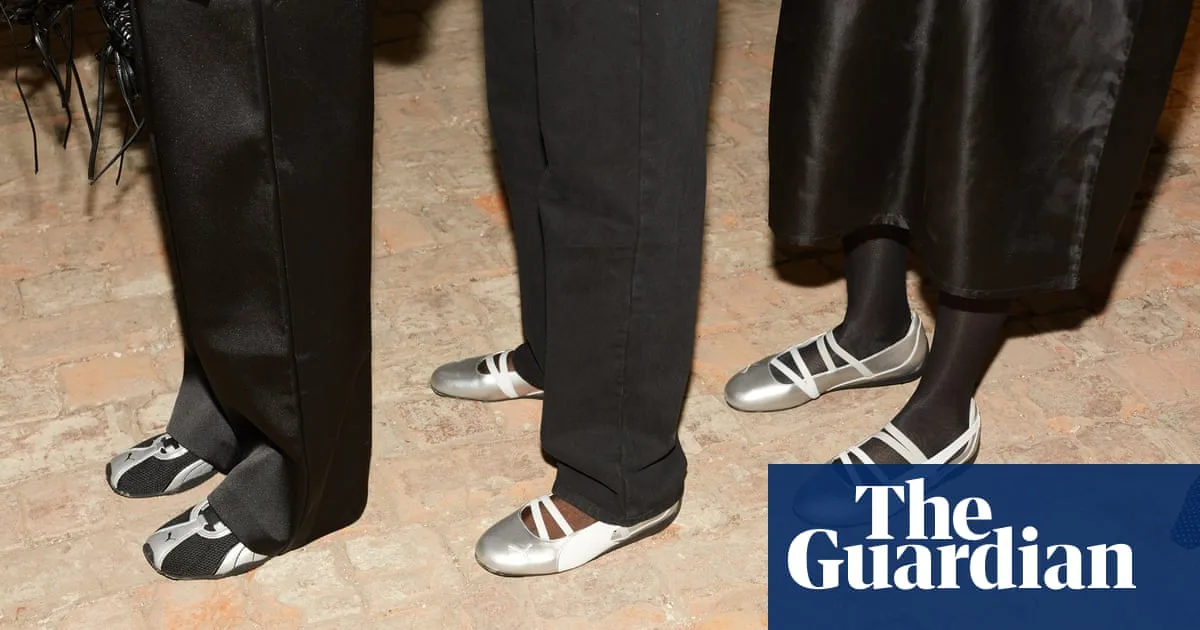
The sneakerina, a hybrid of a ballerina flat and a sneaker, has emerged as a key footwear trend for spring. The upper features delicate details such as bows and an almond-shaped silhouette, while the sole is replaced with a chunkier, heavy-duty version typically found on a sneaker.
Despite sounding unappealing in theory, the combination is enticing consumers. A £730 suede version from Miu Miu, with a scuff-proof rubber sole and Velcro strap, has sold out, as has a £75 satin and ruched style from Charles & Keith. Joy Montgomery, shopping editor at British Vogue, attributes their popularity to "the evolution of fashion’s ugly shoe narrative".
Simone Rocha was among the first to experiment, debuting her "ballet tracker" shoes in 2020 with a heavyset sole and crisscross straps adorned with pearls and crystals. She describes them as "a perfect blend of a traditional ballet style shoe, but still sporty". A collaboration between Danish designer Cecilie Bahnsen and Asics last year sold out within 10 minutes, with pairs now fetching triple the original price on resale platforms.
Puma has also given its Speedcat sneakers a ballet twist for 2025, inspired by archive ballet flats, with pre-sewn elastic straps and a metallic finish. The Speedcat originally launched in 1999 and has recently replaced the Adidas Samba, after Rishi Sunak wore the latter, killing its cool.
The trend extends beyond sneakerinas. New Balance released its "Snoafer" last year, blending a sneaker and penny loafer, while Hoka has launched "Speed Loafers", a cross between a dress shoe and a trail runner. Kiko Kostadinov's Lella features a raised sole, faux fur lining and grosgrain ribbon fastenings, described by its designers as blending classically feminine garments with practical speediness.
Montgomery credits the stylist Annabelle Bornstein's viral "wrong shoe theory" for the trend's success. She suggests wearing sneakerinas with smart tailoring, as the pump introduces an edge to formal or corporate items.