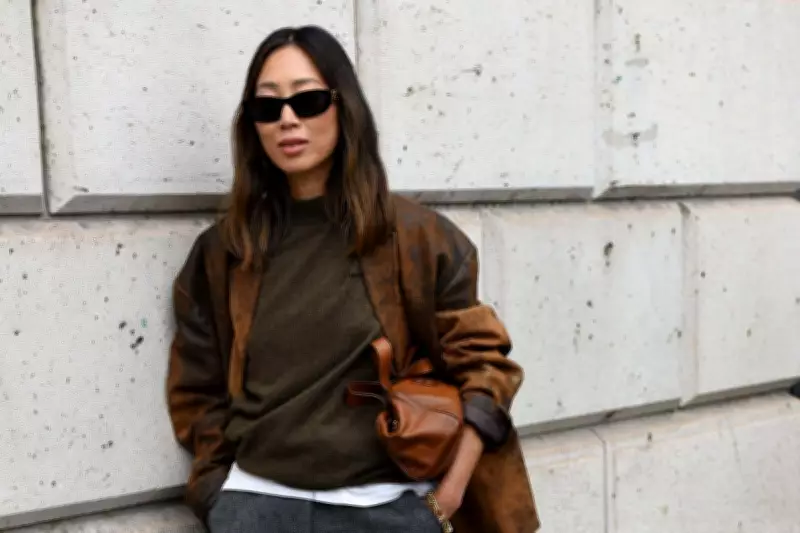
Seven Expert Styling Tricks to Make Affordable Clothes Look Luxurious
You do not require a designer budget to achieve a polished and sophisticated appearance. According to leading fashion stylists, transforming high-street pieces into premium-looking garments is less about the price tag and more about implementing subtle, strategic adjustments. From precise tailoring to disciplined colour coordination, here are seven proven methods to elevate the clothing you already own.
1. Incorporate Structure into Every Ensemble
"For an instant transformation, adding shoulder pads to almost any garment works every single time," explains celebrity stylist Deborah Sheridan-Taylor. Insert them into a sweater, blouse, blazer, or even a coat, and the silhouette immediately becomes more streamlined and refined. "Watch the perceived value multiply before your eyes," she notes. While the dramatic Eighties shoulder has dominated fashion week runways, this added structure creates a stronger line through the shoulders, making the waist and overall proportions appear more considered and, consequently, higher-end.
Luxury fashion stylist Oriona Robb concurs that small, proportional tweaks are paramount. "It is about looking as though you intentionally wore it that specific way," she states. "A half tuck, properly pushing sleeves up, adding a belt, or swapping the shoes can suddenly make an outfit feel meticulously styled and significantly more expensive."

2. Tailoring is Absolutely Essential
Many individuals believe that tailoring should be reserved solely for investment pieces, but in reality, spending money on tapering a pair of high-street jeans can make them look as though you have spent triple the original cost. "Transformative, non-negotiable, and wildly underestimated," is how Sheridan-Taylor describes the art of tailoring. She emphasises that trouser length is critical. "Even the most luxurious trousers can appear subpar if they are hemmed too short. Opt for a super-long length or reconsider entirely."
She also recommends subtle adjustments such as reshaping sleeves, which she terms "banana-ing" – turning a cuff into a curved hem – nipping in a blazer at the waist, or removing bulky pocket bags from trousers to streamline the front. Robb highlights similar details, noting, "If trousers are bunching or dragging, it immediately looks off. In high-street tailoring, arm and leg lengths are often shorter to save on fabric costs, which can make a piece appear cheaper, particularly if it is short in the arm." However, making a piece longer is more challenging, so stylists suggest purchasing a larger size and then paying for professional hemming or shortening. A skilled tailor can make an average piece feel entirely bespoke.
3. Size Up for Superior Drape and Fit
This leads directly to one of Sheridan-Taylor's most frequently repeated rules: "Size up." She explains, "When fabric is under strain, every weakness becomes visible – seams, lining, stitching. It immediately lowers the perceived value." Going up a size, sometimes even two, allows the fabric to drape elegantly rather than cling unflatteringly. The silhouette becomes more fluid, relaxed, and ultimately more expensive-looking. Strategic adjustments can then be made to refine the fit precisely. Robb adds that when pieces do not fit properly underneath or feel overly tight, they can instantly cheapen an entire look. Therefore, ignore the size on the label and focus on the lines when wearing the garment. This may vary between shops, so trying items on in person is essential.
4. Select Fabrics with Care and Consideration
"Fabric is usually the primary giveaway," asserts Robb. Pieces with weight and texture, such as proper cotton shirting, 100% wool, and linen, tend to hold their shape excellently and photograph well. Sheridan-Taylor would always prefer to buy luxury items second-hand rather than mediocre new pieces, prioritising natural fibres like cashmere, camel hair, merino wool, silk, and gabardine. She explains that synthetic fabrics can sit poorly on the body and rarely improve with wear. "Natural fibres soften and develop character over time."
Print is another crucial detail to focus on. "High-street prints are often overly recognisable and date quickly," she observes. Strong, plain colours tend to look more timeless and, in turn, more expensive.

5. Master a Tonal Colour Palette
Print naturally brings us to colour, which can add more perceived value than one might initially think. "I am a firm believer that going tonally – committing to one colour from head to toe – is the single fastest route to an expensive finish," declares Sheridan-Taylor. Tonal does not mean monochromatic; instead, opt for combinations like chalk with ivory, olive with moss, or navy with cobalt. Robb agrees that more pared-back colour combinations work best. "Creams, browns, soft greys, and navy layered together look effortless and timeless."
This does not mean avoiding bold colours entirely. Sheridan-Taylor suggests pairing unexpected shades but keeping them aligned with primary, secondary, and tertiary colour palettes, such as a brown pencil skirt with an Oxford blue shirt and a tomato-red knit. This ensures the combination remains harmonious rather than chaotic.
6. Let Accessories Perform the Heavy Lifting
"An absolutely integral and entirely underestimated role," says Sheridan-Taylor regarding accessories. Oversized 1970s-inspired sunglasses or small Nineties frames can instantly elevate an outfit. Layered jewellery in mixed metals, chunky earrings, or long pendants can add richness and depth. Brooches worn in place of basic buttons can make a classic cardigan look cooler and more elevated. Belts, Robb explains, are another tool that can provide structure and break up proportions in a flattering manner. A vintage leather bag with a natural patina paired with simple jeans and a white T-shirt can effectively bridge the gap between high street and high end.
7. Avoid Common Styling Mistakes
The fastest way to undermine an otherwise excellent outfit is to overcomplicate it. "Creases, worn-out shoes, too many trends layered together," Robb lists, are all elements that can cheapen your look. "The outfits that feel the most expensive are often the simplest ones." Investing in high-quality basics, like good cotton T-shirts, is fundamental. Sheridan-Taylor also warns against wearing head-to-toe high street. Mixing in something vintage – whether a 1970s blouse or an Eighties bag – creates a uniqueness that fast fashion cannot replicate.
Ultimately, looking expensive is not about logos or labels. It is about proportion, fabric, colour, and meticulous care. As both stylists suggest, when an outfit appears unique and intentionally curated, it will always be perceived as premium.