Bayreuth's festival, celebrating its 150th anniversary, remains the ultimate destination for Wagner enthusiasts, despite its notorious lack of padding, absence of air conditioning, and a program exclusively dedicated to one composer's works. Tickets for this summer's edition sold out in 90 minutes, a testament to its enduring allure.
A Test of Endurance
The festival's seating, modeled on ancient Greek amphitheaters, offers unbroken rows with minimal padding, promoting a communal experience but testing physical stamina. A friend's advice to borrow a cushion proved vital, as the auditorium's design demands much from the audience, with one veteran warning against even the slightest movement.
Despite the strict etiquette, modern intrusions persist, with phones clattering and pinging during performances, much to the chagrin of self-policing audiences.
The Mystic Gulf and Its Challenges
The orchestra pit, deep and almost entirely covered, creates Wagner's 'mystic gulf,' offering a unique acoustic that gives the orchestral sound a luminous sheen. However, the pit's oppressive heat forces musicians to perform in T-shirts and shorts, with a small air-conditioning unit providing only minimal relief.
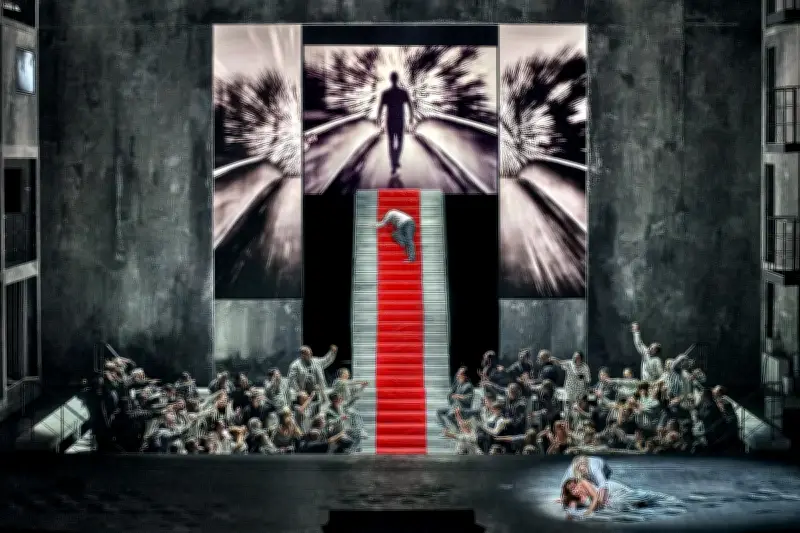
Bayreuth's lack of surtitles, a legacy of Wagner's immersive vision, poses challenges for non-German speakers. This year's 'AI Ring' production, with its shifting projections and identical costumes, left even seasoned attendees lost, prompting one American visitor to abandon the festival for Munich.
A Mixed Verdict
The critic remained, finding the score's spectacle enhanced by the acoustic, yet felt emotionally detached due to the staging's visual clutter. The production's lack of storytelling was a point of contention, especially given the festival's reputation for Regietheater, which often sparks debate among attendees.
Bayreuth's exclusive focus on insiders contrasts with other venues' accessibility efforts, though its loyal audience and restricted repertoire—just 10 operas—ensure its mystique remains.