Former Salford dockers are being invited to a reunion at the premiere of a short film about a lost world where fathers and sons toiled among whiskey, cotton and banana boats. The event takes place at Lower Kersal Social Club on October 22.
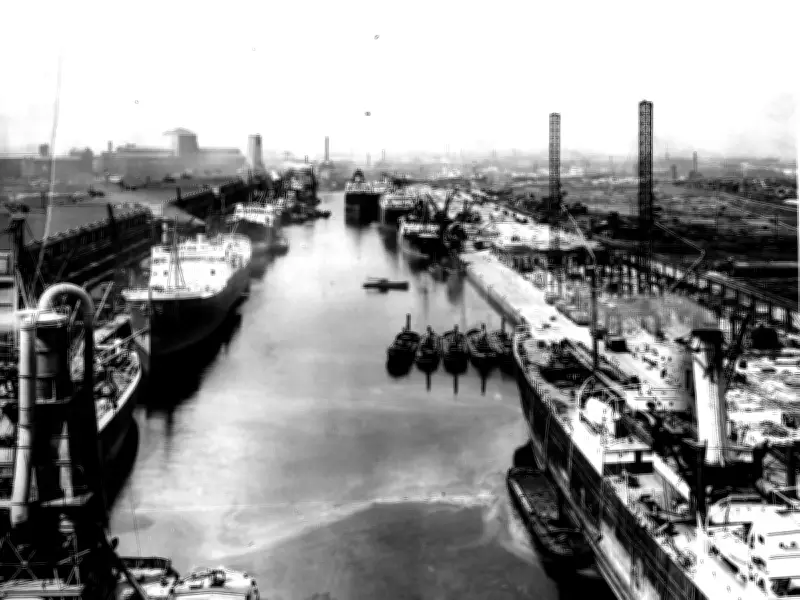
The docks, which employed 5,000 in the 1950s before closing in 1982, shaped the identity of Salford for decades. They were built as part of the Manchester Ship Canal, which opened for traffic from January 1, 1894, at a cost of more than £15m, equivalent to £2.1bn today. The 36-mile waterway from Salford to the Irish Sea was forged by 17,000 navvies over six years, with hundreds losing their lives in landslides and accidents.
Film captures dockers' memories
The film's makers interviewed five former dockers and family members at length. That full archive will be handed over to Salford council for future educational purposes. In the film, Rob Salt, who worked as an electrician at the docks, was the last person to operate one of its huge cargo-lifting cranes. He laments: "All my life I worked on the docks. Best days of my life really on there."
"People don't talk about the docks anymore. I think they should know it was a working dock. I think we should keep the history alive." Others reflect on how the docks were at the heart of Salford and were the bedrock for a huge community taking in Ordsall, Weaste, and Langworthy - and how the profession was a "brotherhood".
Reunion organised by distillery co-founder
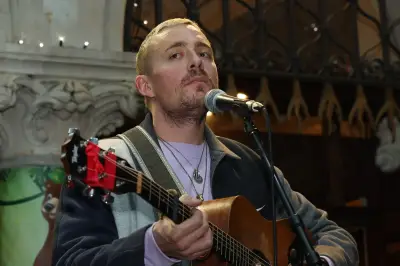
The reunion has been set up by Tommy Gaugan, co-founder of Salford Distillery based under the railway arches in Viaduct Street in Blackfriars. As they arrive, the dockers will get a tot of his company's new rum. Tommy said: "We set up as a company in 2018 and ever since day one have been inspired by the imports that were coming through Salford docks. Back in the day it has the rum coming from the Caribbean."
"We interviewed five former dockers but also family members as we wanted the film to cover not just the work on the docks but the life of their wives and children. We put out a call on social media which resulted in 150 responses from people who worked on the docks or were related." "For the film we chose a small number so it was intimate. On the day of the premier we are expecting up to 200 to attend. It is an opportunity for the dockers to get together. When we did the filming some of the guys had not seen each other for 20 to 30 years. It was poignant to capture them meeting again."
The film is a short version of the interviews. The full archive footage has most people speaking for about 30 minutes and that will be given to the council. "Hopefully it will live on and be available for future generations." "We have had discussions about setting up a booth at the distillery which people can use to record their own memories of the docks which can be added to the archive."
Dockers' tough lives recalled
During the Second World War German bombers targeted the docks, with a raid on December 23, 1941 causing major destruction. In her book of 'poetic reportage' - which chronicles the history of the Salford Quays and Manchester Ship Canal - Lynn Pegler explored the toughness of a docker's life. 'Salford Quays Unlocked - Voices of Manchester Docks', a collection of poems by Lynn recalls the docks around 1900 when men worked for 6d (two and a half pence) an hour, the equivalent of £4 today.
Twice a day men reported to the dock gates in the hope of being picked for work. Lynn's poem, 'Docker's Tanner' is the voice of a man hoping to get casual work, talking to his wife, after not being chosen. The heartbreaking final verse captures his despair: "It's your brave little face that gets me, not showing outside that you care, making one meagre meal last for seven, backing me when the world is unfair."
The same spectacle, but in later years is touched on by retired docker, Jim Moran, in the film commissioned by Tommy Gaugan. Jim, who worked in the docks from 1968 until it closed, says: "You had two and a half thousand dockers fighting for work."
In a Manchester Evening News interview, former Salford ceremonial mayor, George Wilson, recalled his days as a crane operator on the docks. He would climb into the 90ft high cabin of one of the towering blue cranes every day. As a docker, he had one of the most dangerous jobs - working a swaying winch lifting cargo on and off ships. George started work as a docker in 1965, earning £8 a week.
"We went to training school for weeks, doing a course on tying knots, driving a fork-lift truck, how to load and unload a ship," he said. "After training, you would get a pink book, but no one would employ pinkies, because you were regarded as an apprentice, with no experience as a docker." "The foreman always wanted experienced dockers. So what I did, my dad worked on the docks, and I took one of his old books, and got work." "It was one of the hardest, toughest jobs, manually. A lot of people have called dockers lazy, but it was tough and dangerous. I saw seven blokes get killed while working there."
"I remember the first. There was an entire family working on the docks, father and sons. A reel of paper came loose from a crane, and fell on one of them." "It was heartbreaking watching four brothers trying to tear paper off him. I used to watch two of my mates operating the cranes inside the cabs, and it was amazing." "I then became one myself, I seemed to have a knack for it, and if you were good at your job you got bonuses. Not many people drove the cranes because they swayed so much."
"I lifted everything, copper, ore, cotton. Dockers had to physically shovel ore into buckets, it was a back-breaking job." "Because of the lamp black (material produced by combustion of heavy petroleum products, such as coal tar) your sweat would be black coming through your pores, your shirts would be black." "There would be whiskey boats, cotton and banana boats. There was good camaraderie, great friendship, and a good community." "People talk now about diversity - but it was there then. Maltese, Jamaicans, Africans, English, Irish, Hungarians, Polish; every nationality. These were the dockers, not those on the ships."
In 1979, George and PC John Gilbert received awards from the Liverpool Shipwreck and Humane Society for rescuing a drowning man from Dock 9. "I was working in a crane when I heard a shout saying a man had thrown himself in the water," George said. "But his raincoat was holding him at the surface, like a buoyancy aid." "I jumped in and did a doggy paddle to him, pulling his raincoat in my teeth, and dragged him back towards the side. Then a bobby jumped on top of me." "It was that cold I couldn't get out, there was ice on the water. But between us, we saved him."
As a councillor in later life he fought in vain for the two iconic cranes at the old entrance to the docks to be saved as the once barren land around them was transforming into Salford Quays. The two Stothert and Pitt manufactured DD2 cargo cranes originally towered over Dock 6 and then Dock 8, before being pulled apart. He said: "I fought for ten years to save them. They were part and parcel of the docks history. You look now at old docks in Liverpool, London and Bristol and cranes are there as a legacy of what used to be." "I tried to persuade the council to save them." A last ditch application to get the government to get them listed, and so protected from demolition, failed.
New rum to mark Salford's centenary
The reunion will feature poetry about Salford - and the first pour of a new and limited release from Salford Distillery, specially created to mark 100 years since Salford was officially granted city status by King George V. The dockers and their families will be the first people to taste it. Former dockers and their families are being invited to enter a free ticket ballot, with up to four tickets available per entry. The ballot closes at midnight tomorrow (Sunday October 18th).
The screening and reunion takes place on Thursday 22nd October at Lower Kersal Social Club, Stamford Rd, Lower Kersal, Salford M7 3SD, with doors at 6.45pm and the event beginning at 7pm. Enter the ballot for up to four FREE tickets by filling in THIS FORM. Over 18s only.