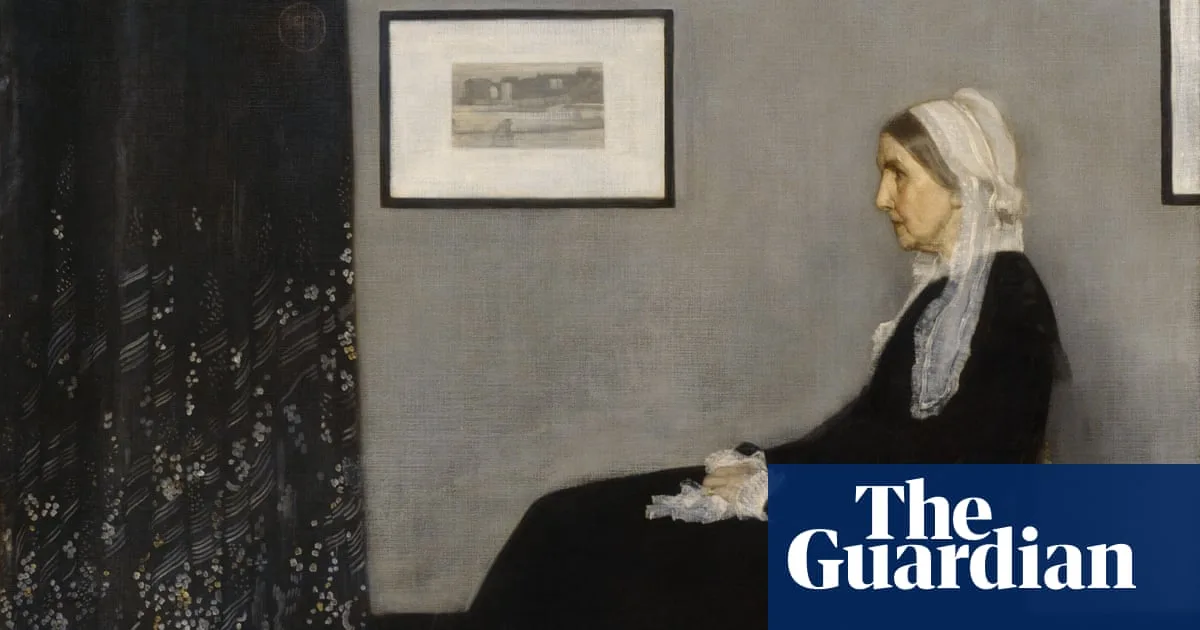
When his 15-year-old model ran off, James Abbott McNeill Whistler turned to his mother Anna to pose for what would become one of the most iconic paintings in American art history. Known formally as Arrangement in Grey and Black No 1, the portrait has been hailed as America’s Mona Lisa. This month, for the first time in nearly two generations, it returns to London, where it was painted in Whistler’s Chelsea studio, as part of Tate Britain’s Whistler exhibition.
The painting’s restorer, who worked on it for the Musée d’Orsay, notes that Whistler is the only artist whose portrait of his mother has achieved such superstar status. The artist was a larger-than-life personality, known for his sharp wit. The young Oscar Wilde once said, ‘I wish I had said that,’ to which Whistler retorted, ‘But you will.’ Walter Sickert, Whistler’s assistant, called him ‘a beacon of light and happiness’.
Yet when Anna sat for her son in 1871, the painting’s success was far from assured. Whistler’s life was at a low point, and London critics panned his work. He had moved from Paris to London, where the art scene was stagnant. After the initial success of At the Piano (1858), his career had declined. English collectors expected narrative paintings, but Whistler pursued what he called ‘the poetry of sight’.

The portrait came about by chance. A 15-year-old model had run off, and Whistler asked his mother to pose instead. Painted on the reverse of a used canvas, the work shows Anna seated, with a footstool possibly serving as a footwarmer in the cold studio. Whistler’s minimalist background was a stark contrast to the Victorian fashion for clutter. When exhibited at the Royal Academy, critics were perplexed; one called it ‘not a picture’. Only after the French government bought it in 1891 did Britain recognise its value.