The most interesting thing about The Uprising is the marketing mess it embroiled itself in, just weeks out from release, when the studio blinked last minute and suddenly unveiled it as a 'Robin Hood origin film' in America. However, the UK distributor disagreed and stood firm in its conviction that this movie was about the Peasants' Revolt instead.
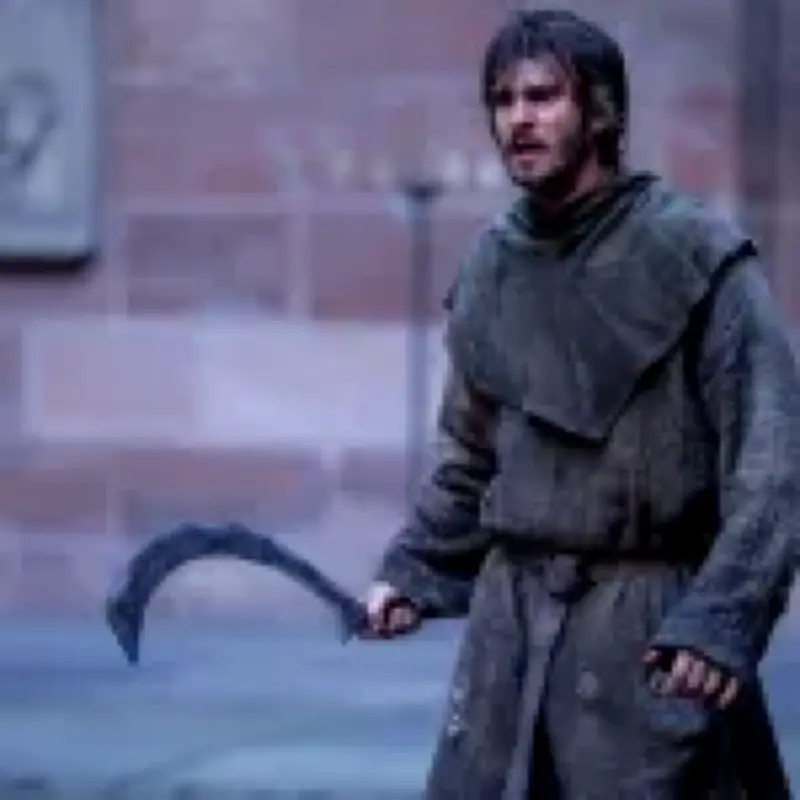
A lot of this confusion remains, given the dates don't match for Robin Hood (we're about 200 years too late here) and there is no proper attempt to tie in that legend, other than by Andrew Garfield donning a hood and wielding a bow and arrow after nearly two hours to hold up a carriage, and the link of his name to a poem referencing the folktale.
Maybe that's enough for US fans, but it makes for a distracting and quite painful conflation for anyone British who remembers their school history lessons – and very odd so far into the film. It's nonsense 'context' we wish we'd never been distracted with, especially because this period is largely unexamined in cinema and could speak for itself.
Plot and setting
The Uprising opens in England in 1381, where plague has killed half the population and 'grief encapsulates the rest', who are mourning their loved ones. This is succinctly demonstrated by Garfield's character – known only as Ploughman – and the empty space next to him in his bedsheets. Life is very hard and mud-spattered, with the film making a decent attempt to engage with the politics of the time, even if it's a little oversimplified.
With a boy king on the throne in the shape of young Richard II (Woody Norman), who has only his strident mother Joan of Kent (Katherine Waterston) for protection, royal advisors insist more money is desperately needed 'or else our kingdom will surely fall'. Their solution is to once more tax the common people, and in the process save themselves, which, yes, is a familiar set-up here with Robin Hood – but it's hardly an usual state of affairs during Britain's history.
However, when they come to his village it transpires Garfield's Ploughman has a deep well of rage to draw from – this film more than once reveals his 14th-century equivalent of a Hulk smash – as he protests being pressed for further money, be it either the king's new poll tax, levied per head, or the death tax once again, which he cannot prove he's already paid.
Characters and performances
Uncomfortably violent and invasive scenes ensue as the men of the lord on whose land these people live and work as serfs attempt to take payment, but Ploughman pushes back before teaming up with real-life figures, radical priest John Ball (Jamie Bell), who has been denounced as a heretic for his sermons pushing for social equality, and soldier Wat Tyler (Cosmo Jarvis), the famous leader of the Peasants' Revolt – and the part many assumed Garfield was playing for a long time.
But even though it's ostensibly Garfield's film, The Uprising doesn't seem personal enough to any one character. These three lead figures have little to work with from writer-director Paul Greengrass's script, other than a lot of anger, even though they are doing their best as fine actors. Garfield has always been an exemplary actor, especially when it comes to grief and emotional pain, but he ends up trapped at the same level of heightened emotion throughout.
There is some welcome relief from the slog of misery though, thanks to the king's dastardly advisers, out to protect their own coffers, with good panto villain energy present from the likes of Tom Hollander as Sir Robert Hales, with Stephen Dillane's bishop in back-up alongside Jonny Lee Miller as Sir William Walworth, the Lord Mayor of London. They panic while the throng of peasants draws ever closer in their march to London to be heard by their oppressors.
Direction and verdict
Greengrass shoots The Uprising with his recognisably scrappy handheld technique, offering documentary style realism to history from 650 years ago, but it often leads simply to chaotic cinematography, complicated further by the grey and green sludge colours and ill-defined masses of people.
Non-noble characters are hidden behind mud, anger and accents – although there is also a female ally of Ploughman's, Alyce (Thomasin McKenzie), a follower of Ball's and a fictionalised amalgam of the women involved in the rebellion. Greengrass does build up more varied energy and stakes away from the baying masses when the king finally engages with his subjects, and the Domesday Book is brought forth, but The Uprising is otherwise consistently bleak and monotonous in both tone and pace.
It's also a brutal film, sometimes to the point of seemingly revelling in it, which then undermines the power of its impact. The Uprising did not help itself with the Robin Hood marketing mess, but even without that distracting drama it's a slog of a misery movie – despite some great acting. The Uprising is in cinemas from Friday.