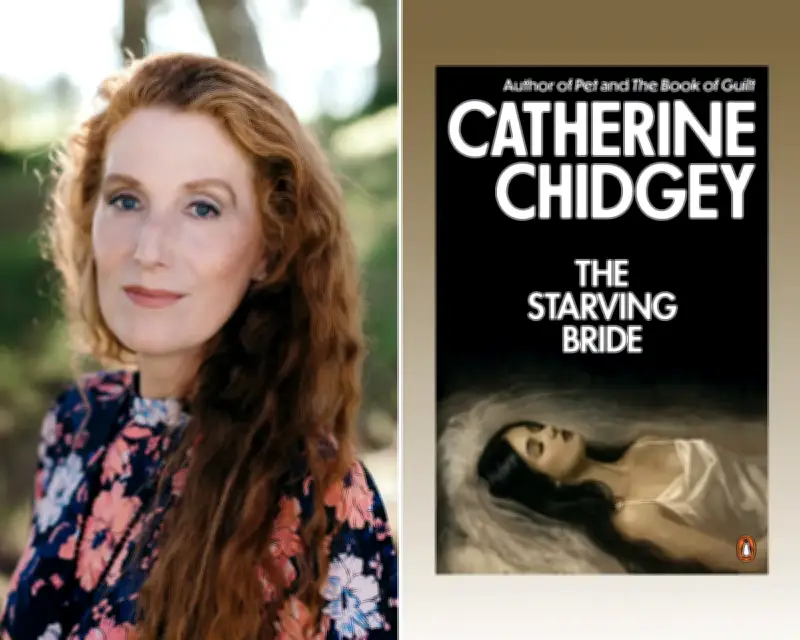
Catherine Chidgey's ninth novel, The Starving Bride, is a gorgeously written gothic tale set in a near-future where a young woman wastes away in a glass coffin. However, the book feels tame and almost quaint against the real world of GLP-1 drugs and looksmaxxing.
The novel was inspired by a 1930s newspaper report of a bizarre pay dispute. A young woman had "undertaken to fast for 40 days and 40 nights in a lion's den" as an attraction in Blackpool, but abandoned the feat partway. Her employer claimed she had broken the contract; the woman claimed the lion was at fault – it had been set loose.
A near-future restaging
The Starving Bride restages this big-cat sideshow act in a near-future where old-timey attractions are being revived in the hope of reviving something else: "A sense of nostalgia, that was the thing. A sense of innocence. Even if the stags and hens still vomited in the gutters." The sea is rising; the buildings are crumbling; the city is beset by poverty; and the bureaucrats are masters of denial and delay. But at night, on the boardwalk, the lights are shining and the past is alive again – England in its imagined prime (the tourist board hashtag: #Asimplertime).
Visitors can play bingo, have a slice of tearoom cake, enjoy the minstrels and their blackface antics, and watch a pretty girl in a wedding dress waste away in a glass coffin, while a male lion waits. The story the showmen tell punters is that the bride is saving for her dream wedding; starving for love. But the world Chidgey conjures offers darker possibilities: climate inaction, extractive economics, the beauty industrial complex, the baying hungers of Brexit, coercive control.
The bride in the box
The bride in the box is Hazel. She's newly dumped and carrying a mortifying secret, a deep and corrosive shame. That's the attraction of the Blackpool gig: a chance to emerge from the coffin as someone else. The starvation is just for show; after hours, Hazel can do – and eat – whatever she likes, as long as she stays backstage to keep up the ruse. But there's something intoxicating about making the fairytale true. Hazel fasts and the crowds gather: mostly mothers and daughters, come to worship at this silent altar of erasure ("They don't want chit-chat from you," Hazel is warned. "They want suffering"). The skinnier she gets, the sleeker and more restless the lion.
Chidgey has created a gauzy version of the near future. But we live in a cruelly specific time for bodies: a world of GLP-1 drugs and looksmaxxing, where the stories we tell about flesh are being twisted into grotesque new knots. The Starving Bride is set in the aftermath (or next incarnation) of these Insta-noxious years, but the world it conjures is almost quaint in its self-hatred (and certainly myopic when it comes to gender). The plot feels tethered to a version of life – particularly online life – that already belongs to the past.
A nostalgic novel about nostalgia
And so we have a nostalgic novel about nostalgia; or perhaps just a naive novel about the present. The Starving Bride begs comparisons, as did Chidgey's last novel, The Book of Guilt. By the end, the reviewer had a list of books they were itching to revisit: Margaret Atwood's The Edible Woman (1969), Marian Engel's Bear (1976), Patrick Süskind's Perfume: The Story of a Murderer (1985), Angela Carter's Wise Children (1991), Don DeLillo's The Body Artist (2001). All of them decades old, and all of them far stranger than this one: more sensual, more feral, more meat on their bones.
For all its leonine rumble, the great surprise of the New Zealand author's ninth novel is how tame it all feels, especially given her capacity for top-shelf weirdness (see The Axeman's Carnival and Pet). This vaudeville gothic is gorgeously written, but it has arrived at a moment when literary hunger has been set loose. The last decade has seen a glut in greedy novels: tales of perimenopausal wolf-women (Nightbitch, Rachel Yoder); ravenous lovers (A Certain Hunger, Chelsea G Summers); marrow-sucking aliens (Earthlings, Sayaka Murata); new sources of meat (Tender is the Flesh, Agustina Bazterrica); culture-shaking refusals (The Vegetarian, Han Kang). Cannibal-lit has become its own sub-genre: all crunch and munch and gizzards and guzzle. Books in which our appetites are allowed to become truly monstrous, where bodies leak and rot.
Against this feasting, festering backdrop, The Starving Bride is positively decorous. Chidgey's epigraph reads: "For our younger selves, who were beautiful already." The impulse is kind: a counter to all that wild and weighted shame. But it's also possible to read the novel as a fable about conquering your unruly hungers – mastering your inner lion. The Starving Bride by Catherine Chidgey is out now in Australia (Penguin; $34.99) and will be published in the UK on 14 January 2027 (John Murray Press).