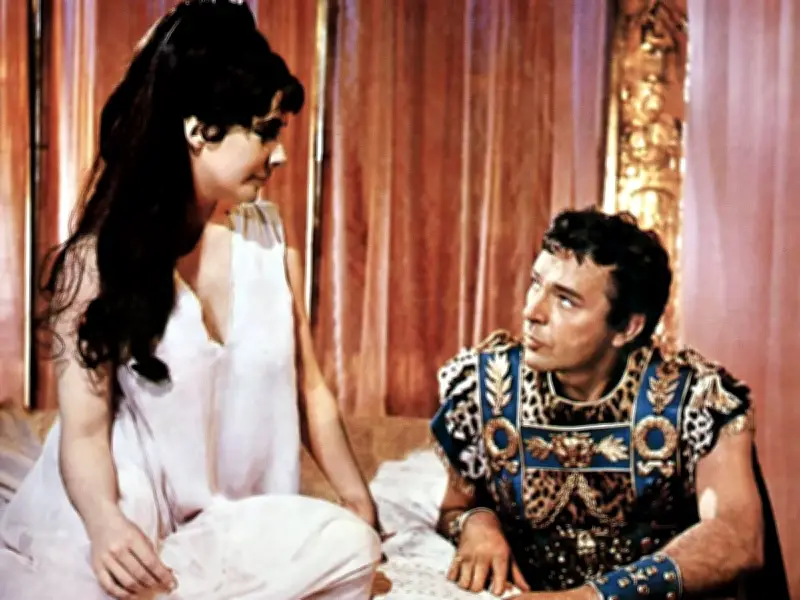
The Oscar-winning 1963 biographical epic Cleopatra, starring Elizabeth Taylor, airs on Film4 this Monday afternoon at 4:15 pm. Critics have hailed the film as a "memorable epic" and a "monumental spectacle."
The film charts the life of Cleopatra, beginning in 48 BC when Roman general Julius Caesar arrives in Alexandria and encounters her. A relationship develops as she enlists his help in seizing the throne from her brother, Ptolemy XIII. With Caesar's backing, Cleopatra secures sole rule over Egypt, and the alliance sparks political upheaval in the years that follow.
Cleopatra later becomes entangled with another influential figure, Mark Antony, in both a political and romantic capacity, enraging powerful forces in Rome and ultimately triggering war and tragedy.
A Production Plagued by Drama
Behind the scenes, the production proved nearly as dramatic as the subject matter itself. Initially budgeted at $2 million, costs spiralled to an eye-watering $44 million - approximately $470 million in today's terms - establishing it as one of cinema's most expensive ventures.
Shooting first started in London, but Elizabeth Taylor developed serious pneumonia and needed an emergency tracheotomy. Production ground to a halt for months, and with the English weather appearing unsuitable on screen, the studio abandoned the costly UK sets and relocated everything to Rome, starting from scratch.
The spiralling costs nearly bankrupted 20th Century Fox, forcing the studio to suspend other active productions and enforce drastic cost-cutting measures. Due to the protracted production schedule, two main actors had to be replaced, necessitating scenes to be reshot.
Scandal and Record-Breaking Contracts
Elizabeth Taylor and Richard Burton, who portrayed Mark Antony, embarked on a notorious affair that dominated headlines at the time, despite both being married to other people. The media frenzy surrounding the scandal was so intense that the Vatican intervened to publicly condemn it.
Elizabeth Taylor made history by becoming the first actor ever to sign a $1 million contract for a single film. Due to extensive filming delays and overtime clauses, she ultimately pocketed closer to $7 million.
Legacy and Critical Acclaim
Despite the turmoil, the film secured nine Academy Award nominations, including Best Picture. It won in the categories of Best Art Direction, Best Cinematography, Best Costume Design, and Best Visual Effects.
The film's legacy is that it effectively ended the golden age of old-Hollywood big-budget historical epics, as studios grew scared of allowing individual productions to have such colossal budgets.
On Rotten Tomatoes, critics call it "absolute cinema. It's four hours that pass in four minutes," and a "monumental spectacle, with a stirring performance by a radiant Elizabeth Taylor, arguably the 'Most Beautiful Woman In The World'."
One admirer wrote: "Beautiful sets, good acting, and a determination to make an excellent film, show in every scene. Not a perfect film, but still quite excellent as it is." Another user said: "Just brilliant. My favorite version of the queen by far. The acting, the sets, the soundtrack, the story, the fiery chemistry between Taylor and Burton. I loved absolutely everything. 10/10."