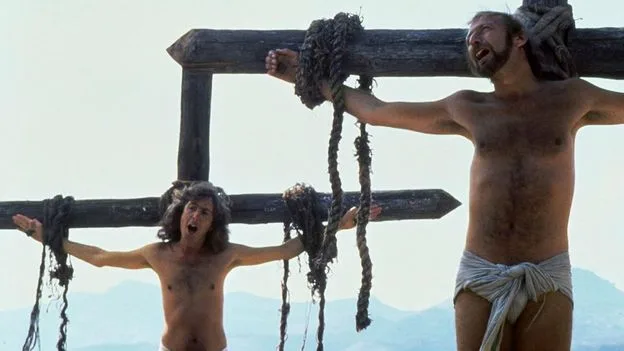
Forty years after its release, Monty Python's Life of Brian continues to provoke discussion, with fans uncovering new layers of meaning in the controversial comedy. The film, which was initially banned in several countries for blasphemy, went on to become a box office hit, partly thanks to the protests that boosted its publicity.
The idea for Life of Brian originated when the Python team was promoting Monty Python and the Holy Grail. Eric Idle joked about a film called 'Jesus Christ: Lust For Glory', but after researching Jesus, the team decided there was little to ridicule in his life. Instead, they created Brian, a hapless man mistaken for the Messiah in Roman-occupied Judea.
The film's satire targets political militants, credulous crowds, and other targets, rather than Jesus himself. Despite this, EMI's CEO Bernard Delfont refused to fund the project after reading the script. The film was saved by ex-Beatle George Harrison, who remortgaged his house to provide the £2 million needed, a bail-out later called 'the most expensive cinema ticket' ever issued.

Harrison's investment was notable given his experience with religious backlash; in 1966, John Lennon's comment that the Beatles were 'more popular than Jesus' sparked protests and record burnings. Harrison remained unruffled, arguing that Christianity should withstand discussion. Life of Brian faced bans in Ireland and Norway, and protests in the US, where Rabbi Abraham Hecht called it 'foul, disgusting, blasphemous'. Terry Gilliam noted the protests were 'fairly ecumenical', uniting Catholics, Protestants, and Jews against the film.