Steve McQueen Reveals Robert Duvall's Nerves on Widows Set
McQueen on Duvall's Nerves Filming Widows

Steve McQueen Reflects on Working with Robert Duvall

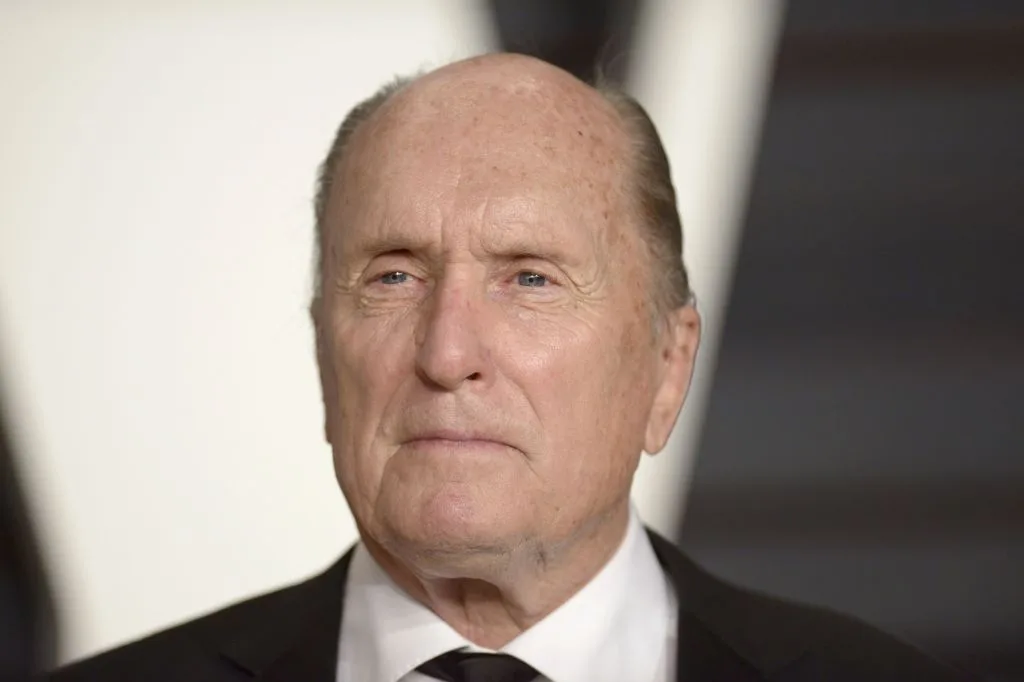
Acclaimed director Steve McQueen has opened up about his experience working with the legendary actor Robert Duvall on the 2018 thriller Widows. In a revealing interview, McQueen shared that Duvall, who was cast as politician Tom Mulligan, displayed unexpected nervousness despite his decades of experience.

The Nerves of a Veteran

McQueen recalled that Duvall was approximately 88 or 89 years old during filming. "He came on the set – this icon – and we got talking, about London," McQueen said. "He started telling me about Michael Caine and all these cockney phrases that Michael must have told him. We're getting on all right – and then all of a sudden, he gets a bit annoyed."

The director admitted he was initially confused by the shift in mood. "It got to a point where I didn't really understand what was going on, as we'd been having a good time," McQueen explained. "It turned out he was nervous. He was as nervous as Cynthia Erivo was, whose first ever film role it was."

Wide Pickt banner — collaborative shopping lists app for Telegram, phone mockup with grocery list

This revelation left McQueen astonished. "And I was gobsmacked – he's been doing this for I don't know how long, back to the 1960s, and then I realised that, for him, it's brand new every time," he said. "That's a sign of a great artist: he doesn't rely on what he's done before he's going into it."

Memorable On-Set Moments

McQueen shared several memorable anecdotes from the Widows production. One particularly amusing incident occurred during a scene with Elizabeth Debicki where her character gets shot by Duvall's character and falls on top of him.

"We had to hold the shot at that point, with them in position," McQueen described. "He's holding her up, they are like face to face – and then he starts to sing 'Getting to know you, getting to know all about you' from The King and I. Amazing."

Another remarkable moment involved Duvall's wife arriving on set with what appeared to be spy equipment. "She opens up this briefcase, it's almost like a spy movie, and then she gets out a telephone headpiece with a microphone and starts talking into it," McQueen recalled. "I realised Bob had an earpiece and she's reading him his lines – they're doing a Brando! That made me laugh."

The Essence of a Great Actor

McQueen praised Duvall's acting approach, noting that "everything is on the surface so it can be manipulated in the scene to get the best out of it." He emphasized that Duvall "puts everything out there, for the film" and described him as "a proper artist" willing to take creative risks.

The director pointed to Duvall's work in The Apostle, which Duvall wrote and directed, as evidence of his ability to "conjure things up" and connect with audiences. "The congregation in the movie are with him because he can stir the pot in the way that the character does," McQueen observed. "He could do that because he's a great actor, and not everyone's a great actor."

The Foundation of Great Cinema

McQueen reflected on Duvall's essential role in cinema history. "I think what made him what he was, was that in the telling of any story he was the rock. He brought gravity," he said. "Everything would have flown away if he wasn't pulling it together."

The director went further, stating that "without him, there is no Pacino, there's no De Niro. You need those rocks." He also noted Duvall's background as the son of a rear admiral in the US navy, suggesting this military influence informed his performances, particularly in Apocalypse Now.

A Legacy of Artistic Autonomy

McQueen highlighted Duvall's remarkable range and independence as an artist. "Look at his range: an actor, writer, director," he said. "He bet on himself. When he said he wasn't going to do Godfather III, he knew himself."

Pickt after-article banner — collaborative shopping lists app with family illustration

The director noted Duvall's diverse projects, from writing songs in Tender Mercies to starring in a tango movie. "He had autonomy as an artist," McQueen emphasized. "And that's the thing about Duvall. He always bet on himself. And because of that he died happy."

McQueen's reflections offer a rare glimpse into the working relationship between two cinematic talents and underscore why Robert Duvall remains one of the most respected figures in film history.