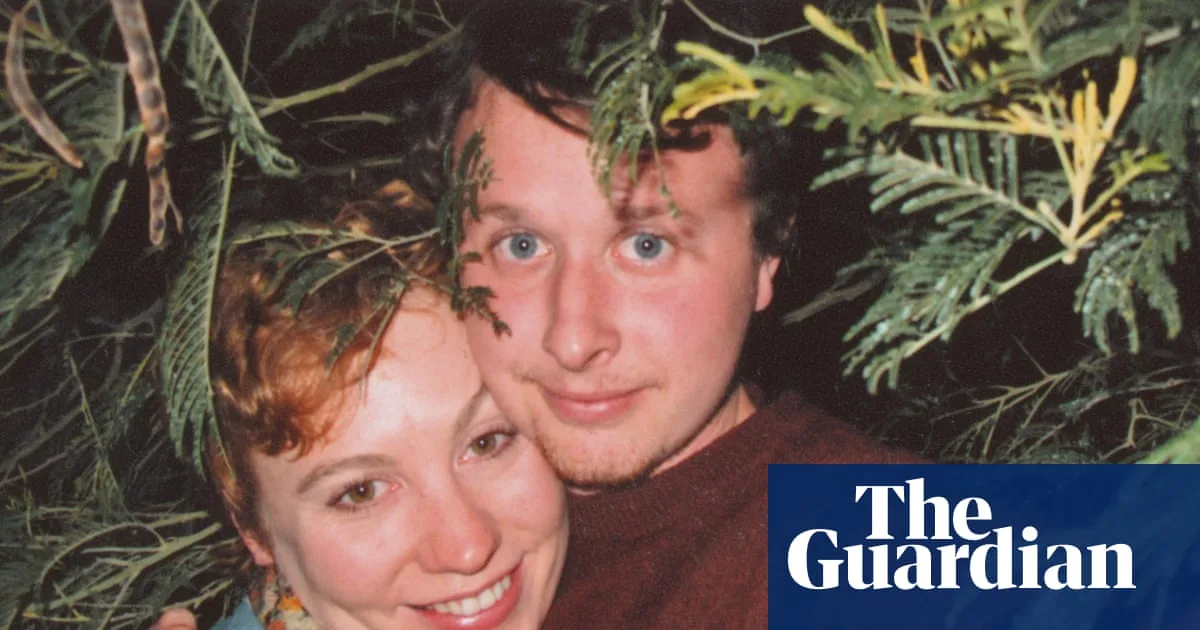
It began with an artist standing in a bucket, wearing a jumper emblazoned with 'Ho Ho Ho' as water dripped onto her head. For painter Mitch Cairns, that arresting image of Agatha Gothe-Snape at a 2007 Christmas group show in Sydney's Redfern was a revelation. 'It was completely new and arresting for me,' Cairns recalls of the encounter at MOP Projects, an artist-run gallery.
Weeks later, mutual friends introduced them, suggesting Cairns could advise Gothe-Snape on applying to art school. But Cairns, then a recent National Art School graduate, was already convinced of her brilliance. 'She had such a broad, intimate understanding of a creative life,' he says. He told her she needed no further schooling.
Their friendship deepened at exhibitions and openings. One evening, crammed into a corner of the Hollywood Hotel in Surry Hills, Gothe-Snape expressed interest in buying one of Cairns's paintings – a raw linen canvas depicting a foot with a smiley face, resembling a happy accelerator pedal. Charmed by her interest, Cairns insisted she need only offer a bag of chips in exchange to share with their drinks.

True to her playful nature, Gothe-Snape delivered the empty packet, shrunk in the oven and housed in a vintage cigarette tin, accompanied by a note. 'What she had written wasn't any declaration of love – but it was the beginning of something more than friendship,' says Cairns. 'There was something in that exchange that was so absurd, that told me we spoke the language.'
Within six months, the couple were living together. Nearly two decades later, they share a home and a son. The painting hangs in their bedroom, and the tin sits on a kitchen shelf. 'That fleeting, playful moment has been immortalised in these objects that continue to absorb the energy of our life together,' Cairns reflects.
Gothe-Snape's artistic career has flourished, and Cairns describes her as 'the most rigorous, interesting and sincere artist I know; my dream girl and favourite artist.' A survey of Cairns's work, titled 'Artist's Mouth', runs at the National Art School Gallery in Sydney from 1 May to 11 July, and at the Institute of Modern Art in Brisbane from 10 October to 20 December.