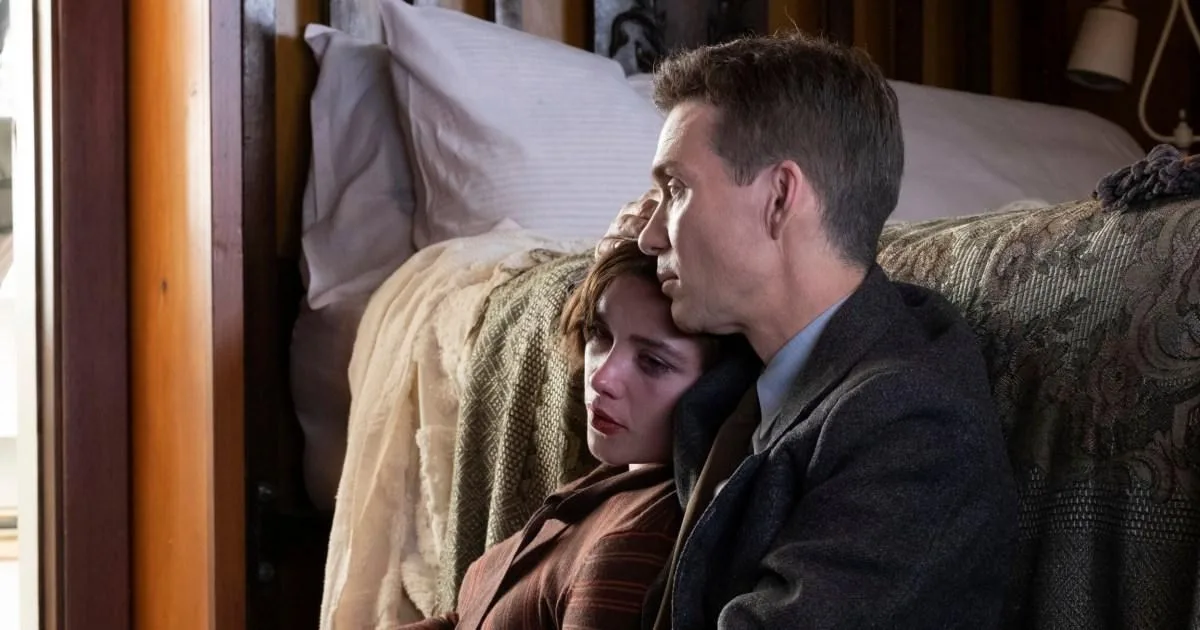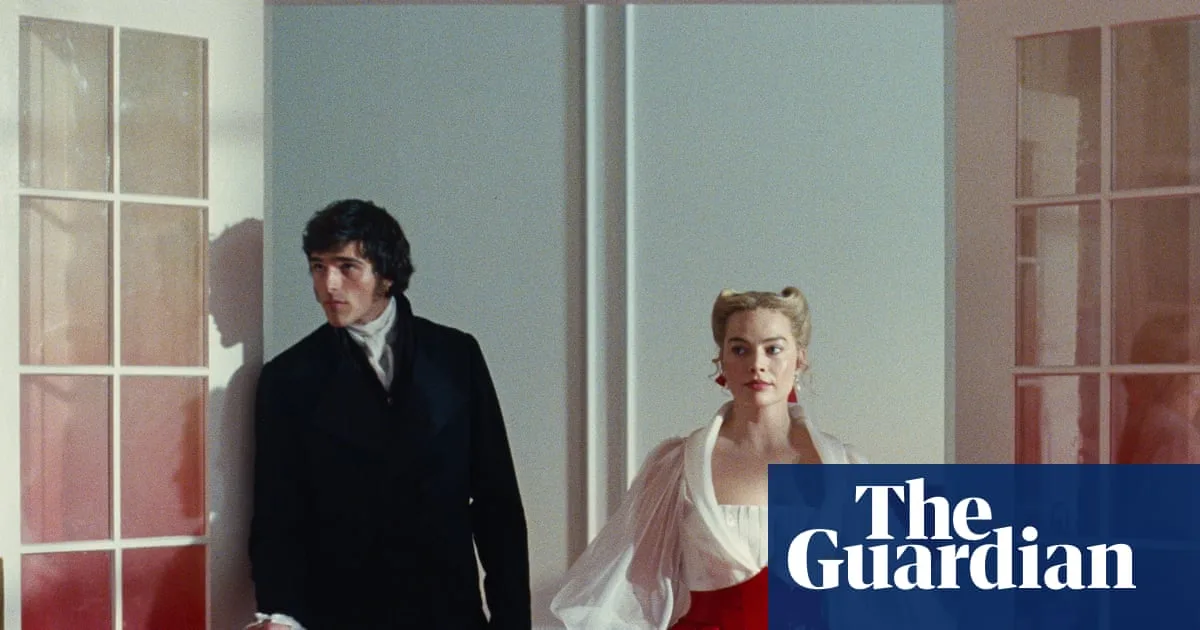
The release of Emerald Fennell’s Wuthering Heights has reignited debate over historically inaccurate costumes, with fashion watchdog Diet Prada noting the “freaky mix of Oktoberfest corseting meets 1950’s ballgowns meets futuristic liquid organza meets … Barbie”. The film, an adaptation of Emily Brontë’s 1847 novel, has drawn attention since its first stills were released.
Oscar-winning costume designer Jacqueline Durran, who created the looks, told Vogue: “We’re not representing a moment in time at all.” Her mood board for Cathy included Thierry Mugler, Alexander McQueen, German milkmaid-style dress, and Elizabethan, Georgian, Victorian and contemporary references. On the wedding night, Cathy wears a dress resembling cellophane, as if “a gift wrapped for her husband”.
Durran is part of a broader movement of designers prioritising storytelling and spectacle over accuracy. Holly Waddington, who won a Bafta for Poor Things, used modern fabrics such as plastic and latex in the late-Victorian setting, saying she was “playing with the period, not being slavish to it”. Kate Hawley acknowledged her Oscar-nominated work on Guillermo del Toro’s Frankenstein is also far from historically accurate. The trend has earlier roots, with Sofia Coppola placing Converse trainers in Marie Antoinette in 2006.

Keith Lodwick, a theatre and film historian, cites the “Bridgerton effect” as a catalyst, describing the show as “a fantasy version of what we might think Regency is about”. He notes that expressive design often thrives in times of crisis, referencing the 1940 film Pride and Prejudice as escapism from the second world war. However, Helen Walter, a costume and visual historian at Arts University Bournemouth, is not “sure it’s as big or as unprecedented a shift as people are making it out to be”. She argues costume “always says something about the time that it’s being made”.
True accuracy is elusive, as Sandy Powell, Oscar-winning designer of Shakespeare in Love, explained: “All of the silhouettes were the correct period cuts… but you can’t necessarily find period-accurate fabrics.” She once used art deco lace for an Elizabethan collar, saying: “I thought, ‘Well, I don’t care. It looks good. And actually, this isn’t a documentary’.” Powell’s upcoming film The Bride! takes an anachronistic approach to how clothes are worn rather than the garments themselves, imagining what 1930s punk might look like.