Throughout much of the American experience, blue jeans have served as a common thread, weaving together the diverse fabric of the nation. When Americans wish to express their patriotism, they often don red, white, and blue clothing, or even drape themselves in the U.S. flag. However, to truly capture the country's zeitgeist, one need only slip into a favorite pair of blue jeans. Chances are, you already own at least one pair, just like nearly everyone you know.
Even in these divisive times, denim remains an American uniform worn by liberals and conservatives, young and old, rich and poor, the cool and the nerdy. It is the garb of citizens born in the USA—like Bruce Springsteen on his chart-topping 1984 album—and immigrants who came seeking a better life, such as Levi Strauss. If there is a common thread in America's crazy quilt of racial diversity, it is blue jeans.
The Origins of Blue Jeans
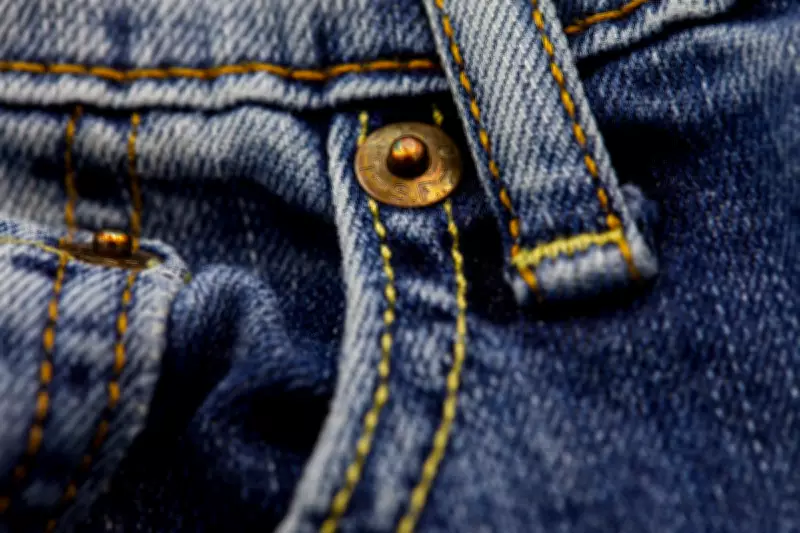
The pants did not start out blue. They were originally made from brown tent canvas when first conceived in 1853 by Strauss, a Bavarian immigrant who arrived in San Francisco after the California Gold Rush. The pants proved so popular among gold miners that Strauss ran out of tent canvas, prompting him to switch to indigo-dyed denim. After Nevada tailor Jacob Davis suggested reinforcing the pockets with copper rivets, the two patented the concept in 1873, creating the style of blue jeans worn today.

Cultural Significance
Levi Strauss & Co. and its imitators, such as H.D. Lee and Wrangler, have sold billions of dollars worth of denim over the decades. Yet blue jeans have always been more about culture than capitalism. They evoke:
- The rugged determination of railroad workers who wore them while laying tracks across the country.
- The daring of cowboys and wandering spirits who wore them while settling the frontier.
- The work ethic of farmers and factory workers who wore them on the job.
- The rebellious ethos of bikers and mavericks, popularized by Marlon Brando in the 1953 film The Wild Ones.
- The colorful flair of hippies who stitched flower patches and psychedelic designs on bell-bottomed versions during 1967's Summer of Love.
In all shapes and styles, blue jeans remain the perfect fit for America.