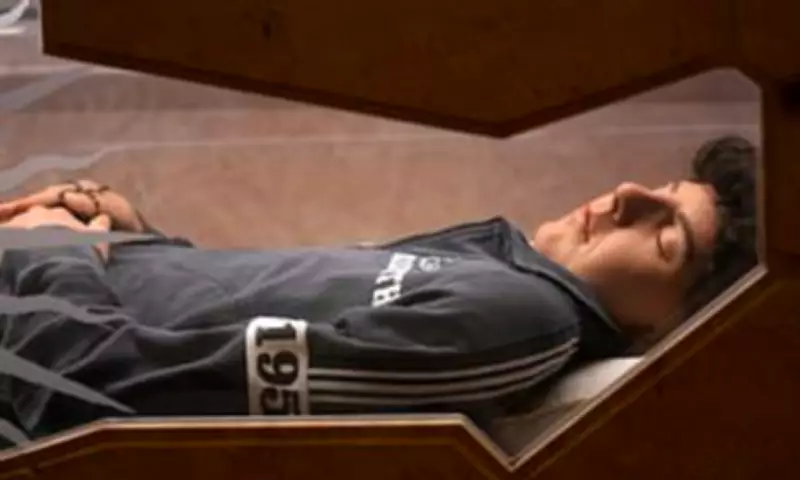
Few tracksuit-clad teenage boys have the same credentials as the late, English-born Italian computer programmer Carlo Acutis. Dubbed 'the first millennial saint' or the 'patron saint of the Internet', St Carlo, as he is now referred to, was born an ordinary boy - but his interest in the Catholic faith quickly led him down a life of religious devotion.
Sadly, though, that life was cut painfully short when Carlo died of leukemia at the age of just 15 in 2006. However, his contribution to the religious community, using digital communication to teach the word of Catholicism, was deemed so valuable that he was beatified by Pope Francis in 2020. His body - still dressed in the casual attire of a young boy - was entombed in the town of Assisi, in Italy's Umbria region, which has a religious significance of its own as the home of St Francis, the country's patron saint.
And that's exactly why I've ended up in this tiny town, listed as a UNESCO World Heritage Site since 2000, in a region that's often called 'Tuscany's little sister'. Naturally, the town is a popular destination among pilgrims and Catholics - you can visit the tomb of both St Francis and St Carlo. But from the moment I arrive, it's abundantly clear this is a town for everyone, not just those on a religious journey.

A Town of Profound Religious Significance
I am at one of the holiest sites in the world - certainly one of the places holding the most religious significance in Italy. Assisi is the home of St Francis, the patron saint of the country, and ranks among destinations of holy significance alongside the likes of Santiago de Compostela in Spain, Mecca and Medina in Saudi Arabia and Jerusalem. The sense of religious awe here is palpable. People are respectful: everyone obeys the 'no photograph' rules, and the silence when we approach the most famous cross in Italy is one of reverence.
The story of Assisi dates back to the 12th century, when a 24-year-old Francis first heard the words of Jesus Christ spoken to him - and thereafter dedicated his life to God and the religious order. This year, the UNESCO town is hosting a year-long programme to mark the 800th anniversary of the death of St Francis, the town's most revered figure and one of the most influential spiritual leaders in Europe. It's full of tourists in May and the summer months, but our guide tells us this year is even busier thanks to the festivities. If you plan on visiting during the half term, expect queues.
And it's absolutely buzzing as a result. You'd think we were in the Italian capital with the queues all around us - it takes 40 minutes just for us to enter the Basilica of St Francis of Assisi, and we don't even have time to visit the Church of Santa Maria Maggiore, where St Carlo is buried. Disheartened, we move on - but fortunately, despite the intensely spiritual significance of Assisi, that's not all there is to enjoy here.
Beyond the Pilgrimage: Exploring Assisi
Wandering through the streets, you're totally surrounded by greyish-pink stone walls. It's somewhere between a fortress and a classic cobbled-stone Italian village, punctuated by churches everywhere you look - our guide tells us there are at least 50 here. Everywhere you look, there's a combination of historic, religious heritage and modern appeal - even our hotel.
Once we've left Assisi and head towards the Borgo Antichi Orti Assisi, where we're staying, the devout crowds melt away. It is situated right at the foot of the Basilica of Saint Francis. From the moment my partner and I arrive, we are in the heart of the countryside you can admire from the hilltop town. The restored retreat has deep historical roots dating back to 1444, having been founded as a small Benedictine monastery. It's easy to see why this was a place of retreat and refuge - despite its proximity to Assisi, it's so serene.

Our suite, one of 12, is ideally placed to look out into the countryside. I've never been to Umbria before, but admittedly, it reminds me greatly of Tuscany - which I'm told to keep to myself. We are, I am told by locals, in Umbria. Which other pilgrimage sites are significant? The Camino de Santiago in Spain is perhaps the most popular - although the airport is currently closed, set to reopen at the end of May. Vatican City and Rome in Italy are the most popular sights for religious Christian visitors in Italy. Jerusalem holds religious significance for both Jews and Muslims, although the FCDO advises against all travel to this part of the world currently. Mecca and Medina in Saudi Arabia are holy cities in Islam, and are visited every year for the Hajj and Umrah religious gatherings. Fatima in Portugal is an important Catholic pilgrimage site.
A Serene Stay at Borgo Antichi Orti Assisi
Rustic wooden beams on the ceiling and authentic hardwood floors decorate the interiors, and despite the fact we are just minutes from the buzz of Assisi, you truly wouldn't know it. The Umbrian countryside, like that of Tuscany (sorry!), is pure greenery. Expansive vistas, vineyards, olive trees and winding roads bring that Italian charm that draws in so many tourists to the country. Tuscany is gorgeous but, admittedly, the quiet here is unparalleled - we go for a walk along a stream and do not see a soul.
After a stroll, ending through the hotel's olive trees - olive oil is a regional specialty here - we head to SAIO for a wine tasting tour. We partake in a tasting of five SAIO Assisi wines - our favourite, without a doubt, is surprisingly a white colderba. Surprising because neither of us really like white wine. Bruschetta with extra virgin olive oil accompany our tasting, alongside pecorino cheese with SAIO grape jam - and a standout caciotta cheese with black truffle. Handmade torta al testo, a lightly salted Umbrian flatbread, soaks up all the extra olive oil. Wine tasting is often a pricey affair - but not so, here. Tastings start from €25 (£21.70) - which, when considering you get five wines and a whole array of snacks, is an absolute steal.
We stumble back from our vineyard afternoon to the hotel, and enjoy an hour in the sunshine before our dinner at Re Tartu, the restaurant that is on the hotel site. But, unlike many hotel restaurants, this is an attraction of its own accord - it's fully booked. And not just by hotel guests. Truffle is often considered the epitome of luxury, and here it's served in generous portions. I opt for the beef, topped generously with shavings of truffle, and an anchovy cream starter - with portions of bread on the side. For dessert, creme brulee is on the cards, decorated with fresh fruit - and olive oil. It's unexpected - but delicious.
Why Assisi is a Worthy Italian Vacation
But just as my unlikely dessert is a real treat, so too is a trip to Assisi. Don't be fooled by the town's hugely significant religious background. While it is, of course, a bucket list item for many, it is truly a worthy Italian vacation for anyone who enjoys good wine, even better olive oil and countryside as far as the eye can see. It's easy to get to, too. Flights run directly from London Stansted to Perugia, the gateway to Umbria, with Ryanair, and you can get from the airport to the city in just 20 minutes by taxi. Swap big-name spots in Tuscany and popular cities for Assisi, and you might just enjoy a drizzle of olive oil on your dessert - or shaved truffle on your dinner.