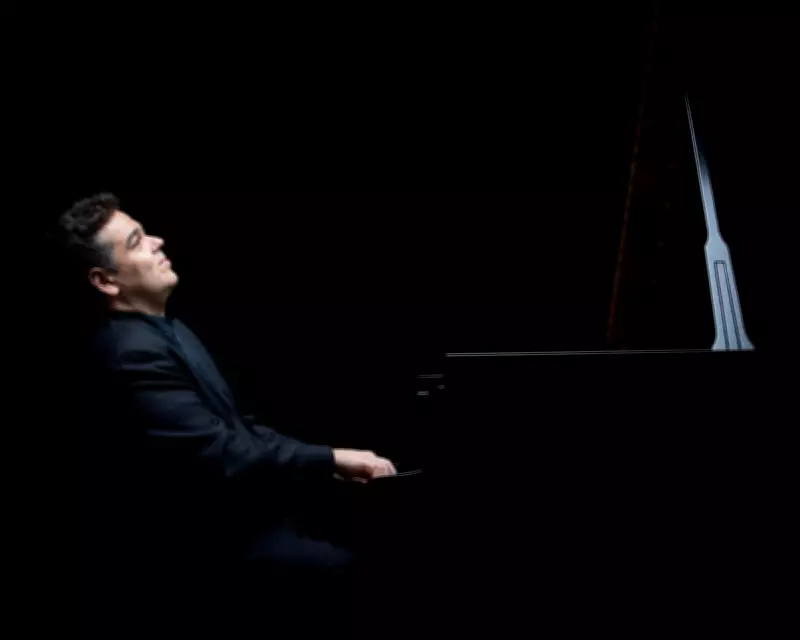
Arcadi Volodos records infrequently, making each album something of an event. The two works on his latest release, both staples of the Romantic piano repertory, could not be more different, and yet he manages to bind them together, bringing elasticity and a dash of fantasy to Schubert's D major sonata, D850 while investing Schumann's evergreen Kinderszenen with a dose of Schubertian longing.
Schubert Sonata D850: A Daringly Flexible Interpretation
In the sonata's opening Allegro vivace, Volodos is far less headstrong than, for example, Alfred Brendel or Radu Lupu, but notably more flexible – daringly so at times. Measured phrases are shaded with supple rubato, the line enlivened with tiny dynamic emphases. The expressive slow movement, laced with musical question marks, exudes a calm benevolence. Volodos can be playful, too, with a mischievous take on the disorderly scherzo and a dainty finale that borders on the coquettish.
Schumann Kinderszenen: Nostalgia and Refinement
Kinderszenen, infused here with an adult's sense of nostalgia, ranges widely. Flightier music boasts a robust warmth, contrasting with gentler movements where the tone is sometimes pared down to a whisper. He brings a relaxed elegance to Von fremden Ländern und Menschen, crystalline technique to Hasche-Mann (though without the wit of a Horowitz), and a weightless refinement to Träumerei. A wistful Der Dichter spricht brings the cycle to a close, the music dissolving into vaporous nothingness.

Overall, Volodos demonstrates a mastery of both playfulness and longing, with a warm, crystalline technique that makes this album a compelling addition to the Romantic piano discography.