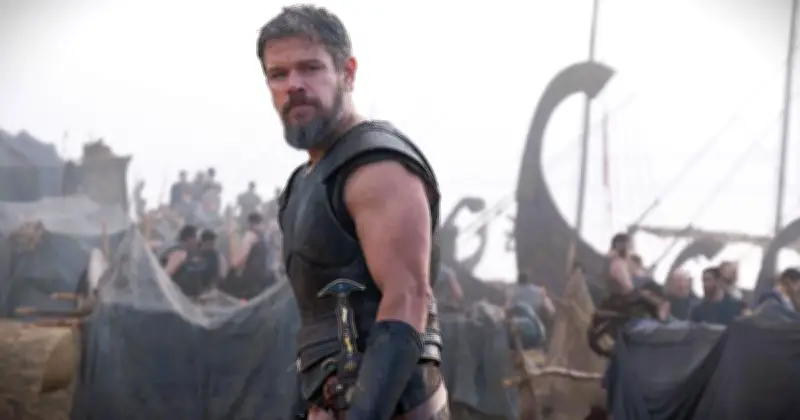
Christopher Nolan's adaptation of Homer's The Odyssey presents a radical interpretation: the fantastical adventures of Odysseus never actually happened. The film opens with the line, “In a time of apparent magic,” suggesting that ancient peoples imagined spiritual and fantastical elements in a pre-enlightened age.
Calypso and the Lotus Plant
In Nolan's version, Calypso is not a nymph but a beautiful woman. She tricks Odysseus into eating the lotus plant, which keeps him in a drug-fuelled state for seven years as her sex slave. Unlike Homer's Odysseus, Nolan's character does not cheat on Penelope because he is not in his right mind.
Drug-Induced Memories
Odysseus recounts losing his men to the Cyclops, Laestrygonians, Circe, Sirens, and Scylla and Charybdis while under the influence of the lotus plant. This drug trip causes him to misremember his journey as “apparent magic,” a mechanism to cope with his trauma from committing atrocities during the Trojan War—contrasting with Homer's glory-seeking hero.
Connection to Oppenheimer
Nolan uses a similar technique to depict selective memory in Oppenheimer, where color sequences represent subjective experience versus black-and-white objective views.
The True Nature of Athena
Zendaya's Athena is the only Greek god to physically appear. The film reveals she is not a goddess but the manifestation of a temple priestess beheaded during the Trojan invasion, haunting Odysseus as a memory of his crimes.