Luke Evans has said that filming the underlying LGBTQ storyline in ITV's The Party was emotional and gave him a "strange positive PTSD". The Welsh actor reunited with World Productions, the company behind The Pembrokeshire Murders, for the new ITV drama set and filmed in Wales.
The actor brought The Party to the production company after reading Elizabeth Day's novel of the same name. The series centres on Martin Glimour (Evans), a journalist whose lifelong friendship with wealthy politician Ben Fitzmaurice (Tom Cullen) dates back to their time at an elite boarding school, where Martin attended on a scholarship.
When Ben and his family give Martin the sense of belonging he has always yearned for, he remains fiercely loyal through even the most challenging of times. However, three decades later, an invitation to Ben's party triggers a chain of events that transforms everything.
Emotional release and personal resonance
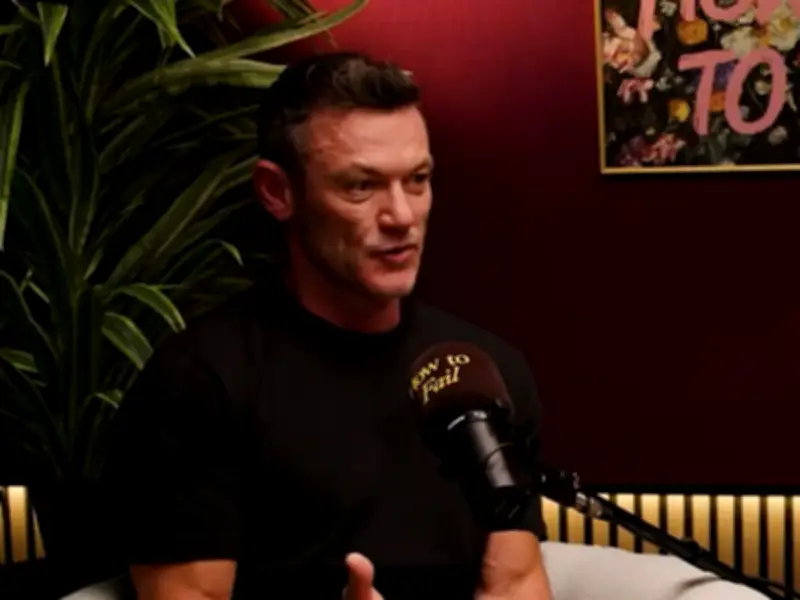
Speaking to the author on her podcast How to Fail, Evans said that filming The Party was an emotional experience and he felt a "strange positive PTSD" when it came to his underlying LGBTQ storyline with fellow Welshman Tom Cullen. Elizabeth discussed his character's relationship with his best friend Ben, and how it "differs slightly from the book" and has different layers.
She then asked: "How important was that for you, Luke, to explore?" The actor said: "This is a friendship slash relationship slash sexual dynamic, I have rarely seen in a good TV drama. Yes we do definitely take their relationship to a further level, deeper level than it goes in the book but I think it's his representation of what some people go through. I would hope it's not a common thing, but it certainly does exist within society."
"I don't know whether that answers your question, but it definitely, it's painful. It makes me emotional when I got to the certain scenes with Martin where he finally releases this cloud, this darkness, this shadow that's been following him."
Finding identity and authenticity
Evans continued: "I just felt this overwhelming emotional release possibly because I am a gay man and I remember leaving home and I had to leave home to find my identity, to find my family, my non blood relation family. I did it much earlier than Martin did it, but I remember that feeling."
"Of course, he's in his late 30s, early 40s, I was a late teenager, but it's something that only gay people ever experience. That suppression when everyone else is celebrating their first girlfriend and their first boyfriend and a lot of gay kids grow up not being able to do that."
"When you do finally find that, coming out, I often struggle with that phrase, but finding yourself, seeing yourself, it's a euphoric thing. I think I felt that in certain scenes with Martin where I just felt that strange positive PTSD moment of that."
Elizabeth responded: "Thank you for using your own experiences, to give this character such depth because it can be very difficult for people to live an authentic life and sometimes that's a privilege to live an authentic life from an early age, and for some of us it takes and endless amount of time to get there."
Parallels with Martin's upbringing
Speaking to Wales Online before the series release, Evans explained that he could relate to his character Martin's upbringing. He said: "A lot of those parts of Martin's life match mine a lot; religious upbringing, a small village, having big dreams, having ambition. Also being a chameleon and being able to disappear into the shadows, but also find your feet and stand up for yourself. I think Martin manages to do that."
"That's sort of where the parallels finish. There is a lot to Martin that I could understand, even if he chose a different path in life. I sort of understood him, and once I was inside his brain I sort of felt the pain he was going through and the life choices he was making that were clearly damaging to him and people around him. I understood this need to belong and this want to be accepted and loved. The crux of the story is about finding your identity, finding contentment and happiness in your authentic self."
He also resonated with the underlying LGBTQ storyline of his character Martin. "It definitely resonates with me that there is this tragic love story that sadly fails, but it's also not a straightforward LGBTQ story of two men that fall in love. I mean, it's much more complicated and much more tragic than that."
"But it is about finding your authentic self and breaking down the barriers that are preventing you from being happy. So that's an interesting message, definitely, that runs through the story of The Party." How to Fail with Elizabeth Day is available wherever you get your podcasts.