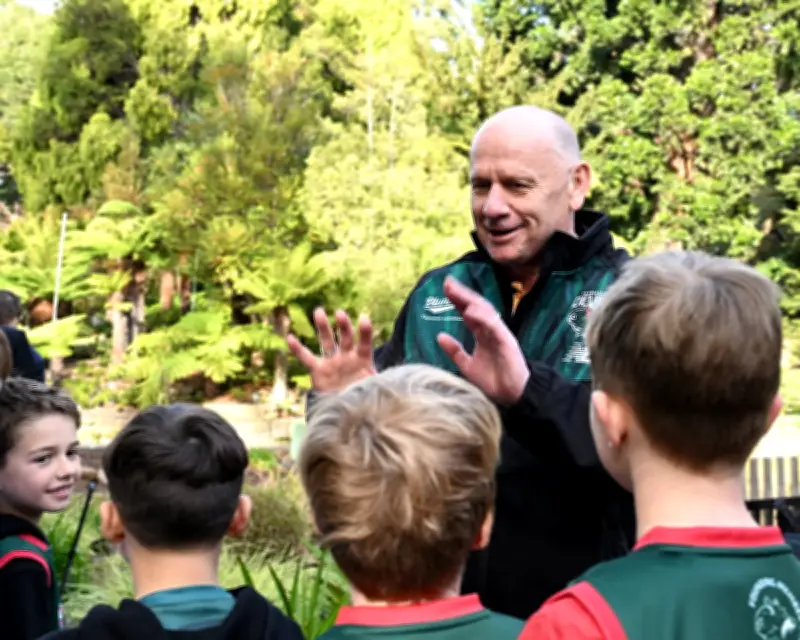
The announcement of Ken Hinkley as Tasmania's first AFL coach this week 'felt like a love-in', according to Jonathan Horn, though his coaching has been a source of contention. Hinkley was chosen for his ability to win over locals, foster a siege mentality, and connect with young players, as well as sell the club's vision to managers, parents, and the entire island.
Why Hinkley was chosen
To understand why Hinkley was selected, it is worth looking at the men who missed out. Nathan Buckley was the early favourite but perhaps lacked the salesmanship to 'spruik the gospel' as Devils CEO Brendon Gale says. John Longmire has a cushy role at Sydney Swans and seems more relaxed than in two decades. Both Buckley and Hinkley seemed more prepared to upend their lives and start a team from scratch.
Hinkley was praised as a father figure and master connector, none of which can be disputed. However, his coaching has been contentious. When hired at Port Adelaide, the club was in disarray, having won eight of its past 44 games. Hinkley made them relevant again, winning nearly 60% of his games, but never reached the mountaintop—partly due to his own rigidity and partly due to forces beyond his control.
Hinkley's coaching style
Hinkley was a gloriously attacking footballer and the quintessential Malcolm Blight player. The wild spirit of Blight coursed through his coaching veins, sometimes to his detriment in big games. His teams pressed high, played on emotion, and were easy to scout. The closest they came was a preliminary final loss to Richmond in 2020, and they were torpedoed by the Western Bulldogs in the opening 10 minutes the following year.
None of that disqualified Hinkley from the Tasmania job. The role demanded someone who could win over the locals, which he did in about 20 minutes. It also demanded someone who could foster a siege mentality and connect with young footballers—someone who could sell them a story and a purpose.
The challenges ahead
When Hinkley told Blight he wanted to be a coach, Blight advised him to take on the worst country team he could find to see if he really had the passion. This job is a far cry from that. He will get generous draft concessions and coach in a state where football matters, but the role won't be easy. The training and administration centre will not be built when the 2028 preseason starts. Tasmanian politics is unpredictable, and considerable uncertainty remains around the stadium, the roof, the economic climate, and the state's capacity to pay for it.
When it comes to senior coaches, it is a buyer's market. Three former premiership coaches are available, along with Buckley and a strong pool of assistants. Each club is looking for something different, but Tasmania wanted something else altogether. 'I'm a football coach,' Hinkley told Gale when they first met. 'I don't know too much else.' He was selling himself short, as this role demands much more than being a football coach, which is precisely why Hinkley was the right man for the job.