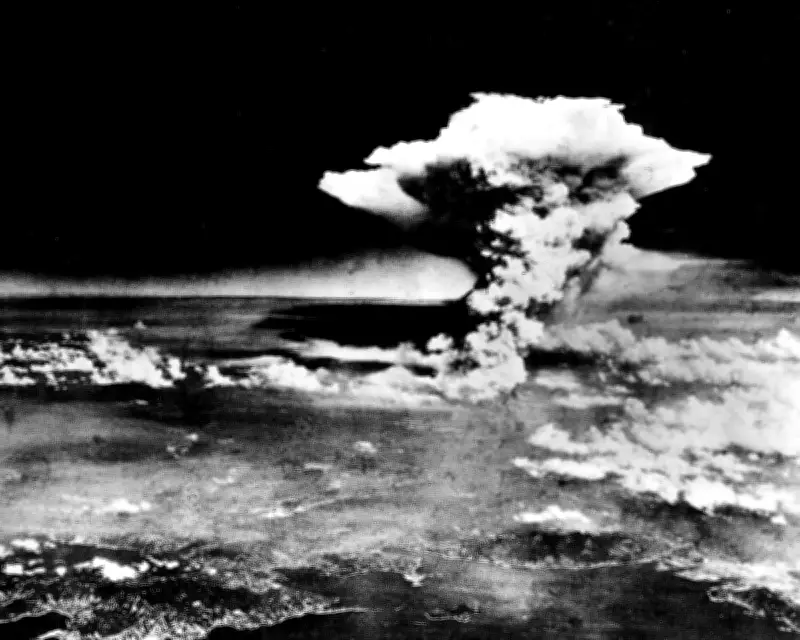
The memoir of Kiyoshi Tanimoto, a survivor of the Hiroshima atomic bombing who died in 1986, will be published for the first time this summer after being discovered in a US archive. The 230-page account, written in 1947, details the city's destruction on 6 August 1945, when the world's first nuclear attack killed an estimated 120,000 people within four days. The memoir will be released on 6 August 2025 by Random House in the US and Penguin worldwide, with a 9,000-word foreword by his daughter, Koko Tanimoto Kondo.
Film Adaptation in the Works
Takehiro Hira, known for his role in Netflix's Giri/Haji, will portray Tanimoto in a feature film titled Hiroshima, 8:15, referencing the exact time the bomb was dropped. Pre-production begins in November 2025, with filming scheduled for February 2027. The film is being produced by Donald Rosenfeld, former president of Merchant Ivory Productions, and directed by Phil Joanou, who wrote the screenplay. Rosenfeld told the Guardian: 'It’s an in-depth look at what this terrible bomb did. It is so topical now with the Iran situation and North Korea. You can’t imagine anything worse than Hiroshima, but it could be worse – supposedly 10,000 times stronger today. We really have to make sure it doesn’t happen again.'
Memoir's Discovery and Significance
The memoir was found in the Beinecke rare book and manuscript library at Yale University among the papers of John Hersey, the Pulitzer prize-winning reporter who wrote the 1946 nonfiction account Hiroshima. Hersey had befriended Tanimoto while visiting Hiroshima eight months after the bomb. Tanimoto, a Methodist priest, survived because he was transporting a wardrobe to another town that day. His daughter Kondo wrote in the foreword: 'For many years I could not live in Hiroshima, the city of my birth. On the day the atomic bomb dropped I was eight months old, a baby in the arms of my mother. It was 40 years before she could bring herself to tell me, in her own words, how I had survived. Few people would talk about that time. Their memories kept them quiet.' She added that the blast flattened almost everything in central Hiroshima, with heat reaching about 4,000C at ground level, burning through wood, tile, concrete, and human flesh.
Historical Context and Impact
The atomic bomb attack on Hiroshima was followed three days later by a plutonium bomb on Nagasaki, killing about 73,000 people. Japan surrendered on 15 August 1945, ending the second world war. Tanimoto's memoir, which he wrote because he believed it 'would help ensure that no one experienced it ever again,' includes harrowing scenes described in the screenplay: a city engulfed by towering flames and toxic smoke, with thick black droplets raining down 'almost like oil falling from the sky.' In one scene, he encounters a toppled tram with its side ripped open, its occupants incinerated and bodies carbonised like Pompeii. Tanimoto reflects: 'We deserved to lose. We could not win. Did we deserve the atomic bomb? Perhaps ... perhaps not. But no one yet understands ... what it was like here.'