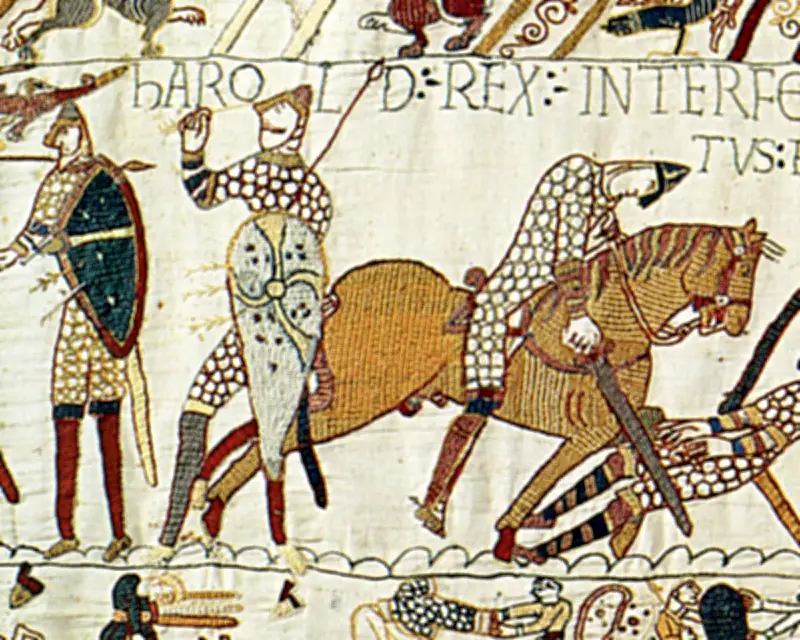
A new historical analysis has cast doubt on one of the most iconic images in English history: King Harold II being struck in the eye by an arrow at the Battle of Hastings. The famous scene, depicted in the Bayeux Tapestry, has long been accepted as the cause of Harold's death in 1066. However, scholars now suggest that the evidence is far from conclusive.
Reexamining the Bayeux Tapestry
The Bayeux Tapestry, a 70-meter-long embroidered cloth, shows a figure pulling an arrow from his eye, with the inscription 'Harold Rex Interfectus Est' (King Harold is killed). Yet, historians point out that the tapestry's stitching is ambiguous. Some argue that the figure may not be Harold, as the name label appears above another figure being cut down by a sword. 'We cannot be sure that the arrow-in-the-eye story is accurate,' said Dr. Emily Ward, a medieval historian at the University of Cambridge. 'The tapestry is a piece of propaganda, not a documentary record.'
Contemporary Accounts
Contemporary chronicles, such as the Anglo-Saxon Chronicle and William of Poitiers' account, do not mention an arrow to the eye. Instead, they describe Harold being killed by a group of Norman knights. The first mention of the arrow appears in the 12th century, nearly a century after the battle. 'Later writers may have embellished the story for dramatic effect,' added Dr. Ward.
- Bayeux Tapestry: Shows a figure with an arrow in the eye, but identity unclear.
- Written sources: Earliest accounts omit the arrow, mentioning sword wounds.
- Historical context: The tapestry was commissioned by Normans to legitimize their rule.
Implications for History
The uncertainty has implications for how we understand the Norman Conquest. If Harold's death was less dramatic, it might change perceptions of the battle's turning point. However, the consensus remains that Harold died at Hastings, leading to Norman victory. 'The arrow story is powerful, but history is often messier than legend,' concluded Dr. Ward.