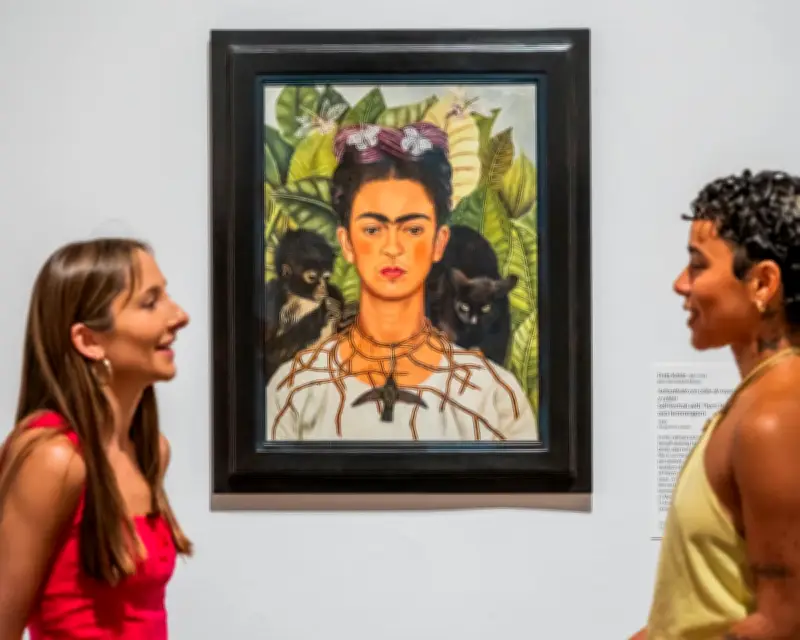
The Guardian's editorial board has weighed in on the delicate balance between celebrating Frida Kahlo as a cultural icon and the risk of reducing her legacy to a commercial brand. The newspaper argues that while Kahlo's status as a feminist and artistic pioneer is undisputed, the relentless commodification of her image threatens to obscure the very qualities that made her revolutionary.
The Thin Line Between Canonisation and Commercialisation
Frida Kahlo, the Mexican painter known for her self-portraits and exploration of identity, postcolonialism, gender, class, and race in Mexican society, has become a global symbol. Her face adorns everything from T-shirts to coffee mugs, and her likeness is used in advertising campaigns worldwide. The Guardian notes that this widespread commercialisation risks turning Kahlo into a 'one-dimensional logo,' stripping her work of its political and personal depth.
According to the editorial, Kahlo's canonisation as an icon has been a double-edged sword. On one hand, it has brought her art to a broader audience and inspired countless people, particularly women and members of the LGBTQ+ community. On the other, it has led to a sanitised version of her life and work, often ignoring her communist beliefs, her bisexuality, and the physical and emotional pain that permeated her art.
The Impact of Commercialisation on Kahlo's Legacy
The Guardian highlights that the commercialisation of Kahlo is not a new phenomenon but has accelerated in recent years, driven by social media and the global demand for inspirational female figures. The newspaper cites examples of Kahlo's image being used to sell products that contradict her values, such as luxury goods and beauty products, which often promote the very standards of beauty she challenged.
The editorial board argues that this trend does a disservice to Kahlo's legacy, as it reduces her complex life story to a few easily marketable attributes: her unibrow, her traditional Mexican dresses, and her resilience. 'The danger is that the real Frida—the artist, the activist, the woman who endured immense suffering—gets lost in a sea of merchandise,' the Guardian writes.
Preserving the Artistic and Political Significance
To counter this, the Guardian calls for a more nuanced appreciation of Kahlo's work. It urges museums, galleries, and educational institutions to focus on the context of her paintings, her techniques, and her role in the Mexican muralism movement. The newspaper also emphasises the importance of acknowledging Kahlo's political activism, including her support for the Mexican Revolution and her affiliation with the Communist Party.
The editorial concludes by acknowledging that while Kahlo's image may be ubiquitous, her art remains powerful. 'The challenge is to ensure that the icon does not eclipse the artist,' the Guardian states. 'We must look beyond the face on the T-shirt and engage with the pain, the passion, and the politics that made Frida Kahlo a true revolutionary.'