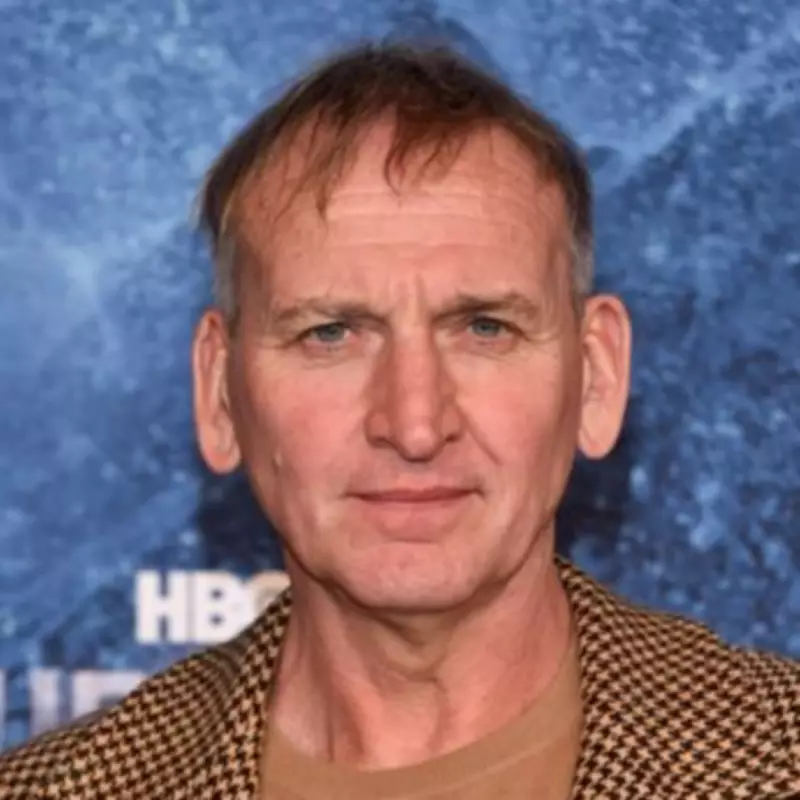
Christopher Eccleston Demands Class Diversity in British Acting
Doctor Who star Christopher Eccleston has declared that Britain has more than enough actors from privileged public school backgrounds, urging for concrete action to support working class talent in the entertainment industry. The acclaimed actor, who rose to fame from a working class family in Salford, highlighted systemic barriers that prevent those from poorer backgrounds from succeeding in film, television, and theatre.
A Stark Reality for Working Class Aspirants
Eccleston, who became the ninth Doctor in 2005, emphasized that class remains a taboo subject in discussions about diversity. "We need to say we've got enough public school, private school, Oxbridge actors... we've got more than enough," he stated. "I'd like to hear more regional accents." He pointed out that gatekeepers in the industry—producers, directors, and financiers—often hire individuals who mirror their own upper-class backgrounds, perpetuating a cycle of exclusion.
The actor, who completed a two-year performance art course at Salford Tech, argued that talent alone is insufficient. "I've worked in this industry for 40 years and it's not really about talent. It's about connections and luck," he revealed, noting that many of Britain's top film stars, such as Eton-educated Damian Lewis, Eddie Redmayne, Tom Hiddleston, and Dominic West, come from privileged educational institutions.

Alarming Statistics Back the Claims
Eccleston's concerns are supported by compelling research:
- A 2022 study showed the proportion of working class actors, musicians, and writers has halved since the 1970s.
- Further research in 2024 found fewer than one in 10 arts workers in the UK had working class roots.
- Analysis of Bafta nominations revealed a significant domination by privately educated individuals.
These findings underscore a growing crisis in representation, where working class voices are increasingly marginalized in cultural productions.
Echoes from Industry Veterans
Eccleston's comments resonate with warnings from other prominent figures. Dame Julie Walters, born into a working class family in Smethwick, expressed concern a decade ago about the vanishing opportunities for aspiring actors from similar backgrounds. "Working class kids aren't represented. Working class life is not referred to. It's really sad," she lamented, predicting a future dominated by middle-class narratives.
Eccleston, set to star in the new Netflix mini-series Out of the Dust, has previously highlighted the additional hurdles faced by marginalized groups. "If you're from my background, you have to work twice as hard; if you're from an ethnic background, you have to work four times as hard," he asserted, calling for a more equitable industry.
Proposed Solutions for Change
To address these disparities, Eccleston advocates for government intervention and institutional reform. He suggests that successive governments should invest culturally in the regions, beyond London-centric initiatives. Additionally, he urges drama schools to actively diversify their intake. "We need drama schools to say 'Hey, everybody we've got here looks and sounds the same. Let's mix it up'," he proposed.
This call to action emphasizes the need for positive discrimination—targeted support to level the playing field for working class actors. Without such measures, Eccleston warns, the industry risks becoming an echo chamber of privilege, stifling creativity and authentic storytelling.