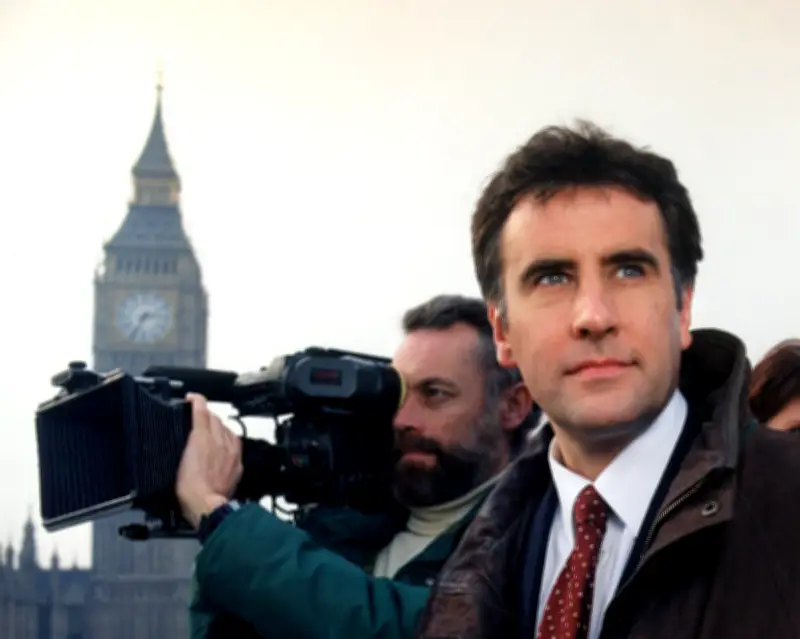
Dermot Murnaghan, a television presenter who anchored news slots on all four major UK networks, has died at the age of 68 after revealing a diagnosis of late-stage prostate cancer on screen last year. His career was defined by affability, reliability and authority rather than ego, which made him a trusted face in British broadcasting.
Murnaghan was one of the few journalists to have anchored news on Channel 4, ITV, the BBC and Sky News. His dependability and calm demeanor earned him regular roles, but his relative reticence kept him from the absolute front rank of TV journalistic celebrity. Nonetheless, he gained sympathetic recognition for cameos on quizzes such as Pointless Celebrities and The Weakest Link, as well as a stint as a question card shuffler on the BBC's Eggheads. His authoritative look and sound also led to regular employment announcing fake news in dramas like Absolute Power, The Gunman and the film Wimbledon.
Early Life and Career Beginnings
Born in Devon, Murnaghan and his family soon moved to Northern Ireland, where he grew up and was educated. After graduating from the University of Sussex, he started as a newspaper reporter but soon moved to TV newsrooms, as many well-dressed members of that profession do.
The launch of Channel 4 in 1982, followed by the introduction of breakfast television, doubled the broadcast news market, and Murnaghan was an early beneficiary. He worked for Channel 4's early morning service, first as a business presenter and then as a main host.
Move to ITN and the Death of Diana
Because breakfast shows were required viewing for those preparing news lists for later programmes, they could be a good showcase. This proved true for Murnaghan, who moved to ITV's news arm, ITN, in 1992. He was hired as a squad player, handling lunchtime bulletins and holiday relief on News at Ten. Journalistic careers often benefit from being in the right place for bad news, and it fell to Murnaghan to announce the death of Diana, Princess of Wales, after a car crash in Paris in August 1997.
Woken by his wife, Maria, who had seen early reports while up with the second of their four children, he headed to the studio. While some other anchors overdid emotion or historical pomposity, Murnaghan characteristically delivered the facts with gravitas but a soft acknowledgment of the near-impossible shock it would seem to viewers. This breaking news clip was frequently used in documentaries and TV dramas, raising Murnaghan's profile.
BBC Years and Final Move to Sky
The BBC, which had agreed to breakfast television for ratings reasons, still felt some guilt about a form of broadcasting it considered vulgar, American and commercial. To appease these feelings, it put respected journalists on the sofa, including Jeremy Paxman, Jeremy Bowen and, from 2002 to 2007, Murnaghan.
From the BBC, he made a final career move to Sky, where his air of gentle authority and long experience in slots from morning to night proved invaluable to a fast-moving 24-hour news operation. His CV and demeanour were ideal for an operation that broadly aimed for the authority of ITN and BBC but with a lighter touch. His 16 Sky years were the capstone of his career.
Final Years and Legacy
Going freelance in 2023, he was deprived of the varied third act he deserved by the diagnosis of his illness. A reporter and communicator to the end, he used TV appearances as a guest—the last on Good Morning Britain in December 2025—to encourage those in risk groups to seek prostate checks. As had been the case throughout his career, the audience was likely to listen hard and take seriously what he was saying.