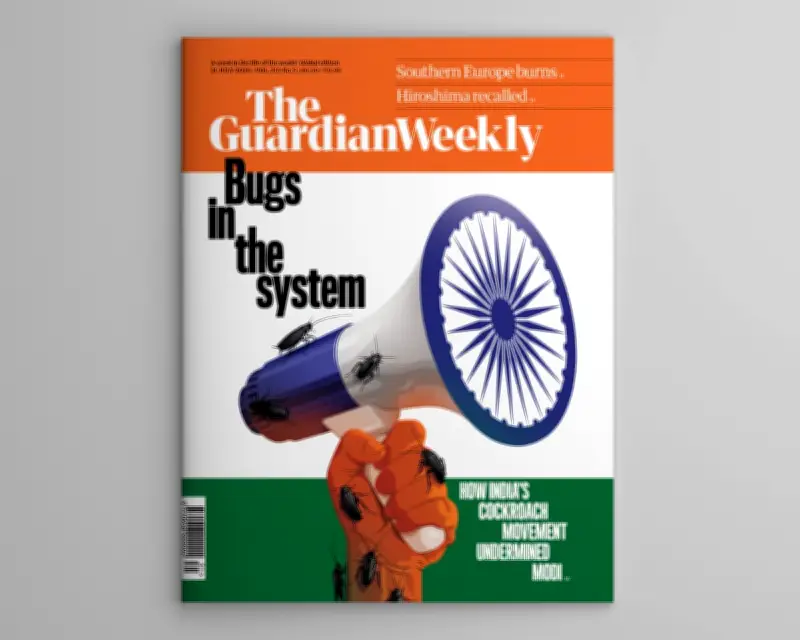
The 31 July edition of the Guardian Weekly magazine takes an in-depth look at the unexpected rise of India’s Cockroach Janta party, a satirical protest movement that has rattled Prime Minister Narendra Modi’s government. What began after the chief justice of India compared unemployed youth to cockroaches quickly evolved into widespread demonstrations, forcing the resignation of the education minister — a rare concession for Modi, who has rarely bowed to public pressure during his 12 years in power.
Why the movement gained traction
According to south-east Asia correspondent Hannah Ellis-Petersen, the protests resonated because they addressed corruption in competitive examinations, a concern for every middle-class family in India. Writer Mukul Kesavan notes that unlike earlier movements, protesters used smartphones to record and distribute police brutality on social media, turning the narrative against authorities.
Other highlights in this issue
The magazine also covers the devastating wildfires in southern Europe, with Angelique Chrisafis speaking to evacuees from France’s Gironde region. In Gaza, Amjed Tantesh’s project creates sea pools from sandbags and rubble to give traumatised children relief. Simon Hattenstone meets Hiroshima survivor Koko Kondo, who reflects on her father’s long-forgotten diary. Jonathan Freedland analyses UK prime minister’s bus fare policy, and Steve Rose interviews film director John Carpenter.
Also featured
A piece on Mayo’s historic all-Ireland Gaelic football victory after 75 years, with a priest’s curse blamed for the drought. Audio explores Palantir’s involvement with the NHS, a video examines why many American Jews are distancing from Israel, and a gallery showcases LensCulture critics’ choice award winners.