The Rise and Commercialization of Ruin Bars
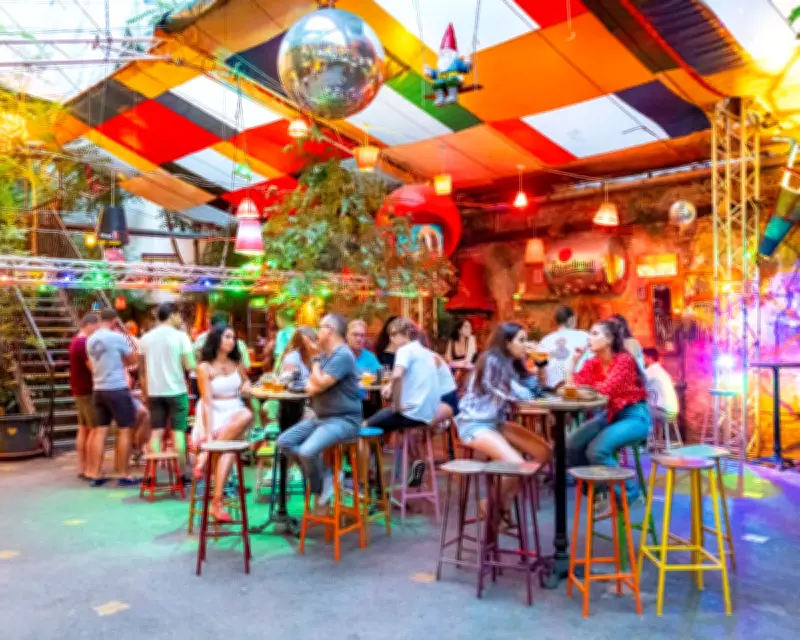
Ruin bars, or romkocsmák, emerged in Budapest's historic Jewish Quarter (District VII) in the early 2000s. Young entrepreneurs transformed abandoned prewar buildings and empty courtyards into cheap bohemian art spaces that flaunted their dilapidation. These bars were typically adorned with fairy lights and mismatched secondhand furniture, creating a unique, gritty atmosphere.
However, many have since lost their essence, becoming commercialized hubs for tourists, pub crawls, and stag parties. Artist István, standing outside the Instant-Fogas complex—billed as Europe's biggest ruin pub—notes, "Many ruin bars seem to be just tourist traps now." He adds, "Ruin bars being expensive actually ruins their purpose. I’m a student, I like beers that are under 1,000 forints (about £2.50), and the big commercial ruin bars are typically much more expensive."
Szimpla Kert: The Pioneer That Still Charms
Szimpla Kert (Simple Garden) is considered the pioneer of Budapest's ruin bars. It can feel overwhelming at night, with multiple rooms on two levels, colorful lights, and pulsating music, but it's calmer during the day. While undeniably touristy, it retains character with graffitied walls, rough wooden benches, concrete floors, a huge disco ball, and plants lining the ceilings. It also functions as a community center, hosting film screenings, an art gallery, a farmers' market, and a flea market. Prices are high—about 2,000 forints (£5) for a half litre of lager—but the experience is unique. Rating: 9/10.

Füge Udvar: A Ruin Bar Ruined
Füge Udvar exemplifies a ruin bar that has lost its way. The night I visited, the clientele was 90% male, many intent on getting drunk. It resembles a mainstream sports bar with football screens and arcade games, though it has some dilapidated areas and a tree in the courtyard. A £1 deposit is added to each drink for an ugly plastic cup, and reclaiming it is difficult, often requiring a visit to another bar with a long queue. Online reviews are critical. Rating: 0/10.
Fekete Kutya: Still Cultivating the Vibe
Fekete Kutya (Black Dog) retains the ruin bar aesthetic with shabby furniture, chaotic artworks, and sticker-covered windows. Student Milan Keleti, serving a Postřižinské Francin lager (£2.10), says, "It’s been here since 2013 and used to be a ruin bar for local people. Initially, this was a place for artists, for people that couldn’t afford expensive bars. But, as this area has become more touristy, about half the custom is now from tourists. But it still has the atmosphere, the music, the decor that is fit for ruin bars." Prices are noticeably lower than commercial bars, and live music is featured. Rating: 8/10.
Élesztőház and Csendes Létterem: Variations on a Theme
Élesztőház in District IX has elements of the ruin bar formula—courtyard-centered rooms, worn plaster, exposed brick—but feels more like an east London craft beer bar. It focuses on Hungarian and international beers, with over 20 on draught daily. Beers from Fehér Nyúl brewery are popular. Rating: 7/10.
Csendes Létterem ("quiet restaurant") offers a vintage café look with high ceilings, artwork, graffiti, fairy lights, and mismatched furniture. Originally a grand late-19th century coffee house for intellectuals, it remains a place for conversation, hosting live acoustic music and cinema nights. An Edelweiss wheat beer costs £5.70 for a half litre. Rating: 9/10.
Zsír: The True Spirit Alive and Well
Zsír, also known as Fővárosi Kulipintyó, is a hidden basement venue in District VIII where a six-piece band plays Hungarian folk songs as locals dance energetically. Bartender Anna Horváth, serving a gin and tonic in an old jam jar, says, "It’s not really a ruin bar—but then I suppose, come to think of it, it is a ruin bar." The bar is suitably shabby with a semicircular wooden slatted roof, worn tiles, antique posters, and old boots on display. Regular Gyula Márky, fresh from the dancefloor, enthuses, "I come here every night for the live music. It’s fantastic. It’s like you’re in a novel or something; it’s really, really special. Dancers, singers and musicians all together: that’s the best thing I can imagine." Rating: 10/10.