Artwork Withdrawn After Political Pressure
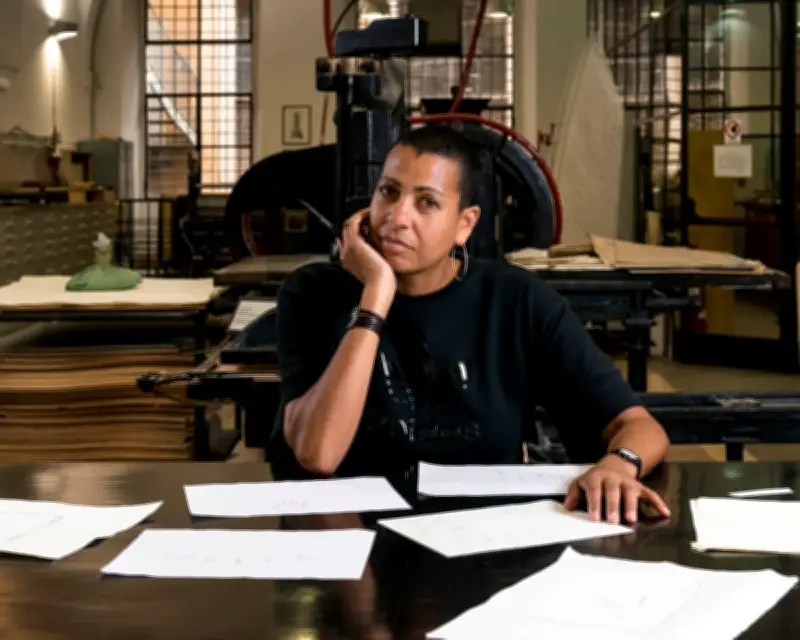
An artwork by Turner prize-winning artist Helen Cammock has been removed from the National Portrait Gallery (NPG) following a dispute over Winston Churchill's role in the 1943 Bengal famine. The video installation, titled Persistence, was taken down on Monday after a week of mounting criticism.
The controversy began when a group of 50 peers, including Churchill's grandson Sir Nicholas Soames, objected to a line in the piece. In the 40-minute narrated work, Cammock discusses Oliver Cromwell's campaigns in Ireland, stating: "He starved people, en masse, a little like the wilful starvation of the Indian population by Winston Churchill."
Peers' Letter Sparks Row
The historian and peer Andrew Roberts sent a letter to the gallery's board, signed by 50 peers, claiming the installation's description of Churchill was an "ideologically motivated rant." The Telegraph also criticized the work, calling Cammock's assertion that Churchill caused the famine "incorrect."
Initially, both Cammock and the gallery defended the work. However, on Monday evening, the NPG confirmed it had been removed at Cammock's request. "We respect her decision," the gallery said in a statement. "Just as we acknowledge the opinions of those who were offended by what was said in the film."
Artist Defends Right to Question
In her own statement, Cammock said: "There is an incredible pressure on artists and arts institutions to bend to external pressure; to be benign at best and silent at worst. I do not accept this pressure. To question, challenge and explore ideas and histories is vital to a healthy society and art is intrinsic to this."
Cammock, who jointly won the Turner prize in 2019, had been invited to create a work responding to the NPG's collection. Persistence had been on temporary display for 10 months and was scheduled to finish in August.
Debate Over Churchill's Role
Churchill's role in the Bengal famine, which caused an estimated 3 million deaths in eastern India, remains fiercely debated among academics. The Telegraph described the famine as "a lethal food shortage caused by natural disasters and exacerbated by local mismanagement and wartime supply problems." However, other scholars argue that Churchill ignored warnings about rice shortages, which were worsened by diverting food across the British empire during the war rather than keeping it in India.
The NPG stated: "The aim of this project was to give artists the opportunity to create works as personal and creative responses to our collection. The work was presented as an artistic piece, not a documentary, and the views expressed in the film do not necessarily reflect those of the NPG." The gallery added that it recognized "the legacy of those portrayed on our walls, just as we respect artistic expression."
Cammock concluded: "Nina Simone once said 'an artist's duty, as far as I'm concerned, is to reflect the times' and sometimes this means revisiting, enquiry and challenge."