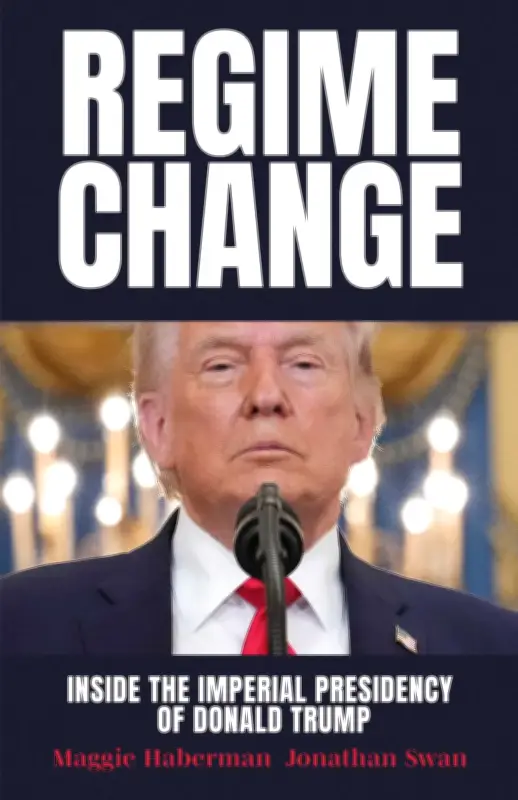
Regime Change: Inside the Imperial Presidency of Donald Trump, by New York Times White House correspondents Maggie Haberman and Jonathan Swan, paints a chilling portrait of a president unbound in his second term. The book culminates with an encounter where Trump, asked if any US president was as powerful as he, reads a tribute from a golf caddy comparing him to Alexander the Great, Caesar, Genghis Khan, Attila the Hun, Napoleon, Hitler, Mao, and Stalin. The caddy concluded: "If President Trump is the American Eagle, then William the Conqueror was merely a sparrow." Trump reflected, "It's very interesting, the power. The election was rigged. If it weren't, my presidency could never have been as powerful in the second term as it has been in the third."
A Second Term Without Restraint
The book argues that Trump's second term has been more reckless than the first, when he still deferred to experts and felt constrained by precedent. Strengthened by assassination attempts and with no possibility of another term, Trump faces no electoral consequences. Worryingly for Vice President JD Vance, the president is unfazed by the potential collapse of the Republican Party after his tenure.
Trump's taste for gold rivals Louis XIV's, with gilt throughout the refurbished White House. Aides compete for his favor: one lobbied for his face on Mount Rushmore, another proposed a $250 bill with Trump's image. Trump himself compared his planned triumphal arch at Arlington Cemetery to the Arc de Triomphe, boasting it would be 250 feet tall—dwarfing the Parisian landmark.
Tariffs and Foreign Policy
During tariff discussions, Trump forgot China, then casually added a 10 percent tariff. Yet President Xi outmaneuvered him, forcing Trump to back down. The book details Trump's daily habits: he regularly sends aides to give MAGA caps to visitors, drinks Diet Coke incessantly, and shares separate bedrooms with Melania.
The Iran War Decision
The scariest moment described is the inner-circle debate on all-out war with Iran. JD Vance opposed but said he'd support the president; Marco Rubio and chief of staff Susie Wiles agreed. The decision went ahead without opposition. The lone voice against war—arguing it would alienate the MAGA base and allow Israeli influence—was the late Charlie Kirk, described as the voice of sanity.
By the end, the subtitle "Imperial Court" feels apt. For the 250th anniversary of American independence, the US has ended up with something like a capricious emperor, not a king.