Michael Pollan Tackles the Enigma of Consciousness in His Latest Work
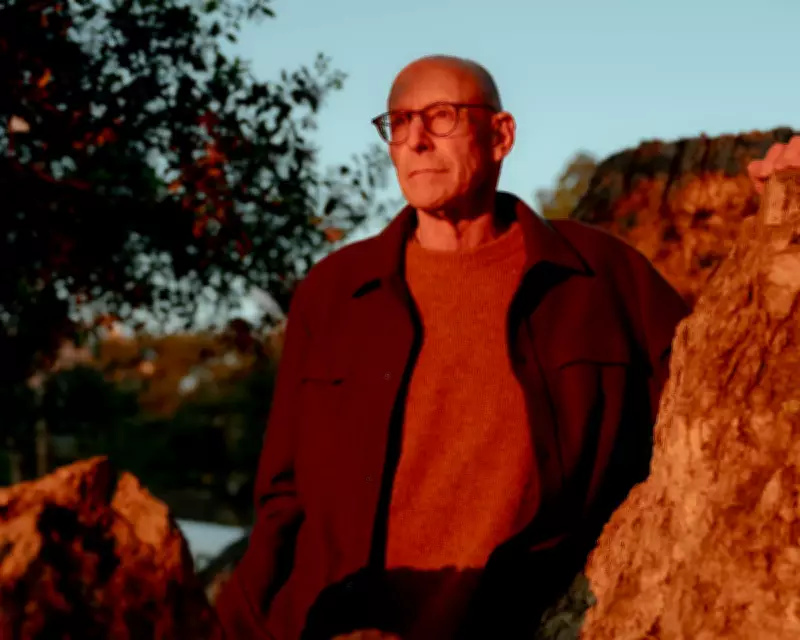
Renowned author Michael Pollan, celebrated for transforming public understanding of food and psychedelics, now turns his attention to one of humanity's greatest mysteries: consciousness. In his new book, A World Appears, Pollan embarks on a profound journey to explore what consciousness is, who possesses it, and why it matters, blending insights from science, philosophy, and personal experience.
From Plants to Psychedelics: Unlikely Starting Points
Pollan's inquiry begins with an unexpected subject: plants. At a conference on plant behaviour, he learned that plants produce anaesthetising chemicals when damaged, prompting questions about their potential to feel pain. While most scientists dismiss this idea, citing evolution and lack of mobility, Pollan uses plants as an edge case to challenge our definitions of sentience. He argues that this forces a deeper examination of consciousness, setting the stage for a broader exploration.
The inspiration for the book stemmed from a psilocybin trip in his garden, where Pollan felt a temporary certainty about the sentience of surrounding plants. This experience, though fleeting, ignited his curiosity and led him to investigate consciousness more rigorously. He notes that psychedelic experiences often foreground questions of consciousness, making them a natural extension of his previous work on drugs.

The Hard Problem and Scientific Challenges
Pollan delves into what philosophers and scientists term the hard problem of consciousness: how biological material generates mind and awareness. He structures his investigation under four headings: sentience, feeling, thought, and self. Sentience involves registering and responding to the environment, which even simple devices like thermostats exhibit. Feeling requires a body and nervous system, while thought proves elusive and intertwined with emotion. Selfhood, though central to human experience, can dissolve in states like ego death during psychedelic trips.
Throughout the book, Pollan interviews a range of experts, from establishment figures to eccentrics, highlighting the diversity of perspectives. He acknowledges the difficulty of the topic, often feeling overwhelmed by conflicting views. As an English major turned science writer, he leverages his outsider status to parse complex ideas into accessible prose, though he admits this was his most challenging project yet.
Ethical Implications and AI Dangers
The question of consciousness extends beyond academic curiosity to urgent ethical concerns. Pollan points out that if animals like cows and chickens are conscious, they deserve moral consideration, yet society often neglects this. More alarmingly, he warns about the risks of artificial intelligence. While machines like chatbots can simulate consciousness convincingly, they lack the bodily sensations necessary for genuine experience. Pollan fears that people may form dangerous attachments to these simulations, mistaking them for conscious entities.
He criticizes the lack of regulation in AI development, particularly under political leaders like Donald Trump, and calls for public conversation about the ethical use of technology. Pollan emphasizes that consciousness is a precious gift under threat from social media and AI, urging readers to defend it.
Literary Insights and Personal Reflections
Pollan also turns to literature, citing authors like Proust, Joyce, and Woolf as experts on the subjective experience of consciousness. He believes novelists capture the texture of inner life in ways science cannot, offering valuable insights into what it feels like to be human. In his own life, Pollan shares a recent difficult psychedelic experience that was later resolved through meditation, highlighting the mysterious links between altered states and mindfulness.
Reflecting on his career, Pollan notes that his books on food and psychedelics have sparked widespread conversations, with readers often approaching him to share their experiences. He remains committed to exploring new frontiers, with a future project on the microbiome planned for 2027. Through A World Appears, Pollan aims to foster greater awareness of consciousness and its vulnerabilities, hoping to inspire others to cherish and protect this fundamental aspect of existence.