The Genesis of a Global Phenomenon
It all began over five decades ago with a simple, curious question from an eight-year-old boy to his father. Adam Hargreaves asked his dad, Roger Hargreaves, 'What does a tickle look like?' That innocent inquiry sparked a creative explosion, leading to the birth of Mr. Tickle, the inaugural character in what would become the beloved Mr Men series. With a few strokes of a magic marker, Roger brought to life a bright orange blob with stretchy arms and a blue bowler hat, setting the foundation for a literary empire.
From Humble Beginnings to Unprecedented Success
Roger Hargreaves, an advertising professional weary of his daily commute from Surrey to London, saw an opportunity to craft something that would not only entertain young children but also allow him to escape the grind of city life. His son Adam recalls, 'I think that was a lot of what drove his ambition - to create something for himself. He was looking to not have to commute to London every day.' Armed with a mock-up of Mr. Tickle, drawn on card to prevent ink bleed and bound with gaffer tape, Roger faced rejection from multiple publishers until an old friend, Jack Thurman, took a chance.
In August 1971, the first six Mr Men titles were published: Mr Tickle, Mr. Greedy, Mr. Happy, Mr. Nosy, Mr. Sneeze, and Mr. Bump. These short, whimsical stories, designed to be quick reads unlike longer classics, quickly captivated children. The series expanded rapidly, with Roger drawing additional characters during his lunch breaks. By 1974, Mr Men had leapt onto television screens, narrated by actor Arthur Lowe and accompanied by an iconic theme tune. Merchandising followed, including toys, jigsaws, and clothing, and in 1981, the Little Miss series was introduced, further broadening the franchise.
A Tragic Loss and a Lasting Legacy
Tragically, Roger Hargreaves died suddenly from a stroke in 1988 at the age of 53, never witnessing the full extent of his creation's global impact. At the time of his death, the Mr Men and Little Miss books had sold millions, but the series would go on to achieve even greater heights. Today, the combined sales exceed 250 million copies, making it the fourth bestselling children's book series of all time, translated into 15 languages. An animated series streams on YouTube, a new TV series is in production, and a major film is being developed by the studio behind the Paddington franchise.
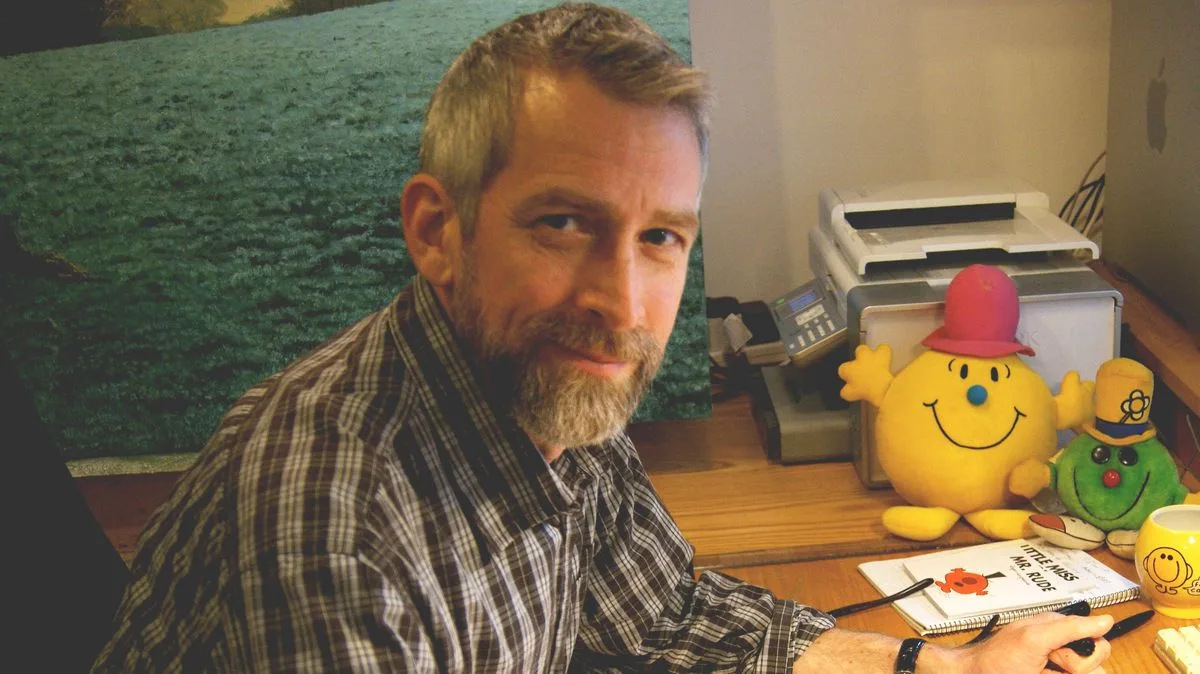
Adam Hargreaves, who was 25 and working in farming when his father passed, stepped into his shoes, taking over the family business. He says, 'I think it was strangely cathartic, even though I was sitting at my dad's desk and in his office, it gave me something to concentrate on.' In 2003, Adam began illustrating new characters, creating three Mr Men and three Little Miss additions. His mother, Christine, managed the business with Roger and later sold the rights to Chorion for £28 million in 2004.
The Enduring Magic of Mr Men
Reflecting on his father's work, Adam emphasises Roger's primary goal: to make children giggle. 'I think my dad's main thought and ambition was just to make young children giggle. He was always having ideas, creative ideas, and he was ambitious creatively.' Roger admired Charles Schultz, creator of Peanuts, and aspired to be a strip cartoonist, but it was that fateful breakfast-time question that unlocked his true calling.
Despite the franchise now boasting over 90 characters, Adam's favourite remains Mr Silly, which he believes epitomises his father's sense of humour. 'I always imagine that was my dad's favourite character. And I also love the story. I think the story's genius. It's very funny.' As the Mr Men universe continues to expand with new media projects, Adam expresses pride and sorrow that his father isn't here to see it. 'He'd have been incredibly chuffed. I mean really excited, to have Mr Men up on the big screen in the cinema. He would have been very, very happy to have seen that and it's a terrible shame that he can't.'
The legacy of Roger Hargreaves lives on through the joyful, colourful characters that have brought laughter to generations of children worldwide, proving that sometimes, the simplest questions can lead to the most extraordinary creations.