Lost Lambs Review: Clever Wordplay Cannot Salvage Hollow Satirical Effort
In the contemporary literary landscape dominated by social media trends, particularly the phenomenon known as "BookTok," there exists a troubling tendency where style frequently triumphs over substance. Many celebrated works appear to exchange genuine satirical depth for mere aesthetic appeal. This critical examination poses a fundamental question regarding Madeline Cash's debut novel, Lost Lambs: does it function as a penetrating critique of modern American society, or does it merely present a superficial collection of cartoonish humor reminiscent of television satire?
The Core Challenge of Comic Fiction
The primary difficulty facing any comic novel is the fundamental requirement to be genuinely amusing. A substantial distinction exists between a work of authentic satire and a carefully curated aesthetic presentation. As an experienced book critic, one searches for that essential "intellectual friction"—the dynamic collision where a narrative's humor powerfully intersects with its exploration of human experience.
Regrettably, within the current environment of viral "BookTok" successes, this crucial friction is often deliberately bypassed. In its place, authors frequently opt for a two-dimensional imitation of contemporary societal unease. This stylistic decision prioritizes capturing a specific "vibe" over undertaking the more demanding and complex labor required for meaningful satirical commentary.

Promising Premise Meets Disappointing Execution
Madeline Cash's inaugural novel, Lost Lambs, arrives amidst considerable anticipation, boasting a premise ripe with satirical potential. The story centers on a disintegrating American family unit, weaving together threads of conspiracy theories, radicalized teenagers, and the ominous presence of a tech billionaire encroaching upon a small coastal community. The narrative unfolds through the chaotic lives of the Flynn family, with each member spiraling into their own absurd subplot involving affairs, online extremism, and apocalyptic paranoia.
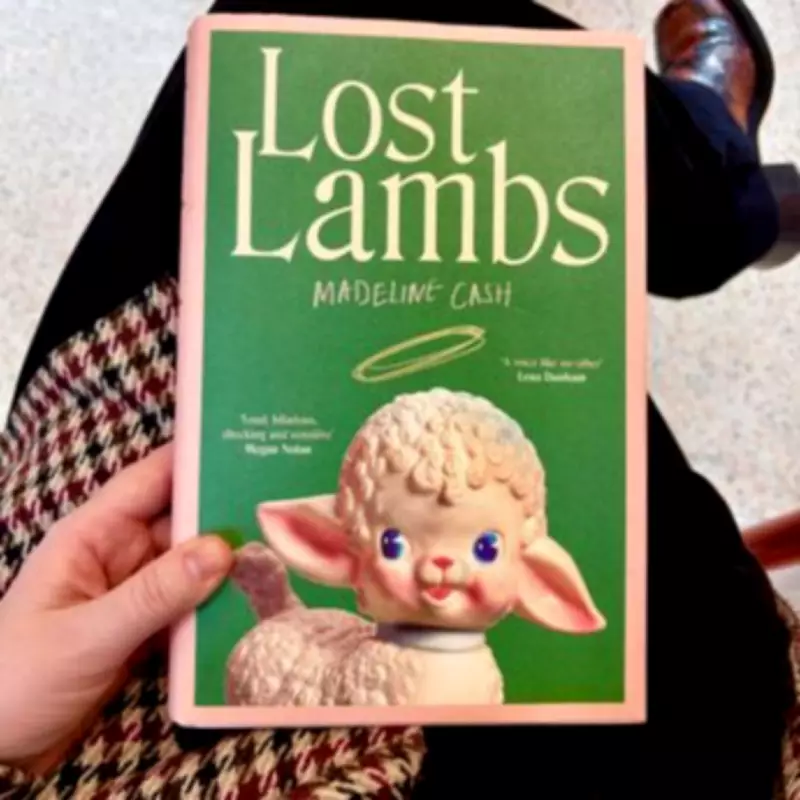
For those active on book-centric social media platforms like BookTok or Bookstagram, this novel's visually appealing and photographable cover has become ubiquitous. Initial critical reactions fueled further excitement; one reviewer from The Times likened it to "an episode of The Simpsons," brimming with cartoonish absurdity, while The Irish Times commended its "pleasurably ridiculous story about the usual American neuroses." On paper, the setup appears fertile ground for incisive comedy—a satire of the modern American family as parents navigate an open relationship while their three daughters seek meaning and adventure.
Where the Satire Loses Its Bite
Every character within Lost Lambs desperately scrambles for something greater than themselves. Harper, one of the daughters, dedicates the novel to unraveling conspiracy theories, while the middle child, Louise, falls victim to grooming by online extremist ideologies. However, effective satire necessitates a certain narrative pressure—a compelling sense that the depicted absurdities are revealing underlying truths about reality.
Too frequently in Lost Lambs, the jokes simply accumulate without coalescing into insight. A prime example is the novel's recurring "gnat" gag, where words become infected with stray letters ("extermignate," "gnaturally"). This device grows wearisome rapidly, failing to evolve beyond a simplistic linguistic trick. The humor rarely sharpens into meaningful commentary. Instead of cohesive satire, readers encounter a cultural collage: tech villains, therapeutic jargon, teenage nihilism, and suburban malaise assembled without deeper synthesis.
This approach results in humor that falls flat through oversaturation, a pitfall that arguably plagued later seasons of The Simpsons as well. The novel's relentless barrage of puns and gags ultimately overwhelms any fleeting moments of genuine insight. Brief flashes where the grotesque edges of American life come into sharper focus are quickly buried beneath the textual noise.

The Verdict on Literary Substance
Comic fiction possesses the unique capacity to illuminate the profound absurdities of contemporary existence. What it cannot accomplish is enduring solely on the strength of clever wordplay and puns. Lost Lambs demonstrates that while aesthetic appeal and viral potential may capture initial attention, they cannot substitute for the intellectual rigor and emotional resonance required of truly impactful satire. The novel serves as a cautionary tale in an era where literary success is increasingly measured by online visibility rather than substantive critique.