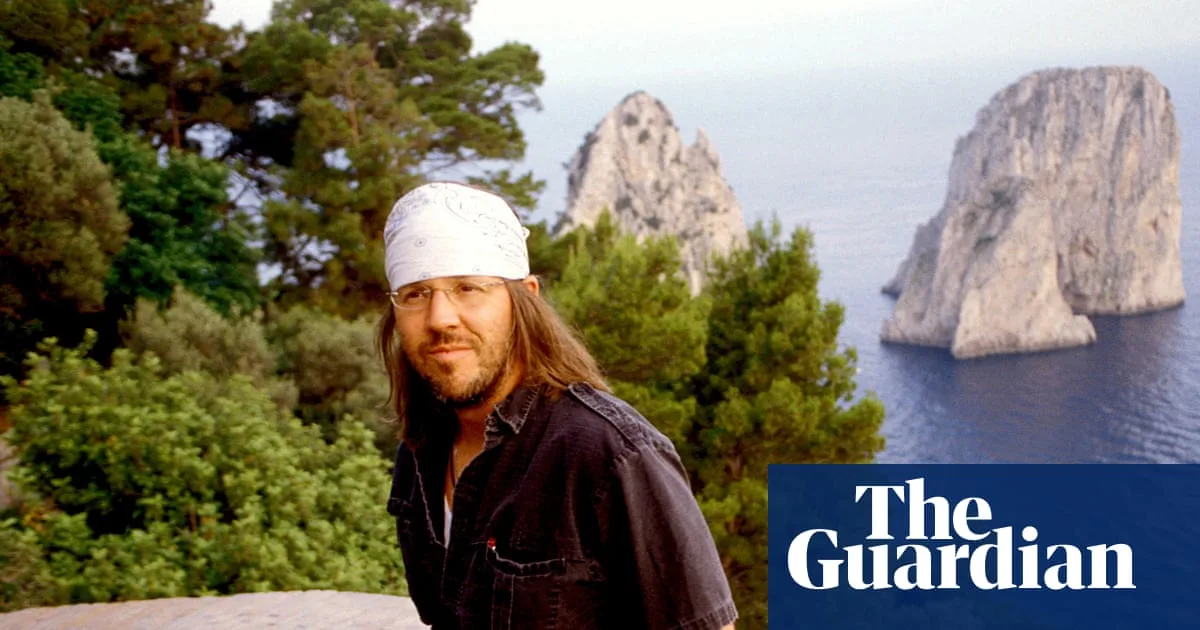
Forget its reputation as a performative read for a certain breed of intense young man, thirty years after its publication, David Foster Wallace's epic novel still delivers, says the author of Crying in H Mart.
I'm not what you might consider Infinite Jest's target demographic. The novel's reputation precedes it as a book infamously few ever finish, and those who do tend to belong to a particular breed of college-age guys who talk over you, a sect of pedantic, misunderstood young men for whom, over the course of 30 years, Infinite Jest has become a rite of passage.
Most readers come to the novel in their formative years, but I was a late bloomer. It wasn't until the winter of 2023 that, at the age of 34, smoking outside a party in Brooklyn, I found myself suddenly motivated to embark on the two-pound tome. A boy I knew from high school brought it up, and as I happened at the time to have developed a casual interest in those works one might attribute to the 'lit-bro' canon, it seemed the appropriate time to take it on.
It's difficult to pin down what exactly constitutes this canon beyond the readership that tends to gravitate toward it, but its defining feature seems to be the centering of male loneliness. A male protagonist, isolated and misunderstood, stands at odds with social norms and expectations. The spaces these works operate in are largely male-dominated – war zones, finance offices, fight clubs. In recent years, the backlash against such success has done as much as any single intrinsic commonality to create the perception of similitude throughout the canon.
I aimed to read 50 pages a day. Some days 50 pages felt breezy, cinematic, riveting; other days they felt like a slog. Though neither the Enfield Tennis Academy nor the Ennet House Drug and Alcohol Recovery House is an inherently male-dominated space, the majority of the characters are men, all of them completely levelled by loneliness. In terms of pace and accessibility, the novel stands starkly apart from the genre with which I had come to associate it.
Reading is often interrupted by endnotes, of which there are 388 in tiny 8pt font. They range in complexity from a one-word translation of the Québécois word for wheelchair to a nine-page inventory of a fictional film director's collection of archival footage. 'The endnotes are very intentional and they're in there for certain structural reasons … It's almost like having a second voice in your head,' Wallace said in an interview with Charlie Rose in 1997.