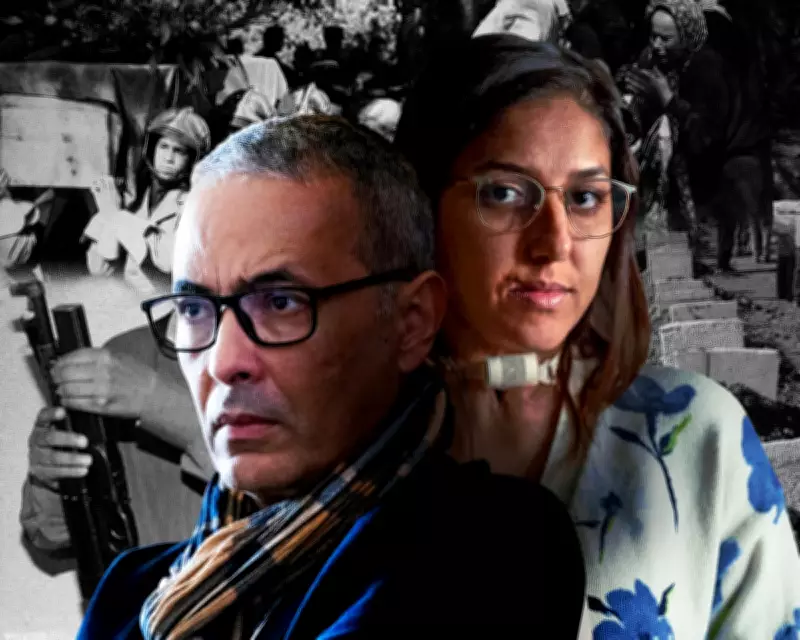
The prestigious Goncourt Prize, France's highest literary honour, is awarded annually in a traditional ceremony at a Parisian restaurant, where judges in dark suits deliberate over classic dishes and fine wine. Winning this prize catapults authors into the global literary canon, alongside giants like Marcel Proust and Simone de Beauvoir, and guarantees significant financial rewards, with sales often soaring to nearly €1 million post-award.
A Tense Victory Amidst Political Strain
In November 2024, the Académie Goncourt awarded the prize to Kamel Daoud, an acclaimed Algerian writer residing in France. This victory occurred during a period of heightened tension between France and Algeria, exacerbated by Algeria's political repression and France's stance on the Western Sahara conflict. Daoud's career has been deeply influenced by this fraught relationship; he relocated to France in 2023, citing an inability to "write nor breathe" in Algeria, and his publisher, Gallimard, was barred from Algeria's 2024 book fair, likely due to Daoud's controversial novel, Houris.
Exploring Algeria's 'Black Decade'
Houris delves into Algeria's civil war, known as the "black decade" of the 1990s, a conflict between the government and Islamist groups that resulted in up to 200,000 deaths. The war remains a sensitive topic, largely suppressed by a 2005 reconciliation law that prohibits discussion of the period to protect state institutions. Daoud's novel, unpublished in Algeria, follows Fajr or Aube, a woman who survived a throat-slitting massacre as a child, leaving her with a tracheostomy and a barely audible voice. The story, praised by Goncourt judges for giving voice to women's suffering, unfolds as an interior monologue between Aube and her unborn child, interspersed with historical commentary from a character named Aïssa.

Saâda Arbane's Accusations
Eleven days after the Goncourt ceremony, Saâda Arbane, a 30-year-old Algerian woman, appeared on television, accusing Daoud of stealing her personal story. Arbane, who survived a similar throat-slitting attack at age six, claims she confided in her psychiatrist, Aïcha Dehdouh, who is Daoud's wife. Arbane alleges that Daoud used details from her medical records and personal life without consent, leading her to file lawsuits in both Algeria and France for invasion of privacy and libel.
Striking Similarities Between Life and Fiction
Arbane's lawyers have identified approximately 30 parallels between her life and the character Aube. Both are survivors of terrorist attacks where their throats were slit, resulting in tracheostomies and whispered speech. They share backgrounds as children of shepherds, were adopted by prominent figures, attended the same high school, owned hair salons, and have a passion for horses. Even specific details, such as the length of their scars (17cm) and experiences with abortion pills, align closely. Arbane's aunt revealed that reading the novel uncovered private information she never knew about her niece, suggesting deep breaches of confidentiality.
Daoud's Defense and Political Implications
Daoud denies the allegations, asserting that his novel is a work of fiction inspired by multiple stories from the black decade. He argues that Arbane's case is orchestrated by the Algerian government to silence critics, pointing to his own persecution, including international arrest warrants and missed family events due to exile. In emails, Daoud emphasized the broader context of Algeria's repressive regime under President Abdelmadjid Tebboune, which has jailed numerous activists and writers, such as Boualem Sansal.
Literary and Ethical Debates
The legal battle has sparked intense debates within literary circles about ownership of personal stories, especially when power imbalances exist between a famous male writer and a female victim. In France, the case has become entangled with broader issues of Franco-Algerian relations, colonialism, and immigration, often overshadowing Arbane's individual claims. Despite the controversy, Houris has sold over 450,000 copies and secured English rights, highlighting the complex interplay between art, ethics, and politics.

Ongoing Legal Proceedings and Cultural Impact
Arbane's case in France focuses on privacy infringement, with precedent from a similar 2011 lawsuit won by her lawyer, William Bourdon. In Algeria, the case has stalled, possibly awaiting the French outcome. Meanwhile, Daoud's portrayal as a martyr against authoritarianism has divided opinions; some Algerian critics accuse him of pandering to French conservatives, while others acknowledge the state's manipulation of the situation. The saga underscores the sacrifices demanded of both victims and writers in confronting traumatic histories, raising poignant questions about memory, justice, and artistic license in a politically charged landscape.