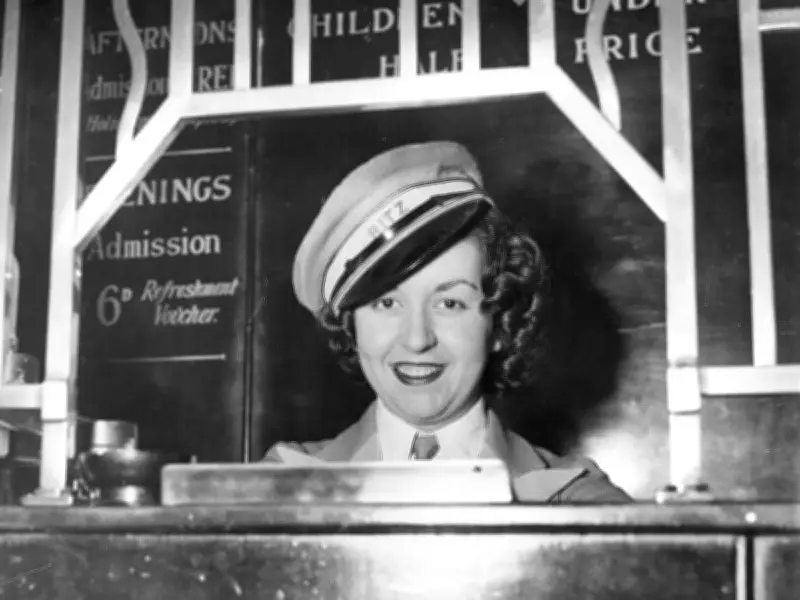
A new book, Britain in the 1930s by Steven Brindle and Maureen Hill, published by Atlantic Publishing at £50, presents 600 unseen black and white photographs of the UK, revealing a nation poised between tradition and modernity. The collection captures a decade of marked contrasts, from the economic devastation of the north to the affluence of the south and midlands.
A Decade of Contrasts
The 1930s led novelist and broadcaster JB Priestley to his famous vision of "three Englands" – the ancient country of cathedrals and villages, the blackened and scarred industrial Britain created by the Victorians, and the Americanised new consumer world of suburbs, cinemas and motorcars. He came to this conclusion after travelling the country with his suitcase and a typewriter to find material for his book English Journey, published in 1934.
The north was hit hard by economic turmoil, with unemployment levels soaring above the national average due to the collapse of industries like coal mining and shipbuilding. However, seaside cities became alive in the 1930s, thanks to the expansion of cheap rail travel and the emerging concept of paid holidays, with thousands of working-class families flooding to the coast during their "Wakes Weeks".
But the south and the midlands saw growth in new industries, notably car making and electrical goods, and were able to withstand the economic fallout which the book says was distributed in a "grotesquely uneven way".
Capturing the Era in Photographs
Counties covered by the book include parts of the old Lancashire, which are now in Greater Manchester, Cheshire, Yorkshire, Lancashire, and Northumberland. Images include an outdoor swimming pool in Rochdale in 1936 known as the Norden Riviera; soldiers clearing snow from the Manchester to Sheffield railway line; and a busy Deansgate in December 1930.
The Norden Riviera opened in 1935 during a boom in open air swimming in Britain. Located just off Edenfield Road in Norden, it was 'Rochdale by the sea' for many who could not afford a longer journey or who preferred something nearer to home. The pool was heated and came equipped with diving boards, slides and spectator stands. It was surrounded by attractive gardens, a cafe, a sports field with horse riding facilities, fences for show jumping, cricket pitches and areas for ball games.
The Manchester Guardian newspaper on August 17, 1935 described the facility. It said: "The Norden pool, which measures 80ft by 40ft and is from 2ft 6in deep to 9ft deep is situated in the grounds of what, before the war, was Tenter House, just beyond the bleachworks at Norden, and the stables, where horses are kept for hire, belonged to this residence."
"It is surrounded by green deckchairs and by an outdoor café, where one may have tea (or other meals) under green and yellow umbrellas. All around are delightful woods, beyond which one can see a shoulder of hill - but not the three factory chimneys lower down the valley."
"A round paddling-pool satisfies the children too young to swim, and the conservatory of the old house has been turned into a ballroom. Next season, tennis courts, a gymnasium, a miniature golf course, and a children's playground will be added to the attractions of the Norden Riviera."
Landmarks and Everyday Life
Other images in the book include Manchester's Cenotaph in St Peter's Square in 1935 in its original location before it was dismantled and reconstructed by Manchester City Council in 2014 at the northeast corner of the square next to the town hall to make way for the expansion of the Metrolink tram service. The memorial was first unveiled on July 12th 1924 by the Earl of Derby assisted by a Mrs Bingle, a local resident, whose three sons all died in the First World War.
A street in Wigan is pictured decorated with washing strung out across it. A Liverpool policeman directing traffic is seen standing in a protector box. A 1933 picture of the then "Liverpool to South East Lancashire Road" shows just eight vehicles over a half mile distance. The 27 mile highway was built at a cost of £3m.
The 1930s marked the golden age of the British seaside. Packed beaches, bustling promenades, pleasure piers and elegant hotels lured millions. Blackpool and Morecambe became synonymous with summer holidays. Camping, walking and boating holidays grew in popularity, while lidos, dance halls and pavilion theatres reflected a new culture of recreation and entertainment.
Beyond the towns and cities, much of rural Britain appeared little changed from previous centuries. Medieval market squares, village greens and ancient churches dominated the landscape, while agricultural shows, livestock markets and seasonal fairs continued to shape everyday life. The decade was a world where horses and carts still shared roads with motorcars, and where quaint picturesque villages, market towns and centuries-old buildings remained at the heart of British identity.
Photographers and Publication
Co-author, Steven Brindle, is an historian and conservationist from Blackburn. He studied History at Oxford and spent almost forty years with English Heritage in a variety of roles as a historian and Inspector of Ancient Monuments. He has published extensively on architectural and engineering history.
The photographs in the collection are from the archive of Associated Newspapers, plus contributions from many distinguished photographers. They include James Dixon-Scott, a photographer who wanted to record landscapes and ways of life that he felt were vanishing; Anthony Frank Kersting, a leading British architectural photographer and a fellow of the Royal Geographical Society; and Will F Taylor, known for photographing sweeping panoramic landscapes across Britain from the end of the Victorian period right through the 1930s. The book is published on November 5th.