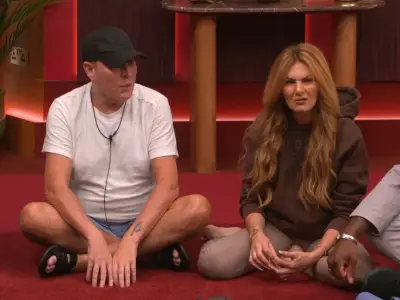
A psychologist has created a three-minute quiz inspired by The Traitors to reveal how you handle pressure, trust and difficult decisions, and whether you'd be a Faithful or Traitor in the castle.
The quiz arrives as millions tune in tonight (October 7) to watch Richard E. Grant, Maya Jama and James Acaster as Traitors on BBC's Celebrity Traitors.
How the quiz works
Dr George Sik, Chartered Occupational Psychologist and psychometric testing expert at eras, designed the Situational Judgement Quiz with nine scenarios modelled on decisions contestants might face in the castle.
The quiz asks how you would react to Traitors-style situations, taking 2–3 minutes to complete, with no right or wrong answers.
It pinpoints which decision-making style best reflects your instincts, whether you lean towards control, gathering information, teamwork or protecting relationships.
What the science says
Situational judgement tests are used in recruitment to examine how individuals tackle realistic scenarios and make judgements under pressure, focusing on suitable responses to specific situations.
"The interesting thing about The Traitors is that it puts people into situations where there is rarely a straightforward answer," said Dr Sik.
"You have incomplete information, competing priorities and enormous social pressure, so the decisions you make can tell us something about the way you approach situations where the outcome is uncertain."
The opening scenario asks whether you'd prefer to be a Faithful or a Traitor, with motivations ranging from desiring control and information to favouring collaboration or developing relationships.
"Being confident about a decision and making a good decision are not necessarily the same thing," he explained.
"Under pressure, we can be influenced by the information available to us, the people around us and what we believe the consequences of getting it wrong might be."
Four decision-making styles
The quiz examines four broad approaches: CONTROL – seizing the initiative and shaping outcomes; INFORMATION – collecting knowledge before committing; COLLABORATION – partnering with others to understand what's unfolding; and RELATIONSHIPS – forging connections to navigate uncertainty.
"There is a big difference between answering a question when you're sitting comfortably at home and making a decision when you are surrounded by people you may or may not trust," said Dr Sik.
"The pressure changes the context, and that is precisely why situational judgement is so interesting."