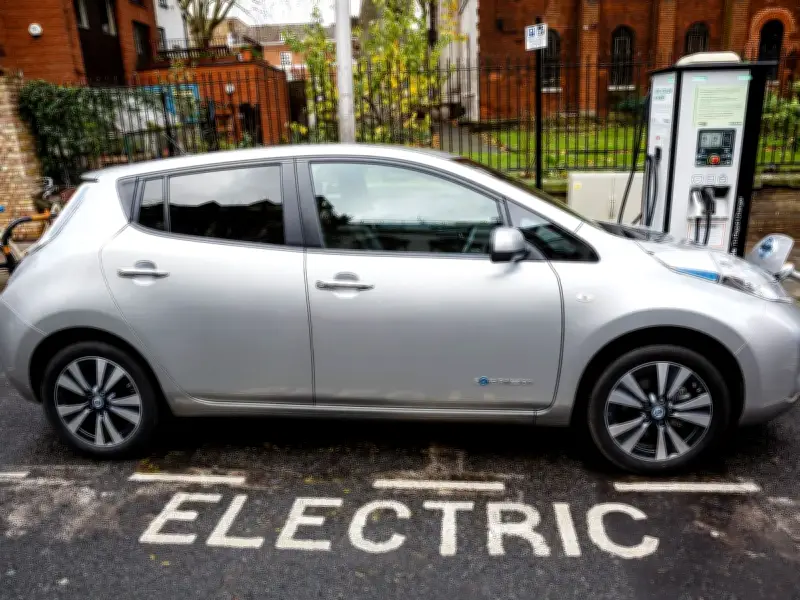
The government has broken its silence over fears of an electric vehicle "pavement tax" hitting motorists, insisting it is actively reviewing the spiralling costs of public charging.
The administration has faced growing scrutiny over charging arrangements that risk penalising drivers without driveways who are forced to rely on public infrastructure or run cables across footpaths.
What is the 'pavement tax'?
This situation has been labelled a "pavement tax", as motorists without driveways are forced to use public charging points. Campaigners warn that this could create an average divide of £200, and there are fears that it could hinder the shift towards electric vehicles. Taxes on EVs have also been increased over the past couple of years, sparking similar concerns.
Now, Whitehall has intervened to address the widening disparity between home and on-street charging. A Department for Transport spokesman exclusively told the Daily Star: "We also want to make it even easier and more affordable for everyone to switch to an EV.
Government's response
"That is why we're reviewing the cost of public charging, funding over 100,000 more public charge points, and providing £25 million to help residents without driveways charge at home and benefit from cheaper rates."
According to Whitehall officials, the Government is firmly committed to ensuring public charging remains accessible and fair for all drivers, particularly those in terraced housing or flats who lack dedicated off-street bays.
An independent review into public charging costs has now been commissioned, headed by independent chair Philip New, tasked with exploring targeted measures to lower the premium prices motorists currently face at public stations.
Support for drivers
In details provided by the Government, officials confirmed that the £25 million EV Cross-Pavement Channels Grant has been launched to empower local authorities to install specialised gullies in pavements. These channels allow residents without driveways to safely run domestic cables from their homes to kerbside vehicles, unlocking significantly cheaper household energy tariffs.
Ministers also confirmed they are keeping the controversial 20% VAT rate on public charging—compared to just 5% for domestic home electricity—under continuous review.
The moves form part of a broader £400 million Local EV Infrastructure (LEVI) Fund, which the Department for Transport expects will install more than 100,000 public charge points across England so motorists can plug in near their doorsteps overnight.
Government figures show that wider state support for the net zero motoring shift now totals £7.5 billion across infrastructure, manufacturing, and consumer incentives. That includes a £2 billion Electric Car Grant launched in July 2025, which ministers say has already supported over 180,000 motorists to buy an electric car.
Officials maintained that recent swings in petrol and diesel prices highlight why Britain must press ahead with ending reliance on fossil fuels, with an extra £600 million earmarked nationwide between now and 2030 to bolster the country's rapid-charging network.