Steven Spielberg's Role in Transforming Auschwitz Survivor into Anti-Hate Warrior
Spielberg Helped Auschwitz Survivor Become Anti-Hate Warrior

How Steven Spielberg Helped an Auschwitz Survivor Confront Her Past

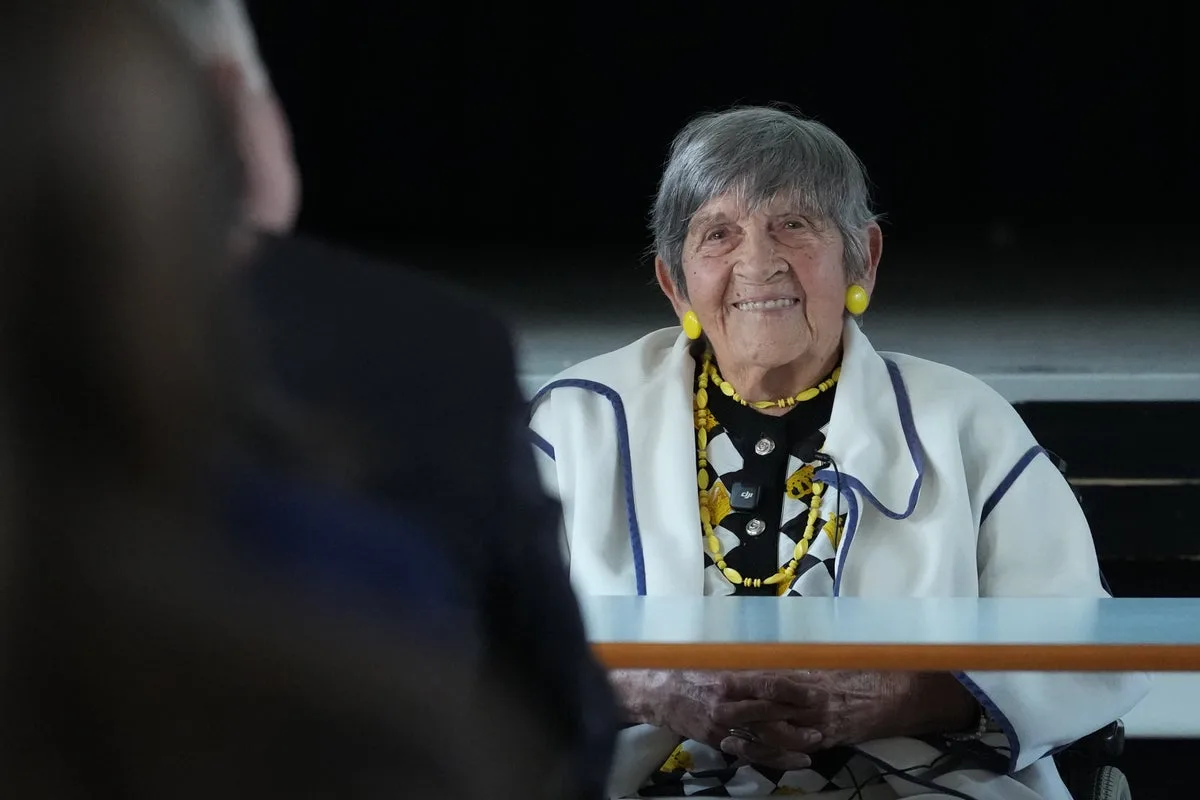
Ginette Kolinka, a 101-year-old French centenarian with a warm and generous smile, stands as one of the last remaining survivors of the Auschwitz-Birkenau death camp. Her journey from silent trauma to vocal activism against hatred was profoundly influenced by an unexpected figure: legendary filmmaker Steven Spielberg.

The Stark Reality of Survival

When questioned about the horrors she endured, Kolinka offers a chillingly definitive response. "If I had a child, well, I would prefer to strangle them with my own hands than make them go through what I went through," she states. This stark answer encapsulates the unimaginable suffering she survived, transforming her into a formidable warrior against antisemitism in contemporary France.

Through countless interviews, school visits, and her 2019 memoir Return to Birkenau, Kolinka dedicates herself to ensuring the lessons of the Holocaust are never forgotten. She aims to prevent any claims of ignorance about the Nazi extermination of six million European Jews, inspiring young pupils to embrace the vital duty of remembrance.

Wide Pickt banner — collaborative shopping lists app for Telegram, phone mockup with grocery list

The Spielberg Catalyst

The turning point came thirty years ago, following the 1993 release of Spielberg's Schindler's List. The filmmaker launched a foundation dedicated to collecting testimonies from Holocaust survivors. When the foundation contacted Kolinka, she was initially reticent, believing talking would be a waste of time.

However, in 1997, an interviewer sat down with her, and the memories flowed for nearly three hours. "For the first time, I found myself compelled to think about it again," Kolinka recounts. The foundation has since collected over 60,000 testimonies, with Kolinka's being among the most powerful.

This process helped her confront the mental and physical scars buried for decades, including survivor's guilt and the eternal regret of not being able to give proper goodbyes to her father, Léon, and 12-year-old brother, Gilbert, before they were sent to the gas chambers.

France's Historical Context and Kolinka's Prominence

During World War II, Nazi-occupied France deported 76,000 Jewish men, women, and children, mostly to Auschwitz-Birkenau. Only 2,500 survived. France's leadership took fifty years to officially acknowledge the state's involvement, with then-President Jacques Chirac in 1995 describing French complicity as an indelible stain on the nation.

Today, Kolinka has become the most prominent remaining French survivor of Auschwitz-Birkenau. According to the Paris-based Union of Auschwitz Deportees, perhaps fewer than thirty such survivors are still alive.

Educating the Next Generation

Recently, at the Marcelin Berthelot high school east of Paris, pupils hung on her every word during a ninety-minute talk. She described her arrest in March 1944, the harrowing journey in windowless animal-transport wagons from Paris, and the violent arrival at Auschwitz-Birkenau three days later.

"The Nazis' hatred of Jews was such that they hunted for every detail that could make us suffer, humiliate us," she told the silent audience. Rolling up her left sleeve, she revealed the identification number—78599—tattooed on her forearm. "Some people’s numbers cover their entire arm," she noted. "But I have a nice little number."

The Brutal Selection Process

Kolinka spared the teenagers the full horror, not detailing that most of the 1,499 people transported with her in convoy No. 71 were killed on arrival. She was among a couple of hundred selected for forced labour instead of the gas chambers and crematoriums.

As a prisoner, she witnessed subsequent trains being unloaded, knowing those aboard would soon be dead. Focused on survival, she shut down her emotions. "I became a robot," she explained.

Inspiring Admiration and Resolve

After her talk, pupils gathered around her for more questions, giving her rock-star treatment. Nour Benguella, 17, and Saratou Soumahoro, 19, were giddy with admiration, both describing Kolinka as "extraordinary."

Pickt after-article banner — collaborative shopping lists app with family illustration

"An amazing woman. It’s wonderful to have her here in front of us. This strength of testimony, her mental fortitude," said Nour. "Keeping this history alive is the only thing that will permit us to not make the same mistakes."

Through her relentless advocacy, Ginette Kolinka ensures that the memory of the Holocaust remains a powerful tool against hatred, her voice strengthened by the catalyst of Steven Spielberg's foundational work.