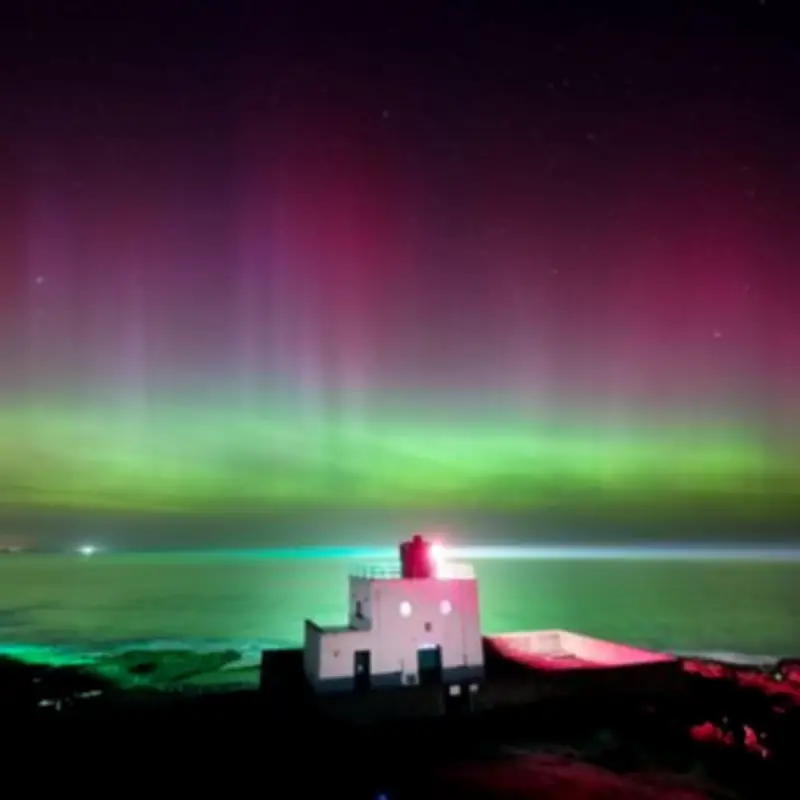
The Met Office has issued an update on the potential visibility of the Northern Lights after a geomagnetic storm alert was announced. A G3 Geomagnetic Storm Watch is in effect for Monday, June 8, raising hopes of seeing the aurora borealis across parts of Europe, including Scotland. However, the long daylight hours typical of this time of year may significantly reduce the chances for most of the UK.
What Causes the Northern Lights?
The Northern Lights, or aurora borealis, are a natural light display caused by large explosions of activity from the sun. These explosions throw vast amounts of charged particles into space. When these particles are captured by the Earth's magnetic field, they collide with gas molecules in the atmosphere during an event called a geomagnetic storm. These collisions release energy in the form of light, creating spectacular colourful displays in the sky.
Geomagnetic Storm Watch Details
A G3 Geomagnetic Storm Watch alert is in force on Monday, June 8. According to the Met Office, the arrival of a coronal mass ejection (CME) is expected from mid to late morning on that day. This is likely to enhance the aurora across Canada and northern USA. While activity may ease by the evening across Europe, there will still be a chance of visible aurora at the northernmost geomagnetic latitudes before conditions return to background levels on June 9.
The Met Office noted that the visibility of the aurora is likely to be further limited by the reduced hours of darkness at this time of year. A spokesperson told the Manchester Evening News: "Although there is some expected geomagnetic activity in the forecast, the longer hours of daylight are likely to prevent sightings of the aurora in the UK, except perhaps from areas in the far north of Scotland."
Tips for Viewing the Northern Lights
According to the British Geological Survey (BGS), the aurora sits hundreds of kilometres up in the sky, above the height of clouds. Therefore, clear skies are essential when trying to catch a glimpse of the Northern Lights. For those in the far north of Scotland, there may be a brief window of opportunity if skies are clear and darkness falls. However, for most of the UK, the combination of daylight and cloud cover is expected to make sightings unlikely.