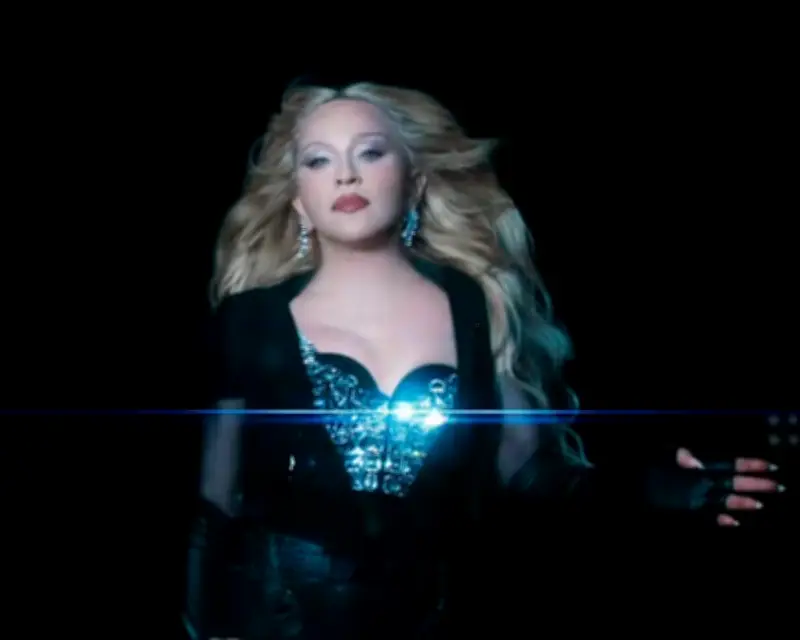
Madonna has long been known for her relentless forward momentum, but her new album Confessions II represents a dramatic shift: she has finally embraced nostalgia. The record, released last week, is being hailed as her most vital work in two decades, a return to the dancefloor-driven sound that defined her 2005 masterpiece Confessions on a Dance Floor.
A Creative Reckoning with the Past
According to Lucy O’Brien, author of the biography Madonna: Like an Icon, Madonna’s resistance to looking back has often been a core part of her artistic identity. But after a near-fatal bacterial infection in 2023 and the emotional journey of her Celebration Tour, she found new creative freedom in revisiting her past. “I feel like my brain is tuned into memory,” Madonna said recently. Reuniting with producer Stuart Price, who helmed the original Confessions and served as musical director for the Celebration Tour, allowed her to transform those memories into gold.
The album’s standout track, Danceteria, originated from a late-night session where Madonna recounted stories about figures from the late 1970s and early 1980s New York club scene, including Basquiat, Keith Haring, designer Maripol, and best friend Debi Mazar. She told Price, “Leave this with me. I’ll go home and think about it.” The next day, she returned with three pages of lyrics, picked up an old microphone held together with tape, and recorded raw spoken word and an explosive chorus.

Emotional Depth Beneath the Bangers
What gives the club tracks their power is the emotional weight Madonna weaves into them. On Bizarre, she recalls a “movie star, deep blue eyes” and a 1960s Shelby Cobra driven too fast—a reference to a wedding gift she gave Sean Penn. The hurt of a broken marriage still stings: “Now you’re gone I feel so empty,” she sings. On LES Girl, she remembers a Lower East Side boy with a “Marlon Brando face,” while Betrayal vents resentment toward her late stepmother: “You’ll never take my mother’s place … you betrayed me, you enslaved me.”
Perhaps most poignant is Fragile, a song about her brother Christopher, who died while she was making the album. In 2008, Christopher published a scathing tell-all memoir, Life With My Sister Madonna, leading to years of estrangement. But when he was dying of cancer, they reconciled. Madonna sings, “I see you standing there / I see inside your soul and I feel whole.” O’Brien compares the track’s acceptance to Mer Girl on Ray of Light, where Madonna confronted grief about her dead mother instead of running away.
Dance Music as Catharsis
Madonna has always created her best songs when working one-to-one with a producer, letting emotions flow through a process Price calls “journaling and scrapbooking.” On Confessions II, trails of Chicago house and Detroit techno are refracted through thundering big-room chug to create a sense of dance music as cathartic and healing. As Madonna intones on One Step Away, “The dancefloor is not just a place, it’s a ritualistic space where movement replaces language.”
The album is the culmination of work that began with a now-shelved Universal biopic project and the Celebration Tour, which O’Brien describes as “less a triumphalist greatest hits and more a meditation on ageing, love and loss.” One key moment was Madonna’s performance of Justify My Love, singing to her younger self “as if in a faraway dream.”
Why Nostalgia Works Now
O’Brien notes that older female artists often resist nostalgia for fear of being seen as past their prime. But Madonna’s approach—like David Bowie revisiting his 1970s Berlin period on 2013’s The Next Day—shows that delving into the past can be “poignant and productive.” Facing grief and loss has made her music deeper than it’s been in 20 years, but also more alive. “I’m the voice in your ear, talking to you, inviting you,” Madonna says, at the vanguard between life and death.

Re-signing to Warner Records in 2021 restored her creative leeway, particularly as the agreement gives her global rights to her entire back catalogue. This freedom, combined with her near-death experience and the emotional work of the Celebration Tour, has allowed Madonna to stop chasing trends and find creative freedom in looking back.