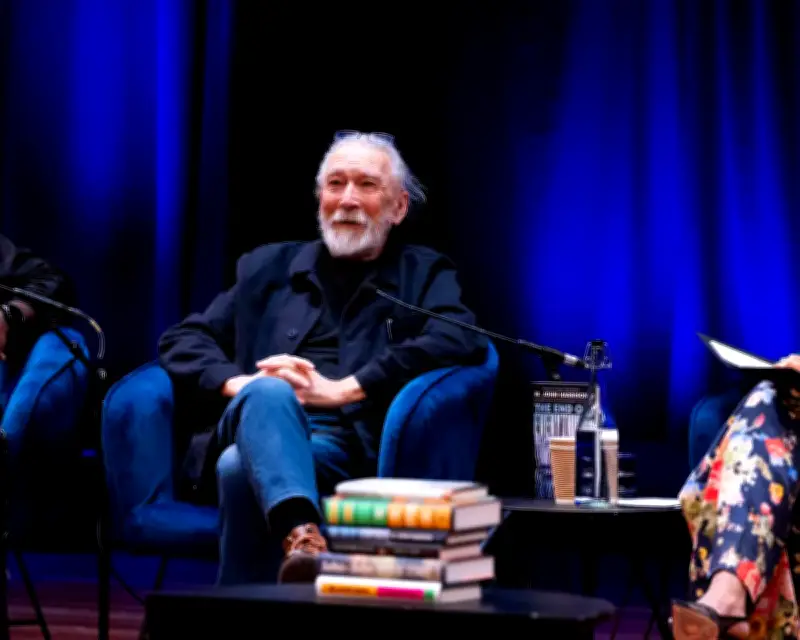
M John Harrison has won the Booker Prize for his novel The End of Everything, becoming the first science fiction author to receive the award. At 81, he is also the oldest winner in the prize's history.
The win caps a 60-year career that moved from the margins of literature to the centre, without Harrison ever compromising on a literary vision that remains deeply weird and unique. The novel is baffling, unnerving and confusing – very purposefully so.
A dystopian tale of collapse
The End of Everything follows two lost souls on the Kent coastline: beachcomber Phillip and his artist aunt Marnie, decades after alien entities called the iGhetti have leaked into our world and triggered a slow-motion social collapse. The City of London is a battle zone; strange biological "artefacts" are washing up from the sea; people are unpredictably affected by episodes of psychic rupture they call, with classic British understatement, a "bad patch".
The novel's resonance with current events is striking. Harrison's own description of the book – "What happens when all of our expectations and explanations of the world become an ongoing disaster, but we still have to make a life?" – is a strikingly topical question for 2026. The artefact that Phillip pulls out of the sea, hoping to sell it on the black market, shows the mimicry and uncanny self-actualisation of a large language model.
From genre margins to literary recognition
Harrison started out in science fiction, publishing his first short story in Science Fantasy magazine in 1966, and becoming part of the 1970s SF New Wave alongside JG Ballard and Michael Moorcock. From the beginning, though, he butted at genre conventions, having more in common with the mavericks of modernism and existentialism. Olivia Laing described him as "the missing evolutionary link between William Burroughs and Virginia Woolf", while Moorcock called him "an anarchist aesthete".
The SF Kefahuchi Tract trilogy in the noughties, and 2020's Goldsmiths-winning The Sunken Land Begins to Rise Again – an uneasy prequel to The End of Everything – brought rising acclaim for the delicate control of his understatedly beautiful prose as well as his visionary ideas.
A fitting reward
Harrison is also a wonderful landscape writer, and in this novel his style is more visual and cinematic than ever, with the effects of certain scenes closer to paintings than prose. The most capacious pigeonhole for his work over the decades is "Weird literature", taking in elements of SF, fantasy and horror, often through a politically aware lens. As Harrison declared in his 2023 "anti-memoir" Wish I Was Here, "The Weird is a way of writing about the real" – however unreal it may feel.
This Booker win is an unexpected but fitting reward for a spectacular novel and career. Harrison may not have courted success, but it's found him.