Liverpool Lime Street Station is marking 190 years since it first opened its doors on August 15, 1836. Over nearly two centuries, it has served as a gateway to the city, witnessing countless arrivals, departures, and reunions.
Early years and pioneering engineering
When Lime Street opened, Liverpool was at the forefront of the railway revolution. The Liverpool and Manchester Railway had opened in 1830, but its terminus at Crown Street in Edge Hill was considered too far from the city centre, prompting plans for a new station at Lime Street. Construction began in 1833, and a tunnel was built between Edge Hill and the new station.
Due to the steep slope between Edge Hill and Lime Street, locomotives initially stopped at Edge Hill. Passenger carriages were then lowered by gravity, controlled by brakemen, while a stationary steam engine hauled them back up using ropes. This system ended in 1870 when locomotives could travel directly into the station.
Major transformations over the decades
The original 1836 station had a wooden train shed, replaced just 13 years later by a grander structure with an iron-arched roof. In the 1860s, the London and North Western Railway rebuilt the station, creating the vast train shed that still dominates Lime Street today. A second great arch was added in 1879.
During major renovation work, original Yorkstone paving dating back to 1836 was uncovered. Sections of that historic platform surface have since been preserved and displayed inside the station. The station's concourse was remodelled in the 1950s, with further modernisation in the 1980s and 2000s.
Modern era and anniversary
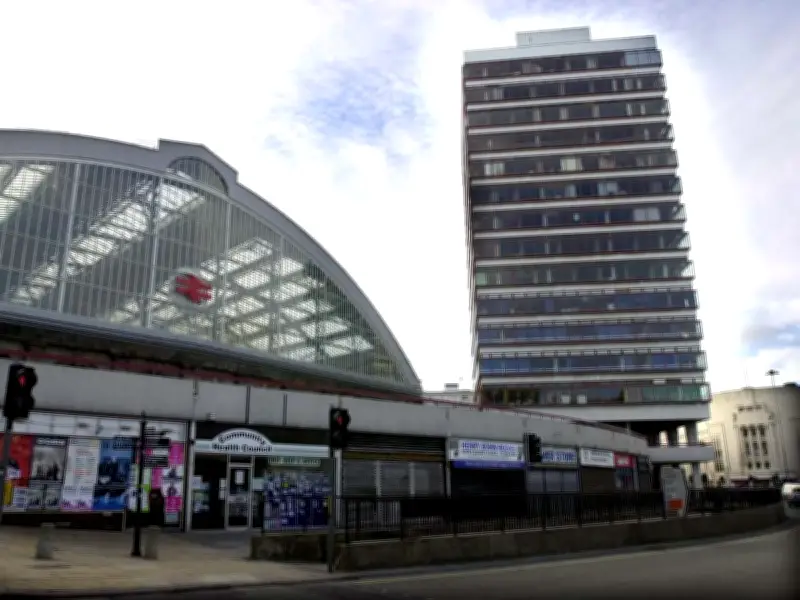
Before 2008, the front of Lime Street featured an arcade of shops and an office tower block. In July 2008, those structures were demolished, and work began on creating a new station frontage and redeveloping the area. The most recent major transformation included new platforms, improved passenger facilities, and a major signalling upgrade.
Today, nearly 20 million passengers pass through Lime Street every year. To mark its 190th anniversary, the ECHO delved into its archive, Mirrorpix, to unearth old photographs showing how the station has transformed over the years.