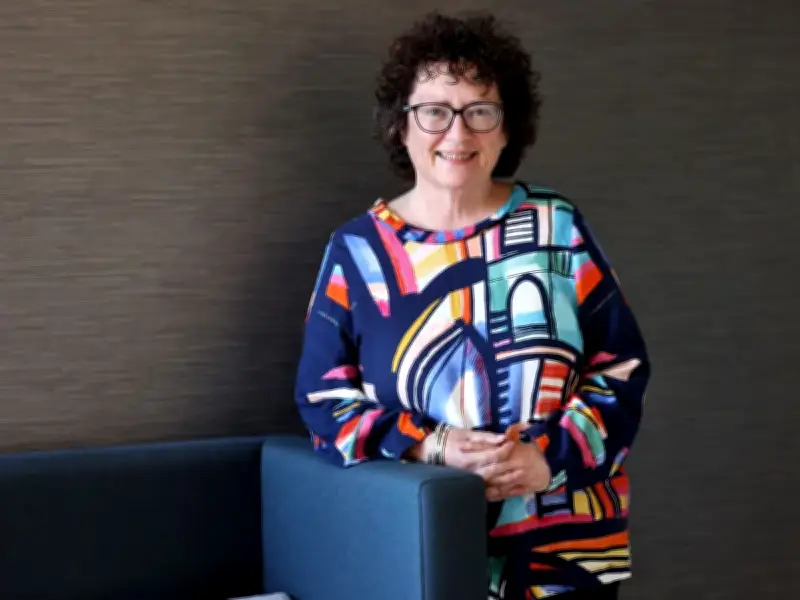
Wales' finance minister Elin Jones has admitted that Plaid Cymru has had to learn lessons from a "painful" defeat in the supplementary budget vote in July, as budget talks for 2027-28 begin in earnest.
Ms Jones, who has spent most of her 60 years hoping for a Plaid Cymru government, is now part of Rhun ap Iorwerth's administration. As finance minister, her main role is ensuring a budget passes. Yet at the first attempt to make their mark on how Wales' money is spent, Plaid endured a humiliating loss.
On July 14, Plaid Cymru failed to get support from any other Senedd group for their plans. Instead of agreeing the effective reallocation of £411m of money from last year's spending plan devised by Labour, the money remains where it was, and Plaid members had a rude awakening to life as a minority administration.
A 'painful' start for the new government
Ms Jones has now admitted that experience was "painful". But as we meet, it is hours since she announced she wants that supplementary budget to return to the Senedd "as soon as possible", although initial soundings from Labour suggest that may be wishful thinking.
She and her team are also looking ahead to the substantive budget, which is in the region of £27bn. As we discuss the various obstacles and options facing her party, she makes it clear she doesn't believe all responsibility is at the door of Plaid alone but falls on all representatives in the Senedd.
Ms Jones is one of only two politicians who has been voted in at every Assembly or Senedd election since 1999. She is the only member of the current Plaid Cymru cabinet with government experience, having been minister for rural affairs during the Labour-Plaid Cymru coalition, before becoming Llywydd in 2016, a role she held for 10 years.
Navigating a new political landscape
She describes being named finance minister by Mr ap Iorwerth as a "huge opportunity". She is aware that her role is being a wise head in politically turbulent times. As we meet in her office, on the fifth floor of Ty Hywel, her walls are still bare despite her being given a governmental brief within hours of the election almost five months previously.
This Senedd is different to any of the other seven before it. There are more members than ever before – Senedd expansion is something she was heavily involved in when Llywydd – while the Green Party and Reform UK has representation for the first time ever. Labour is learning how to be in opposition for the first time since devolution began in 1999, and her party is having its first stab at governing.
"I feel as if my role is to, as the older kid on the block, support those ministers who are doing their work for the first time," she says. "I've known the ins and outs of working as a government and as a minister. I need now to apply that to being a minority government."
Cooperation and the path to a majority
Plaid's 44 seats, thanks to the recent defection of Reform UK's Sarah Cooper-Lesadd, means it needs five others to back anything for it to pass the Senedd. Ms Jones says: "I always think that the alignment of policies should drive the cooperation that's needed to deliver on those policies."
Despite Labour being the obvious choice, she says she would work with any party in the Senedd. "My view is that there is a clearer alignment of thinking with the long-standing parties that have been here, and of course the Green Party," she says. "Reform, in how it's both articulating its work and its priorities, don't, to me, seem to share some of the priorities that Plaid Cymru has. So it's up to them to prove me wrong in that. But, yes, happy to have a discussion with all political parties."
She sees the budget process as a blending of three main areas: funding needed to deliver public services, delivering the programme of government, and needing another party to present its priorities to command a majority.
Lessons from the July defeat
That came into clear focus in the supplementary budget debate in July when Labour refused to do a deal with Plaid Cymru. Even when last-minute letters between the two party leaders were exchanged, there were entrenched views on whether enough funding had been provided for additional learning needs.
Welsh Labour leader Ken Skates remains adamant that Plaid is not putting enough money on the table. Mark Drakeford has weighed in, telling the BBC this week: "I think there was a case myself for taking that deal off the table while it was there."
Ms Jones says: "This is always where party politics meets doing the right thing." She adds: "I think that there were a combination of factors that led to that vote happening in that way. We can all reflect on what we contributed to that."
Looking back at July, were lessons learnt? "I'd certainly accept that lessons are being learned. I'm 27 years in the Senedd, I'm still learning," she says. "Politics is dynamic, to put it mildly, and therefore there are days when everything works perfectly for you and there are days when it doesn't quite work that way. That's the nature of life and it's also the nature of politics. But we strive to make sure that we can make this a government that works for the people of Wales."