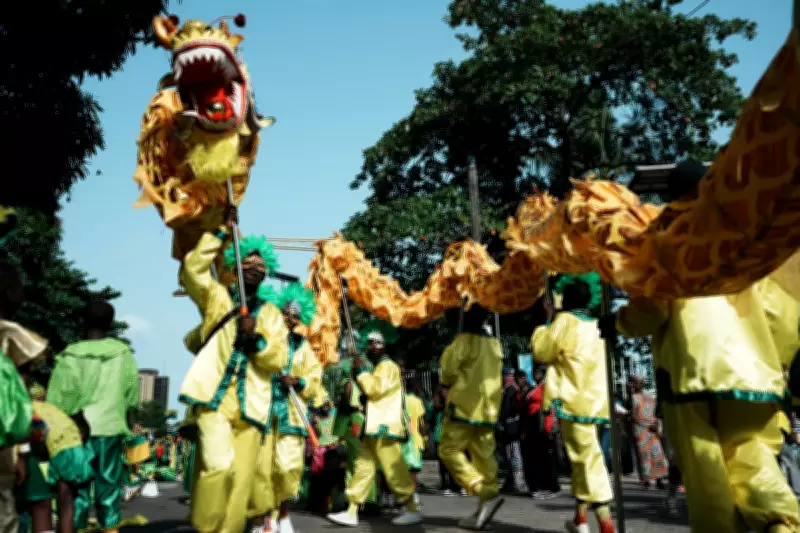
Thousands of revelers have flooded the streets of Lagos, Nigeria, for the annual Lagos Fanti Carnival, a vibrant and colorful celebration dedicated to honoring the Afro-Brazilian heritage of the "Aguda" community. These are the descendants of formerly enslaved people who returned from Brazil during the 19th century, bringing with them a rich tapestry of cultural influences that continue to shape the city's identity today.
A Festival Rooted in History and Tradition
The festival, which in recent years has typically been celebrated during Eastertide, stands as one of West Africa's most prominent cultural events. It draws comparisons to Brazil's famed Rio Carnival, often regarded as the world's biggest party, due to its exuberant displays of music, dance, and elaborate costumes.
Upon their return to West Africa, many of the returnees settled in Lagos, integrating with the local Yoruba ethnic group while preserving elements of Brazilian and Portuguese culture. This fusion has profoundly influenced various aspects of life in Lagos, including music, cuisine, architecture, religion, and overall lifestyle, giving birth to the unique Fanti Carnival that continues to thrive.

Preserving Heritage for Future Generations
"If you know the history of Lagos, you will understand how this carnival is important to the city and its history," remarked Ademola Oduyebo, a participant in the carnival, on Monday. "It is crucial that we preserve this tradition for our children, ensuring that our cultural legacy endures."
This year's theme, "A Homecoming of Heritage," featured processions from across Lagos converging at the iconic Tafawa Balewa Square. The event showcased communities of descendants from the formerly enslaved, representing diverse age groups and highlighting the enduring spirit of the Aguda people.
A Spectacle of Color and Rhythm
Attendees donned vibrant and colorful costumes as they danced their way to the city center, with some participants riding horses to add to the festive atmosphere. The procession was a vivid display of Brazilian history and identity, with artists and performers from across Africa wearing elaborate outfits adorned with beads and feathers. Others had their bodies covered in colorful paint, swaying rhythmically to indigenous Yoruba beats.
Glamour Sandra, one of the revelers, expressed her enthusiasm for both the Fanti festival and Brazil's Rio Carnival. "I love the energy, the artistic splendor that they create," she said, emphasizing the festival's magnetic appeal and cultural significance.
Community Involvement and Organization
Various community associations representing the original Aguda settlements play a pivotal role in the annual festival, heavily featuring in the celebrations and assisting in its organization. Their involvement ensures that the event remains true to its roots while fostering a sense of unity and pride among participants.
The Lagos Fanti Carnival not only serves as a joyous celebration but also as a vital reminder of the historical connections between Africa and the diaspora, preserving a unique heritage for generations to come.